

Content last revised on September 10, 2026
MG75J6ES53: An In-Depth Technical Review for Power System Engineers
Reliable 600V/75A Six-Pack IGBT for Demanding Motor Control and Inverter Applications
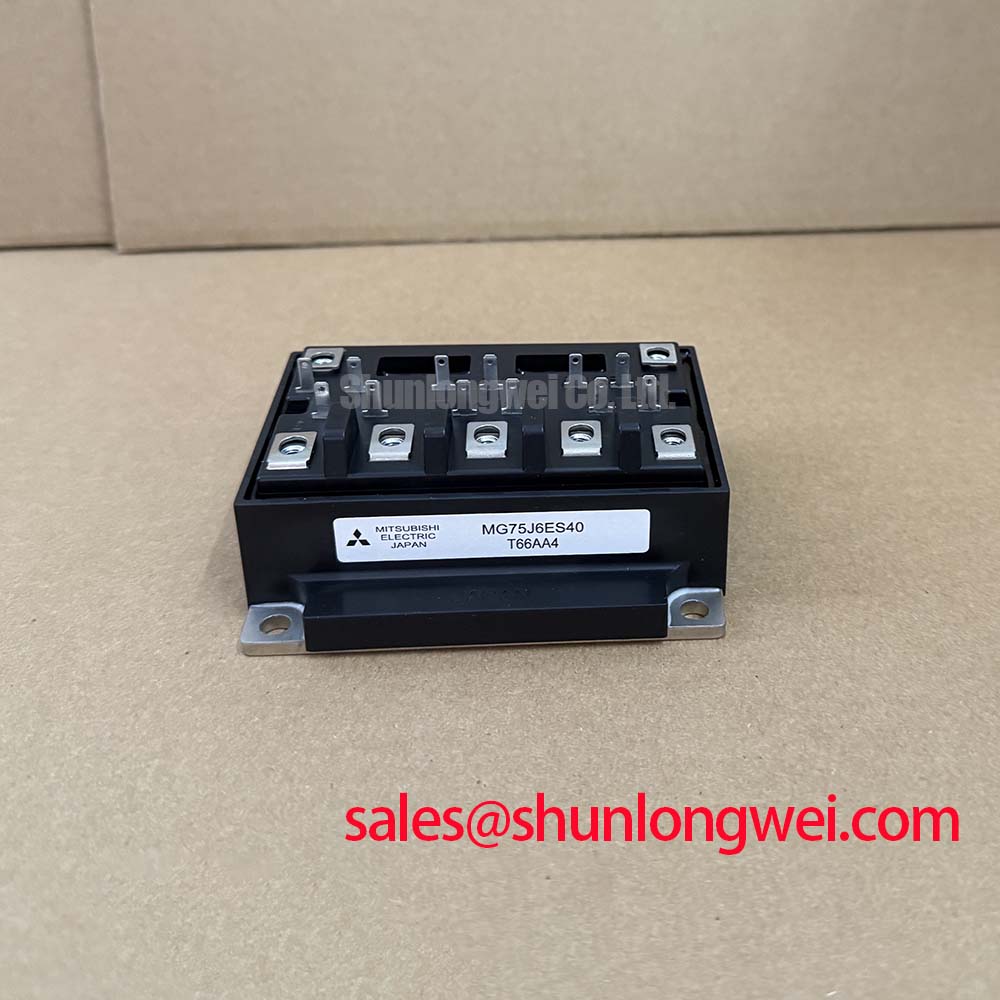
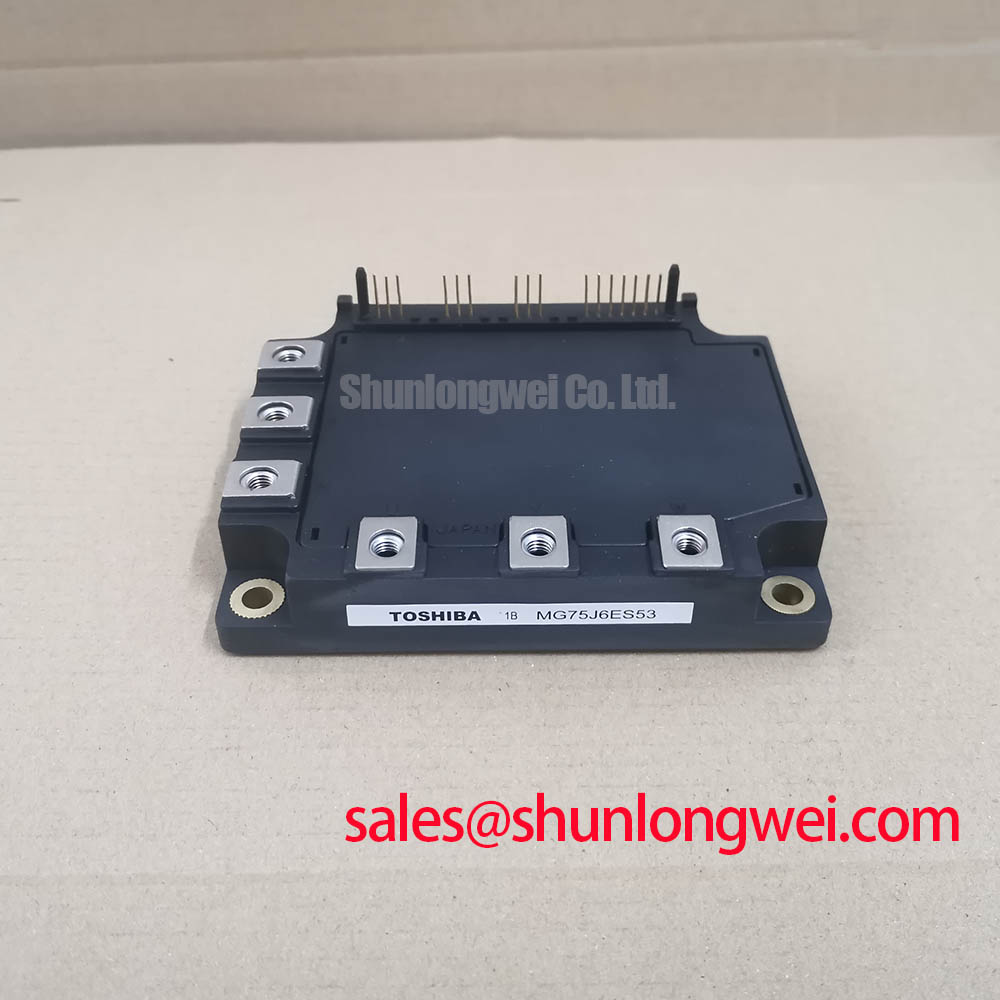
The Toshiba MG75J6ES53 is a 600V, 75A N-channel IGBT module engineered to deliver a robust and efficient power switching solution for three-phase motor control and general-purpose inverter systems. Its integrated six-pack configuration simplifies system design while its core electrical and thermal characteristics are optimized for reliability in high-power switching applications. With a Collector-Emitter Voltage (VCES) of 600V, a continuous DC Collector Current (IC) of 75A, and a total power dissipation of 390W, this module provides a solid foundation for designs requiring dependable performance. Key benefits include its integrated gate-emitter protection zeners and an electrically isolated case, enhancing both reliability and safety. This module directly addresses the engineering need for a compact, high-performance switching block capable of withstanding the electrical stresses found in industrial drive environments.
Key Parameter Overview
Decoding the Specs for Thermal Management and Switching Performance
The specifications of the MG75J6ES53 are tailored for applications where thermal efficiency and switching speed are critical design considerations. Understanding these parameters is key to leveraging the module's full potential.
| Parameter | Symbol | Conditions | Value |
|---|---|---|---|
| Absolute Maximum Ratings (Tc=25°C) | |||
| Collector-Emitter Voltage | VCES | - | 600V |
| Gate-Emitter Voltage | VGES | - | ±20V |
| Collector Current (DC) | IC | - | 75A |
| Collector Current (Pulse) | ICP | 1ms | 150A |
| Collector Power Dissipation | PC | Per IGBT | 390W |
| Operating Junction Temperature | Tj | - | 150°C |
| Electrical Characteristics (Tj=25°C) | |||
| Collector-Emitter Saturation Voltage | VCE(sat) | IC = 75A, VGE = 15V | 2.7V (Max) |
| Gate-Emitter Leakage Current | IGES | VGE = ±20V, VCE = 0 | ±500nA |
| Turn-On Time | ton | - | 1.0µs (Max) |
| Turn-Off Time | toff | - | 1.5µs (Max) |
| Thermal Resistance | Rth(j-c) | IGBT | 0.32°C/W |
Download the MG75J6ES53 datasheet for detailed specifications and performance curves.
Application Scenarios & Value
Achieving System-Level Benefits in Industrial Automation
The MG75J6ES53 is best suited for medium-power industrial applications where efficiency and a compact footprint are paramount. For engineers designing Variable Frequency Drives (VFDs) for conveyor systems, pumps, or HVAC fans, this module offers a compelling solution. The challenge in these systems is managing the thermal load generated during continuous start-stop cycles without resorting to oversized, costly heatsinks. The module's thermal resistance (Rth(j-c)) of 0.32°C/W per IGBT is a critical parameter here; it defines the efficiency of heat transfer from the silicon die to the module's baseplate. A lower value, like this one, directly translates to a lower junction temperature under a given load. This is analogous to having a wider pipe for heat to escape, allowing the device to run cooler, which is a cornerstone of long-term reliability in demanding industrial environments. This thermal efficiency enables more compact system designs and reduces the total cost of ownership by minimizing cooling requirements. For higher power motor drives, the related CM200TXPA-24T could be considered for its increased current handling capabilities.
Frequently Asked Questions (FAQ)
What is the primary benefit of the integrated six-pack configuration in the MG75J6ES53?
The primary benefit is design simplification. Integrating six IGBTs into a single, electrically isolated module reduces component count, simplifies the PCB layout, and streamlines the assembly process for three-phase inverter circuits, leading to a more compact and cost-effective final product.
How does the VCE(sat) of 2.7V impact system efficiency?
The Collector-Emitter Saturation Voltage, or VCE(sat), is the voltage drop across the IGBT when it's fully on. A VCE(sat) of 2.7V at its rated current of 75A means that conduction losses can be calculated (P_loss = VCE(sat) * IC). This parameter is a direct indicator of energy efficiency; a lower VCE(sat) results in less power wasted as heat during operation, which improves the overall efficiency of the motor drive or inverter.
Is the MG75J6ES53 suitable for high-frequency switching applications?
While the module is designed for high-power switching, its turn-on (1.0µs) and turn-off (1.5µs) times suggest it is optimized for applications in the low to medium frequency range, typical for motor control. For applications requiring significantly higher switching frequencies (e.g., >20kHz), designers should carefully analyze the switching losses, which increase with frequency, to ensure they remain within the thermal limits of the system.
What does the 2500V isolation voltage rating signify for system design?
The 2500V AC (for 1 minute) isolation voltage (Visol) indicates that the module's internal live components are safely isolated from the mounting baseplate. This is a critical safety feature, allowing the module to be mounted directly to a common, grounded heatsink without the need for additional, often thermally inefficient, insulating layers, simplifying thermal management while ensuring high electrical safety.
What is the significance of the built-in gate-emitter Zener diodes?
The integrated Zener diodes provide a crucial layer of protection for the IGBT gates. They clamp transient overvoltages that can occur on the gate line due to parasitic inductances during high-speed switching events. This built-in protection enhances the module's robustness and reliability, safeguarding it from potentially damaging gate-oxide breakdown without requiring external protection components.
Industry Insights & Strategic Advantage
System Reliability in Industrial Robotics and Automation
In the context of Industry 4.0, the demand for reliable and efficient automated systems, particularly in industrial robotics and automated guided vehicles (AGVs), is accelerating. The core of these systems are the servo drives that require precise motor control, which hinges on the performance of power modules like the MG75J6ES53. Its architecture directly supports the development of compact yet powerful servo drives. The module's ability to handle pulsed currents up to 150A is particularly relevant for managing the high-torque demands during rapid acceleration and deceleration cycles common in robotic arms. By providing a thermally efficient and electrically robust switching core, this Toshiba IGBT module enables designers to meet the increasing performance and reliability standards of modern industrial automation equipment, contributing to higher uptime and productivity on the factory floor. This aligns with the broader industry trend of integrating more power and intelligence into smaller physical footprints, a key enabler for advanced robotics.
A Strategic Perspective for System Architects
For engineering teams developing next-generation motor drives and power converters, the Toshiba MG75J6ES53 offers a well-balanced combination of electrical performance, thermal efficiency, and integration. Its specifications are not merely numbers but direct enablers of system-level goals: higher power density, enhanced reliability, and simplified manufacturing. By integrating key protective features and offering solid thermal performance in a standard package, this IGBT module serves as a strategic component choice, helping to accelerate development cycles and deliver a more robust and competitive end product in the industrial market.