Content last revised on September 10, 2026
AUO G070VTN03.0: A 7.0-inch WVGA Display Engineered for Seamless System Integration
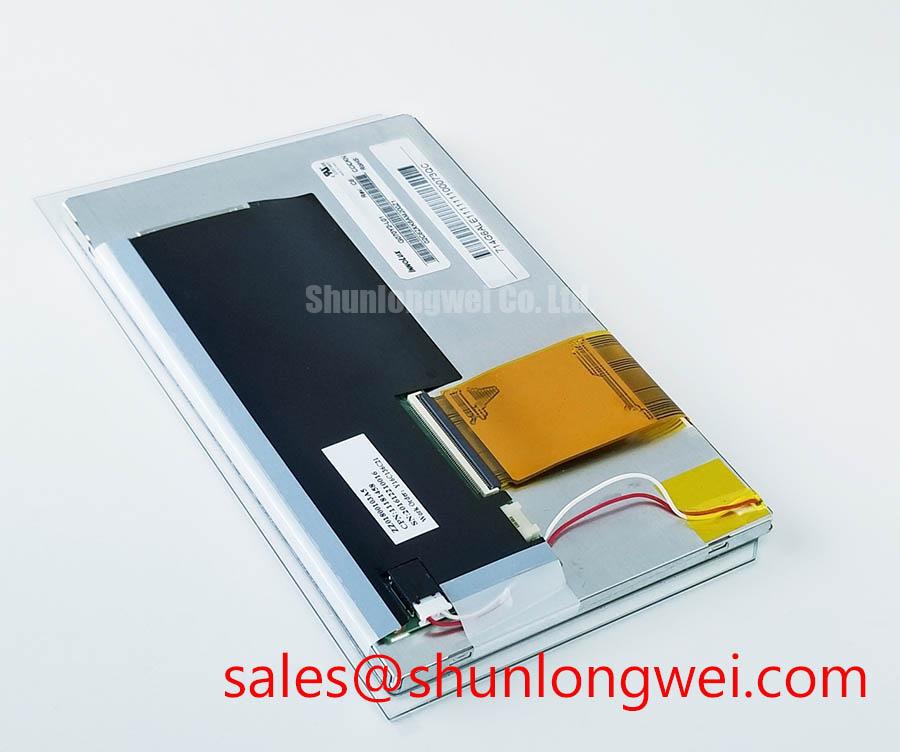
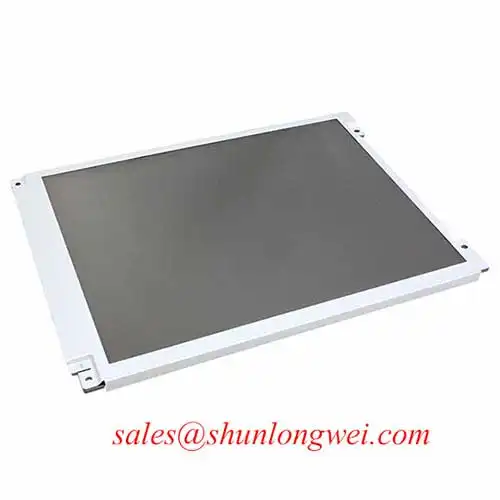
The AUO G070VTN03.0 is a 7.0-inch a-Si TFT-LCD module engineered for reliability and straightforward integration into industrial and commercial systems. It delivers a specification set focused on core performance and longevity: 7.0-inch Diagonal | 800x480 WVGA Resolution | 30,000-Hour WLED Backlight. Key benefits include simplified design cycles through a standardized interface and enhanced visual clarity from its factory-applied anti-glare surface. This display directly addresses the need for a durable and easy-to-implement visual interface for embedded systems. For applications requiring a robust display solution that prioritizes ease of integration and long-term operational stability, the G070VTN03.0 provides a well-defined engineering pathway.
Key Parameter Overview
Decoding the Specs for System Integration and Longevity
The technical specifications of the G070VTN03.0 are tailored to support designers and engineers in developing reliable and performant human-machine interfaces. The parameters below highlight the display's core capabilities, focusing on aspects critical for integration with common embedded hardware and ensuring long operational life.
| Parameter | Specification | Engineering Value |
| Panel Size | 7.0 inch | Compact form factor for space-constrained enclosures. |
| Resolution | 800(RGB)×480 (WVGA) | Provides clear, detailed visuals for typical HMI graphics and text. |
| Signal Interface | LVDS (1 ch, 6/8-bit) | Ensures compatibility with a wide range of industrial motherboards and single-board computers. |
| Contrast Ratio | 500:1 (Typ.) | Delivers distinct separation between blacks and whites for improved image definition. |
| Backlight System | WLED, Edge Light Type | Efficient and uniform illumination. |
| Backlight Lifetime | 30,000 hours (Min.) | Contributes to a lower total cost of ownership by reducing maintenance requirements. |
| Surface Treatment | Antiglare, Hard Coating (3H) | Minimizes distracting reflections and adds a layer of durability against scratches. |
Application Scenarios & Value
System-Level Benefits in Industrial Control and Instrumentation
The G070VTN03.0 is an optimal choice for systems where a balance of performance, longevity, and ease of integration is paramount. Its 7.0-inch diagonal and 800x480 WVGA resolution are well-suited for displaying critical operational data, process diagrams, and user controls in a variety of Human-Machine Interface (HMI) applications.
Consider the development of a mid-range industrial controller for manufacturing automation. The primary engineering challenge is often minimizing development time and ensuring compatibility between the display and the chosen Single-Board Computer (SBC). The G070VTN03.0's standard LVDS interface directly addresses this challenge. This industry-standard protocol simplifies the electrical connection and reduces the need for custom interface hardware, accelerating the prototyping and validation phases. The display's native 6/8-bit color depth provides sufficient range for modern UIs without overburdening the system's graphics processor. Furthermore, its 30,000-hour backlight lifetime provides confidence in the long-term reliability of the final product, a critical factor for equipment deployed in 24/7 production environments. For applications demanding higher resolution in a similar form factor, the G070ACE-L01 can be considered as an alternative for evaluation.
Technical Deep Dive
Analyzing the Impact of the LVDS Interface on System Design
The choice of a Low-Voltage Differential Signaling (LVDS Interface) in the G070VTN03.0 is a deliberate engineering decision that delivers significant system-level advantages. Unlike parallel interfaces like TTL, LVDS uses twisted-pair cables to transmit data, which inherently provides superior noise immunity. This is crucial in industrial environments where electromagnetic interference (EMI) from motors, drives, and power lines can corrupt display data, leading to screen flicker or data errors. By using LVDS, engineers can achieve reliable video transmission over longer cable lengths between the display and the main processor board, offering greater flexibility in mechanical design and enclosure layout.
Think of the LVDS interface as a dedicated, high-speed highway for display data. While a parallel interface is like a multi-lane city street with many potential points of interference (crosstalk), LVDS is a shielded, balanced expressway that ensures the signal arrives intact. This robustness simplifies EMC compliance testing and reduces the need for extensive shielding and filtering in the system design, ultimately saving both cost and engineering effort.
Frequently Asked Questions (FAQ)
Engineering and Procurement Inquiries
What is the primary benefit of the G070VTN03.0's LVDS interface for an embedded system?
Its primary benefit is simplified and robust integration. The LVDS interface offers excellent noise immunity, which is critical in industrial settings, and is a standard supported by a vast ecosystem of controllers and single-board computers, reducing design complexity.
How does the 30,000-hour backlight lifetime translate to real-world value?
A 30,000-hour backlight lifetime equates to over 3.4 years of continuous, 24/7 operation. For devices operating on a standard 8-hour workday, this extends well beyond a decade, significantly lowering the total cost of ownership by minimizing the need for backlight replacement or panel servicing.
Is the 800x480 resolution sufficient for modern industrial applications?
Yes, for a wide range of applications. While higher resolutions are available, the WVGA (800x480) format on a 7.0-inch screen provides an excellent pixel density for displaying status indicators, numerical readouts, soft-key buttons, and process schematics with clarity, without requiring high-end graphics processing capabilities.
What design considerations should be made for the WLED backlight system?
The G070VTN03.0 incorporates the WLED light bar, but it requires an external backlight driver. Engineers must select a suitable constant-current LED driver board that matches the backlight's voltage and current requirements as specified in the datasheet to ensure stable brightness and achieve the rated lifetime.
Ultimately, the G070VTN03.0's value proposition is centered on providing a reliable, no-frills display solution that accelerates development and enhances the long-term viability of the systems it is designed into. Its adherence to industry standards and focus on core performance metrics make it a strategic component for cost-effective and dependable HMI design.