
Content last revised on September 10, 2026
G101ICE-LH3: A 10.1-Inch WXGA Display Engineered for Visual Consistency and Industrial Durability
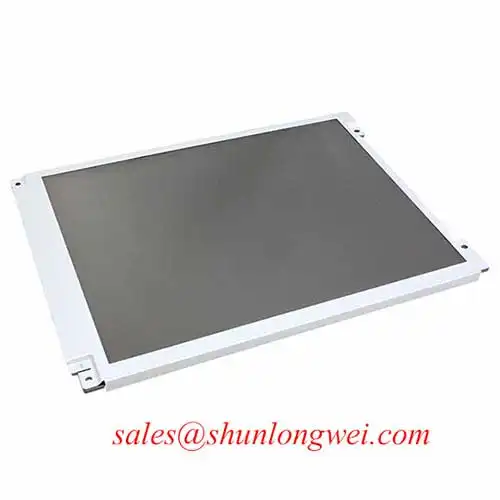
The Innolux G101ICE-LH3 is a 10.1-inch a-Si TFT-LCD module designed to deliver exceptional visual performance and robust reliability for demanding industrial and commercial applications. It combines a 1280x800 WXGA resolution with high brightness and advanced wide-viewing-angle technology, ensuring clear, consistent imagery across diverse operating conditions. With its wide operating temperature range and long-life WLED backlight, it provides a dependable foundation for next-generation Human Machine Interfaces (HMI). For systems requiring a higher resolution in a similar form factor, the G101UAN02.0 offers a WUXGA (1920x1200) alternative.
Application Scenarios & Value
Delivering Uncompromised Readability in Dynamic Industrial Environments
The G101ICE-LH3 is engineered for applications where data must be clearly legible from multiple angles and under varying ambient light conditions. Its primary value lies in its AHVA (Advanced Hyper-Viewing Angle) technology, which maintains color and contrast integrity even at off-axis viewing positions. This is critical in environments like factory floors, medical monitoring stations, and in-vehicle control panels where operators are not always positioned directly in front of the screen. The combination of a 10.1-inch screen, 1280x800 WXGA resolution, and 500 cd/m² brightness creates a highly versatile display solution. This panel's performance makes it a strong candidate for industrial HMI, portable diagnostic equipment, and specialized control systems where visual accuracy is non-negotiable.
What is the key benefit of its AAS technology? It delivers consistent, accurate color and brightness from nearly any viewing angle, a critical feature for collaborative or mobile HMI applications. The robust design, featuring an operating temperature range of -30°C to 80°C and an anti-glare surface, ensures dependable performance in environments that challenge standard consumer-grade displays. For system designs requiring a larger viewing area with similar environmental resilience, the G121XCE-L01 provides a 12.1-inch XGA option.
Key Parameter Overview
Highlighting Core Specifications for System Integration
The specifications of the G101ICE-LH3 are tailored for straightforward integration into industrial-grade devices. The display's standard LVDS (1 ch, 8-bit) interface ensures broad compatibility with a wide array of embedded controllers and single-board computers. This simplifies the design process, allowing engineers to focus on application-level development rather than interface complexities.
| Feature | Specification |
|---|---|
| Panel Size | 10.1 inches |
| Resolution | 1280(RGB)×800 (WXGA) |
| Technology | a-Si TFT-LCD, AAS, Normally Black |
| Luminance | 500 cd/m² (Typ.) |
| Viewing Angle | 89/89/89/89 (Min.) (CR≥10) |
| Contrast Ratio | 800:1 (Typ.) |
| Interface | LVDS (1 ch, 6/8-bit), 30 pins |
| Backlight | WLED, 50,000 hours (Typ.), with built-in LED driver |
| Operating Temperature | -30°C to 80°C |
| Outline Dimensions | 230.7 × 152.55 × 7.0 mm |
Technical Deep Dive
The Engineering Impact of AAS (Advanced Super View) Technology
The G101ICE-LH3 utilizes AAS technology, a feature that directly translates to superior performance in real-world applications. Functionally similar to IPS (In-Plane Switching), AAS aligns liquid crystals horizontally. When a voltage is applied, they rotate in-plane, rather than tilting as in traditional TN panels. This structural difference is the key to the G101ICE-LH3's exceptional viewing angles of 89° in all directions. For an engineer designing an HMI for a large machine, this means an operator can accurately read critical alerts and data from the side, above, or below without experiencing the dramatic color shift or contrast drop common in less advanced displays. This is akin to the difference between an old laptop screen that appears washed out from an angle and a modern television that looks vibrant from anywhere in the room. This inherent stability makes the display a reliable choice for systems where multiple users may view the screen simultaneously or where the operator's position is dynamic.
Frequently Asked Questions (FAQ)
How does the 800:1 contrast ratio impact usability in industrial settings?
A contrast ratio of 800:1 ensures a clear distinction between the darkest blacks and the brightest whites. In a factory or outdoor setting with fluctuating ambient light, this translates to improved legibility of text, icons, and graphical data, reducing the risk of misinterpretation. Think of it as the difference between a faded map and a freshly printed one—the details on the latter are simply easier and faster to discern.
What is the significance of the integrated WLED driver?
The inclusion of an integrated LED driver simplifies system design and integration. It means engineers do not need to source, qualify, and integrate a separate driver board to manage the backlight, reducing component count, potential points of failure, and overall design complexity. This allows for a more compact and reliable final product.
Does the -30°C to 80°C operating temperature range suit unconditioned environments?
Yes, this wide operating temperature range is a key feature for industrial applications. It qualifies the G101ICE-LH3 for use in unheated warehouses, outdoor kiosks, and in-vehicle systems that experience significant temperature swings, ensuring the display starts up and operates reliably in conditions where commercial-grade panels would fail. Further insights on designing for such conditions can be found in our guide to engineering for extremes.
