Content last revised on September 10, 2026
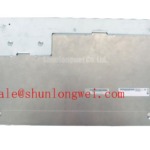
AUO G220SW02 V0: 22.0-inch WSXGA+ Industrial TFT-LCD Panel
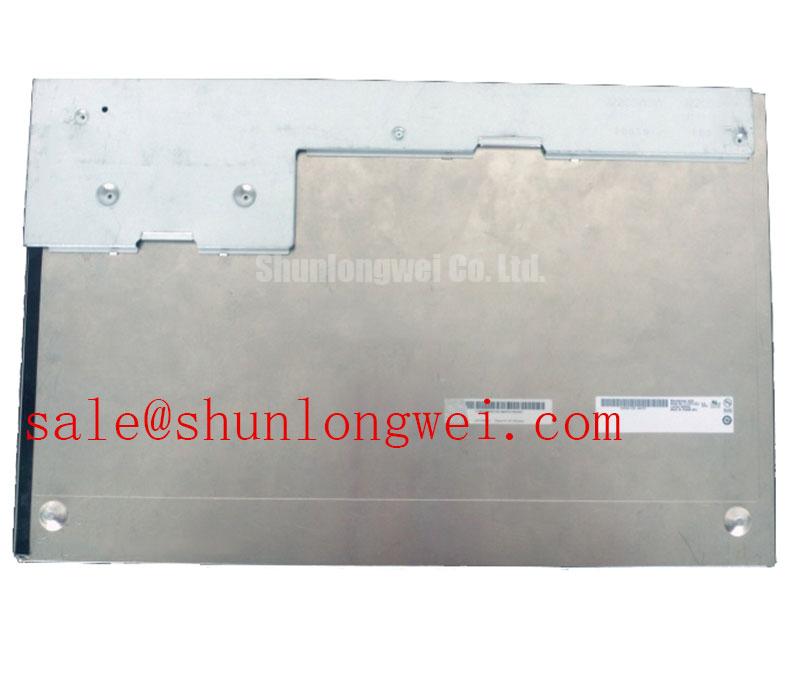
Are you struggling to integrate large-format, high-resolution visual interfaces into industrial enclosures without expanding your power budget or BOM complexity? The G220SW02 V0 by AUO directly answers this challenge. This 22.0-inch industrial TFT-LCD panel delivers a precise 1680x1050 (WSXGA+) resolution, a robust 1000:1 contrast ratio, and a highly resilient 50,000-hour WLED backlight. By integrating the LED driver onboard, it eliminates the need for bulky external inverters, simplifying the overall internal layout. What is the primary benefit of the built-in WLED driver? It eliminates external inverters, streamlining system-level power architecture. For large-scale HMI terminals prioritizing long-term visual clarity, this 22-inch WSXGA+ display is the optimal choice.
Frequently Asked Questions
Targeted Answers for Display Engineering
- How does the 1680x1050 resolution benefit industrial user interfaces? The 16:10 aspect ratio provides more vertical pixel space than standard 1080p, allowing industrial software to display additional control parameters without requiring the operator to scroll.
- What is the expected maintenance cycle for the G220SW02 V0 backlight? The integrated WLED configuration is rated for a 50,000-hour typical half-life, which translates to over 5.7 years of continuous 24/7 operation before noticeable dimming occurs.
- Does this panel require a separate backlight inverter to function? No, the panel includes an integrated LED driver. This architectural choice reduces the hardware footprint and mitigates high-voltage routing risks within the enclosure.
- What interface does the display utilize for video data transmission? It uses a 30-pin, 2-channel 8-bit LVDS connection, ensuring high-speed, noise-immune data transfer across longer cable harnesses typical in factory machinery.
Key Parameter Overview
Highlighting Core Metrics for HMI Integration
| Critical Parameter | Specification | Engineering Impact |
|---|---|---|
| Active Area / Size | 22.0 inches (473.76 × 296.1 mm) | Enhances operator visibility and touch-target accuracy from a distance. |
| Resolution | 1680 × 1050 (WSXGA+) | Delivers crisp, information-dense 16:10 graphics for complex schematics. |
| Brightness & Contrast | 300 cd/m², 1000:1 | Maintains deep blacks and readable text in bright ambient lighting environments. |
| Backlight Architecture | WLED with built-in driver (50k hours) | Lowers Total Cost of Ownership (TCO) through extended longevity. |
| Interface | 30-pin, 2-ch 8-bit LVDS | Simplifies logic board connections and reduces electromagnetic interference. |
Technical Deep Dive
Architectural Advantages of the WLED and LVDS Integration
The internal structure of the G220SW02 V0 is engineered to streamline implementation for OEMs building robust industrial TFT-LCD panels. Traditional CCFL backlights required bulky, high-voltage inverters, which were prone to thermal degradation and electromagnetic interference (EMI). By adopting a 9-string, 6-parallel (9s6p) WLED array with an onboard driver, AUO has drastically reduced the volumetric requirements. Why is the 9s6p WLED arrangement critical? It ensures uniform luminescence across the wide 22-inch active area.
Think of this integration like switching from a discrete power supply to an onboard DC-DC converter; it localizes power delivery, reduces failure points, and tightens the overall package to just 23.0mm in thickness. This significantly bolsters the energy efficiency of LED backlights within the entire system assembly.
Furthermore, the data pathway relies on a standard LVDS Interface. The two-channel, 8-bit architecture supports 16.7 million colors with 72% NTSC coverage, while inherently maintaining low electromagnetic emissions. In a factory environment saturated with electrical noise, LVDS acts like a balanced audio cable, rejecting common-mode noise and ensuring the pixel data arrives intact, even over extended internal wiring.
Application Scenarios & Value
System-Level Benefits in Industrial Automation
Engineers frequently encounter physical layout constraints when retrofitting older machinery with modern visual interfaces. The external dimensions and signal stability of the display panel dictate the entire enclosure design.
In a comprehensive SCADA system or an embedded PC workstation, the visual output must be flawless and persistent. The 1680x1050 resolution of the G220SW02 V0 shines directly in these exact environments. The 16:10 aspect ratio provides crucial vertical real estate, enabling software developers to persistently dock diagnostic toolbars or alarm banners at the bottom of the screen without crowding the central process schematic. The high 1000:1 contrast ratio ensures that warning indicators and fine graphical details remain distinct, preserving operator accuracy. Furthermore, the panel's glossy surface with a 3H hard coating offers baseline protection against light physical abrasions.
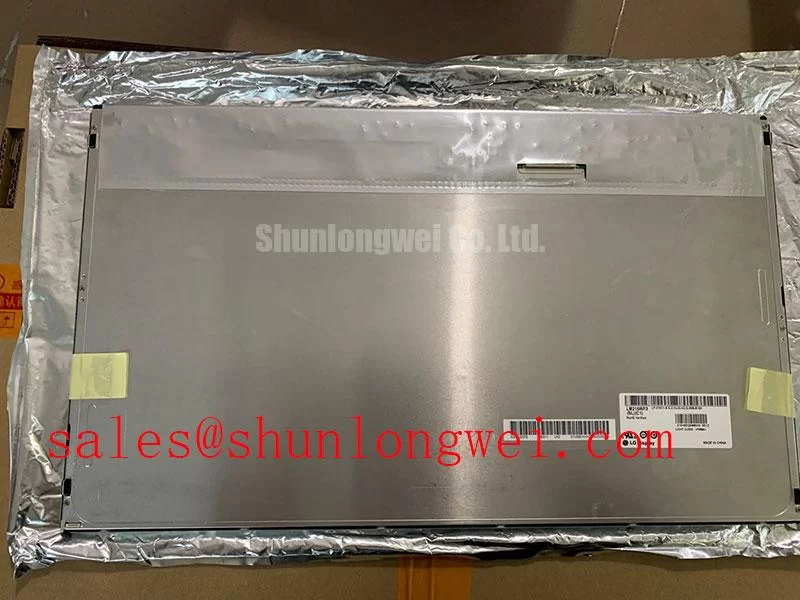
When designing a centralized HMI terminal, internal thermal management is heavily influenced by the display module. The low-heat output of the integrated WLED backlight minimizes internal chassis temperatures, protecting adjacent logic boards and controllers. For systems requiring slightly smaller footprints but higher resolution (FHD), the related LM215WF3-SLA1 offers a 21.5-inch alternative. Alternatively, for wider viewing angle requirements within the same physical ecosystem, the G215HAN01.0 provides an excellent counterpart.
As industrial automation pivots toward smarter, data-rich interfaces, selecting a display with a verified 50,000-hour operational life directly translates to minimized downtime. By choosing the G220SW02 V0 from AUO, procurement teams secure a resilient visual foundation, ensuring the human-machine connection remains uninterrupted for the lifecycle of the host equipment.