


Content last revised on September 10, 2026
Technical Analysis of the IRKE166-08PBF: A High-Reliability ADD-A-PAK Diode Module for Industrial Rectification
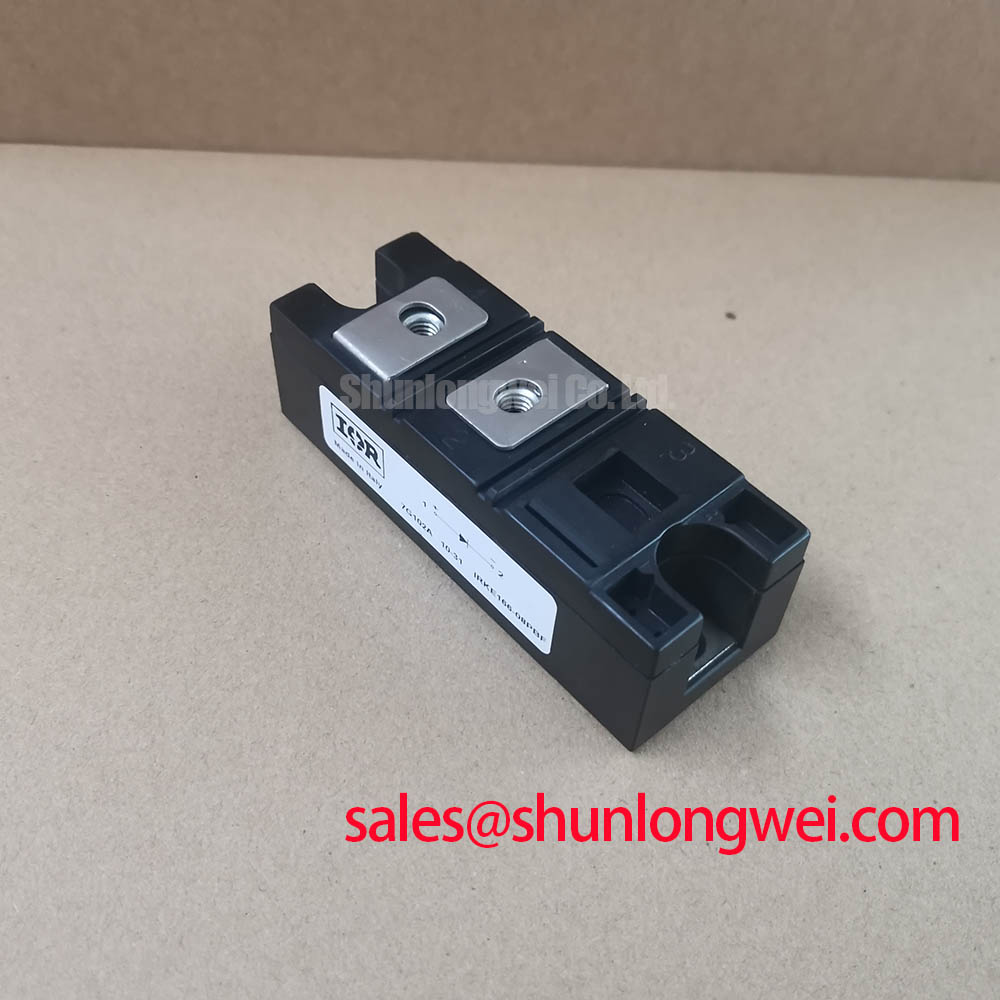
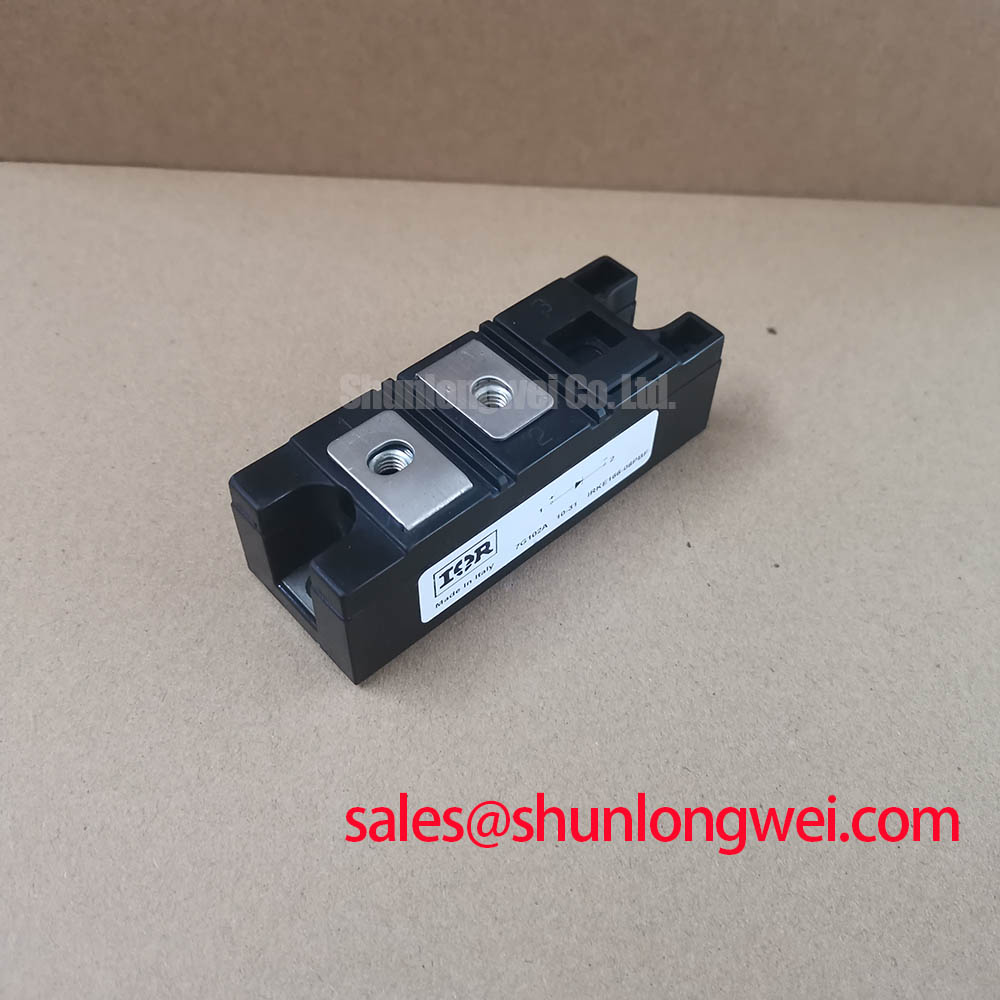
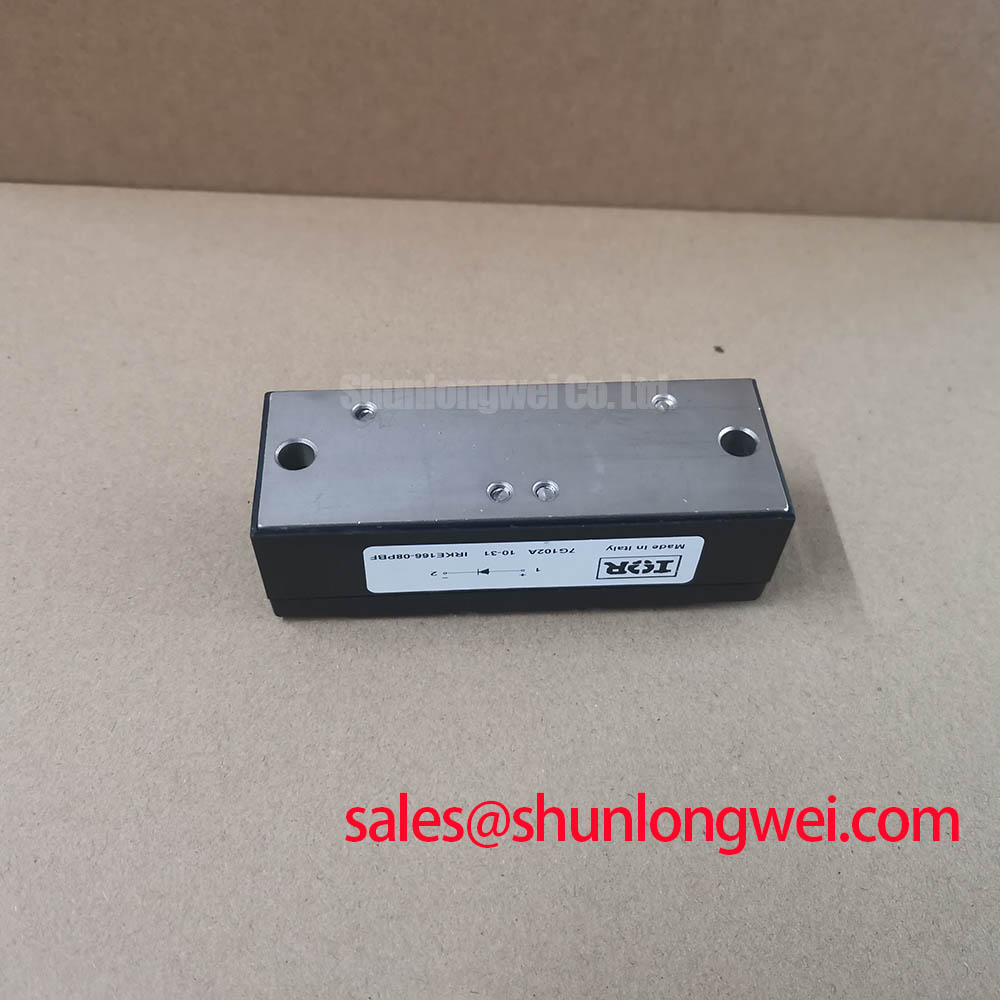
The **IRKE166-08PBF**, a flagship component within the **Vishay** (formerly International Rectifier) ADD-A-PAK Generation VII family, is a robust series diode module designed to bridge the gap between high power density and long-term thermal reliability. Engineered with a **800V** repetitive peak reverse voltage and a **165A** average forward current rating, this module provides engineers with a proven solution for rectification in harsh electrical environments. Its primary engineering advantage lies in the high-surge current capability and the electrically isolated baseplate, which simplifies thermal management in multi-module configurations. For industrial battery chargers requiring high surge capability and compact thermal design, this **800V** **165A** module is the ideal choice.
Top Specifications:
- Voltage Rating: **800V** ($V_{RRM}$)
- Current Capacity: **165A** ($I_{F(AV)}$) at $T_C$ = **85°C**
- Surge Current: **4000A** ($I_{FSM}$ @ 50Hz)
Key Benefits:
1. Eliminates external insulation through **3500V** RMS isolation.
2. Simplifies cooling with a low thermal resistance of **0.20°C/W**.
Engineers often inquire about the real-world thermal headroom of the **IRKE166-08PBF** under heavy loads. This module addresses that concern with its glass-passivated chips and a specialized ADD-A-PAK housing that ensures consistent pressure contact, effectively mitigating the risks of solder fatigue and thermal cycling failure.
Key Parameter Overview
Decoding the Specs for Enhanced Thermal Reliability
To assist in technical evaluation, the following table highlights the critical electrical and thermal boundaries of the **IRKE166-08PBF**. These figures are essential for calculating safe operating margins and heatsink requirements in high-duty-cycle applications.
| Parameter Category | Technical Specification | Value / Condition |
|---|---|---|
| Voltage Ratings | Maximum Repetitive Peak Reverse Voltage ($V_{RRM}$) | 800V |
| Current Limits | Maximum Average Forward Current ($I_{F(AV)}$) | 165A @ $T_C = 85°C$ |
| Surge Characteristics | Max. Non-Repetitive Peak Surge Current ($I_{FSM}$) | 4000A (50Hz) / 4185A (60Hz) |
| Thermal Dynamics | Thermal Resistance, Junction to Case ($R_{thJC}$) | 0.20°C/W (per junction) |
| Isolation Specs | RMS Isolation Voltage (1 min) | 3500V |
Application Scenarios & Value
Achieving System-Level Benefits in High-Frequency Power Conversion
The **IRKE166-08PBF** is primarily utilized in high-current rectification stages where reliability cannot be compromised. Its high $I^2t$ value (up to **80,000 $A^2s$**) makes it particularly suitable for protecting downstream components during transient faults in systems such as **Variable Frequency Drives (VFD)** and uninterruptible power supplies (UPS).
In the context of industrial **Battery Chargers** and **Welding Power Supply** units, the **800V** rating provides a significant safety margin for 230V and 400V AC line inputs, absorbing voltage spikes that might otherwise lead to avalanche failure. The **ADD-A-PAK** package allows for direct mounting on common heatsinks, which reduces assembly time and material costs by eliminating the need for individual mica insulators.
For systems requiring even higher voltage handling or alternative configurations, engineers might evaluate the SKKD162/16 for **1600V** line applications or the MDC100-16 for designs prioritizing a smaller footprint. By leveraging the **IRKE166-08PBF**, designers can achieve a balance between current density and thermal stability that is essential for the transition to **Industrial 4.0** automation standards.
Technical Deep Dive
The Engineering Significance of High-Surge Current Robustness
A critical differentiator for the **IRKE166-08PBF** is its ability to withstand extreme **Surge Current** peaks. In an industrial environment, inductive loads and motor startups often trigger massive inrush currents. The **4000A** surge rating acts as a robust "buffer," preventing the semiconductor junctions from reaching critical temperatures during the first few cycles of a fault condition.
The **ADD-A-PAK** Generation VII housing employs a specific mechanical architecture that maintains uniform pressure across the silicon die. Think of this as the equivalent of a high-performance tire's contact patch; if the pressure is uneven, "hot spots" develop, leading to localized thermal runaway. By ensuring a low **RthJC** of **0.20°C/W**, the module efficiently channels heat away from the junction and into the copper baseplate. This thermal efficiency is crucial for maintaining a high **Safe Operating Area (SOA)** even as the system ages.
Furthermore, the module’s compliance with **UL** standards for isolation ensures that it meets international safety requirements for medical and sensitive industrial equipment. The use of large-area chips allows for lower **V_F** (forward voltage drop), which directly translates to lower power dissipation and higher overall system efficiency. This reduction in heat allows for the selection of smaller, less expensive cooling solutions, effectively lowering the Total Cost of Ownership (TCO).
Frequently Asked Questions
How does the Rth(j-c) of 0.20 °C/W directly impact heatsink selection for the IRKE166-08PBF?
The low **0.20°C/W** thermal resistance means the module is highly efficient at transferring heat. For a designer, this allows for a higher power density because the heatsink can be optimized for a smaller temperature delta between the junction and the ambient air. It effectively reduces the physical size requirement of the heatsink while maintaining a safe junction temperature below the **150°C** limit.
What is the primary benefit of the ADD-A-PAK design versus discrete stud-mounted diodes?
The primary benefit is integrated isolation and ease of assembly. The **IRKE166-08PBF** features a baseplate that is isolated to **3500V**, allowing multiple modules to be mounted on a single grounded heatsink without extra insulating kits. This reduces the parasitic inductance of the wiring and significantly decreases the risk of mechanical stress on the diode terminals compared to traditional stud-mount packages.
The integration of the **IRKE166-08PBF** into modern power architectures represents a strategic investment in reliability. As industrial systems demand higher efficiency and tighter integration, the role of proven, standard recovery modules becomes paramount. By prioritizing the thermal and surge parameters detailed above, engineering teams can ensure their designs meet the rigorous demands of next-generation power electronics while adhering to global safety and performance standards.