

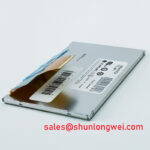
Content last revised on January 21, 2026
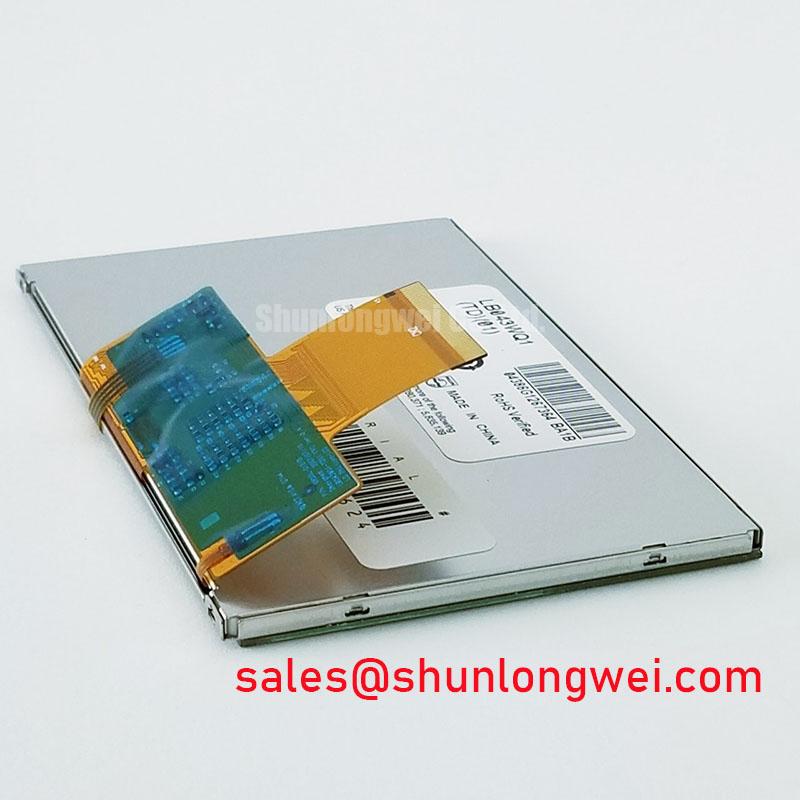
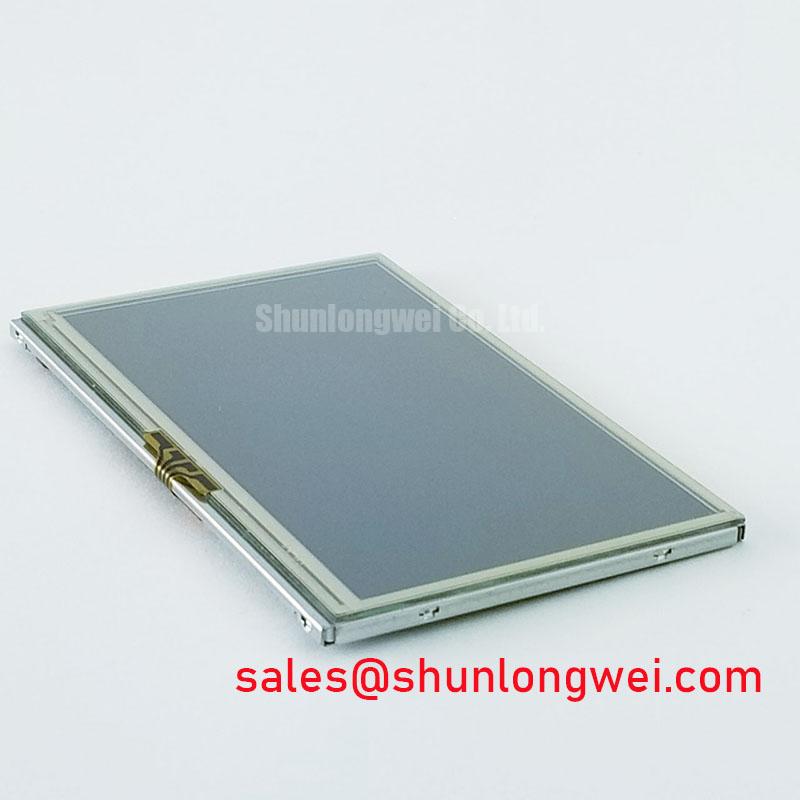
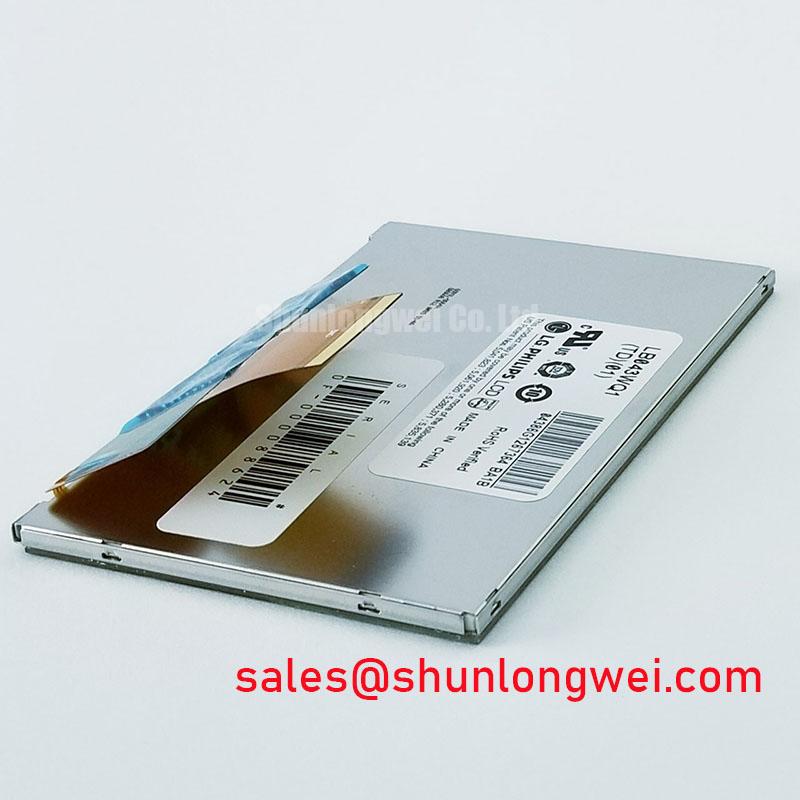
LB043WQ1-TD02: Robust 4.3” WQVGA Display for Harsh Environments
Delivering consistent readability and operational integrity across demanding thermal and lighting environments. Top Specs: 4.3” WQVGA | -20 to +70°C | 450 cd/m² Brightness. Key Benefits: Enhanced field reliability. Superior visibility in high ambient light. As industrial and portable device applications push into more challenging settings, the need for displays that can perform without fail becomes critical. The LG Display LB043WQ1-TD02 answers this by integrating a wide operational temperature range with an effective anti-glare surface treatment, ensuring data is both reliably presented and clearly legible, regardless of environmental variables.
Field-Proven Deployments: The LB043WQ1-TD02 in Action
While specific case studies are proprietary, the design attributes of the LG Display LB043WQ1-TD02 lend themselves to deployment in sectors where environmental resilience is a primary design consideration. Imagine a portable diagnostic tool used by automotive technicians in a non-climate-controlled garage. In winter, temperatures can drop below freezing, and in summer, they can soar. The LB043WQ1-TD02's ability to operate reliably from -20°C to +70°C ensures the device functions consistently year-round. Similarly, consider a handheld inventory scanner in a brightly lit warehouse. The anti-glare surface treatment is engineered to diffuse reflections from overhead lighting, preventing screen washout and allowing operators to read barcodes and inventory data accurately and efficiently.
Meeting the Mandate for Rugged HMIs in Modern Industry
The push towards Industry 4.0 and the proliferation of IoT devices in outdoor and mobile settings have placed new demands on Human-Machine Interface (HMI) components. Consumer-grade displays often fail when exposed to the temperature extremes, vibration, and challenging light conditions common in industrial, agricultural, and logistics environments. This has created a clear engineering mandate for displays that are fundamentally more robust. The LB043WQ1-TD02 is a direct response to this trend. Its specifications are not just numbers on a datasheet; they represent a commitment to operational uptime and a lower total cost of ownership. By building systems with displays proven to withstand these conditions, engineers can reduce field failures, minimize maintenance calls, and deliver a more dependable end product to their customers. For a broader understanding of display technologies in these settings, exploring industrial versus consumer displays provides critical context.
Data-Backed Comparison for Your Design Evaluation
When evaluating compact displays, OEM engineers must weigh multiple factors. The following provides a factual comparison to aid in the decision-making process, based on common alternatives in the 4.3-inch category. The focus remains on parameters crucial for resilient applications.
- Thermal Headroom: The LB043WQ1-TD02's -20°C to +70°C operating range offers a significant advantage over typical commercial-grade panels, which are often limited to 0°C to 50°C. This extended range removes the need for auxiliary heating or cooling components in many designs, simplifying the system and reducing potential points of failure.
- Interface & Integration: With a parallel RGB (1-channel, 8-bit) interface, the LB043WQ1-TD02 provides a standard connection method familiar to many system designers, facilitating straightforward integration with a variety of microcontrollers and display drivers.
- Visual Performance in Bright Light: While some displays may offer higher brightness, the effectiveness of the LB043WQ1-TD02's 450 cd/m² luminance is amplified by its anti-glare surface. This combination is often more critical for legibility than brightness alone.
For mobile devices operating in unconditioned environments, the LB043WQ1-TD02 is a more robust choice than displays with a standard commercial temperature range. For systems where sunlight readability is the primary challenge, a deeper dive into specialized technologies may be beneficial, as detailed in the definitive engineer's guide to sunlight-readable HMIs.
Anatomy of Resilience: A Technical Breakdown
The dependable performance of the LB043WQ1-TD02 stems from specific engineering choices within its construction. The amorphous silicon (a-Si) TFT-LCD technology provides a stable and mature platform for the 480x272 WQVGA resolution. Its durability is further enhanced by several key attributes.
What is the key benefit of its anti-glare surface? Improved readability by diffusing ambient light reflections. The surface treatment acts like a set of microscopic lenses, scattering incoming light rather than reflecting it directly back at the viewer. This prevents the mirror-like effect that can make glossy screens unreadable under direct or strong overhead lighting.
The display’s luminance of 450 nits is a measure of its light output. Think of it as the power of a lighthouse beam. However, raw power is not enough. The 400:1 contrast ratio is what allows that beam to be distinct against the fog. This ratio ensures that the light and dark parts of an image are clearly distinguishable, which is essential for rendering sharp text and clear graphics.
Core Specifications for System Integration
The following table outlines key specifications of the LG Display LB043WQ1-TD02, with an emphasis on their engineering significance for system design and evaluation. For complete details, please refer to the official product documentation.
| Parameter | Value | Engineering Significance |
|---|---|---|
| Screen Size | 4.3 inches | Provides a compact form factor suitable for portable navigation devices, MP3/PMP players, and small industrial HMIs. |
| Resolution | 480x272 (WQVGA) | Offers sufficient pixel density (128 PPI) for clear rendering of graphical user interfaces and status indicators in its size class. |
| Operating Temperature | -20°C to +70°C | Enables deployment in outdoor and unconditioned indoor environments without requiring external thermal management, enhancing system reliability. |
| Storage Temperature | -30°C to +80°C | Ensures display integrity during shipping and storage in extreme climates, reducing the risk of damage before final assembly. |
| Luminance | 450 cd/m² (Typical) | Delivers bright, clear images that are legible in a variety of indoor and covered outdoor lighting conditions. |
| Interface | Parallel RGB (1 ch, 8-bit), 45-pin FPC | A widely supported interface that simplifies the connection to host processors and reduces development time for system integrators. |
Engineered for Demanding Application Environments
The LB043WQ1-TD02 is specified for a range of applications where its combination of a compact footprint and environmental resilience provides direct value. Its robust thermal performance and clear visibility make it an excellent candidate for:
- Portable Navigation Systems: Whether for automotive or handheld use, these devices must perform reliably in vehicles that experience wide temperature swings.
- Industrial Handheld Devices: Barcode scanners, diagnostic tools, and portable test equipment used in factories, warehouses, and field service benefit from the display's durability and readable screen.
- Small-Scale HMI Panels: Control panels on machinery or in building automation systems that are not situated in climate-controlled rooms can leverage the wide operating temperature.
- MP3/PMP Devices: For high-end portable media players, the display offers a quality visual experience with the robustness needed for mobile use.
The fundamental technology behind this display is explored further in The Ultimate Guide to TFT-LCD, which offers insights into how these panels are constructed and function.
Technical Inquiries on the LB043WQ1-TD02
1. What is the display's viewing angle limitation?
The LB043WQ1-TD02 utilizes TN (Twisted Nematic) technology, with typical viewing angles of 70°/70° (Horizontal) and 55°/65° (Vertical) at a contrast ratio of ≥10. This is generally sufficient for single-operator devices where the user is positioned directly in front of the screen. Critical applications requiring multi-viewer, wide-angle legibility might necessitate exploring other display technologies like IPS.
2. Does the LB043WQ1-TD02 include a backlight driver?
No, the datasheet indicates the WLED backlight source is integrated, but the driver circuitry is not included on the module. An external LED driver is required, giving engineers the flexibility to choose a component that matches their power supply design and dimming requirements.
3. How does the -20°C to +70°C operating range impact device reliability?
Operating a display outside its specified temperature range can cause permanent damage or severe performance degradation, such as slow response times at low temperatures or blackening at high temperatures. By specifying a wide range, the LB043WQ1-TD02 ensures it will maintain its optical and electrical characteristics in environments where many commercial displays would fail, directly contributing to the end product's field reliability and lifespan.
4. What does "6 o'clock" view direction mean?
This refers to the optimal viewing direction for achieving the best image quality, specifically regarding grayscale inversion. For a "6 o'clock" display, the ideal viewing position is slightly from below the screen. This is a critical parameter to consider during mechanical design to ensure the final product's orientation aligns with the intended user perspective.
5. Is a touchscreen version of this display available?
The LB043WQ1-TD02 model itself does not come with an integrated touch panel. However, the compact 4.3" form factor is common for applications that require touch input. For similar requirements, a separate resistive or capacitive touch overlay could be sourced, or alternative models like the KCG057QV1DB-G000 which may include integrated touch functionality could be evaluated for fitment.
A Designer's Perspective on Future Integration
For engineers designing the next generation of portable and rugged devices, the LB043WQ1-TD02 provides a solid foundation. Looking ahead, the key to maximizing its value lies in thoughtful system integration. Future design cycles could focus on pairing this display with low-power microcontrollers to extend battery life in mobile applications. Furthermore, optimizing the enclosure's design to leverage the display's slim 3.17mm profile can lead to more compact and ergonomic end products. By building upon this display's inherent resilience, designers can focus their innovation on software features and system-level enhancements, confident in the visual interface's ability to perform reliably in the field.