

Content last revised on September 10, 2026
LJ512U32: Engineering Review of a Robust 512x256 EL Display for Extreme Environments
Product Introduction & Key Highlights
Engineered for Unmatched Durability in Demanding Applications
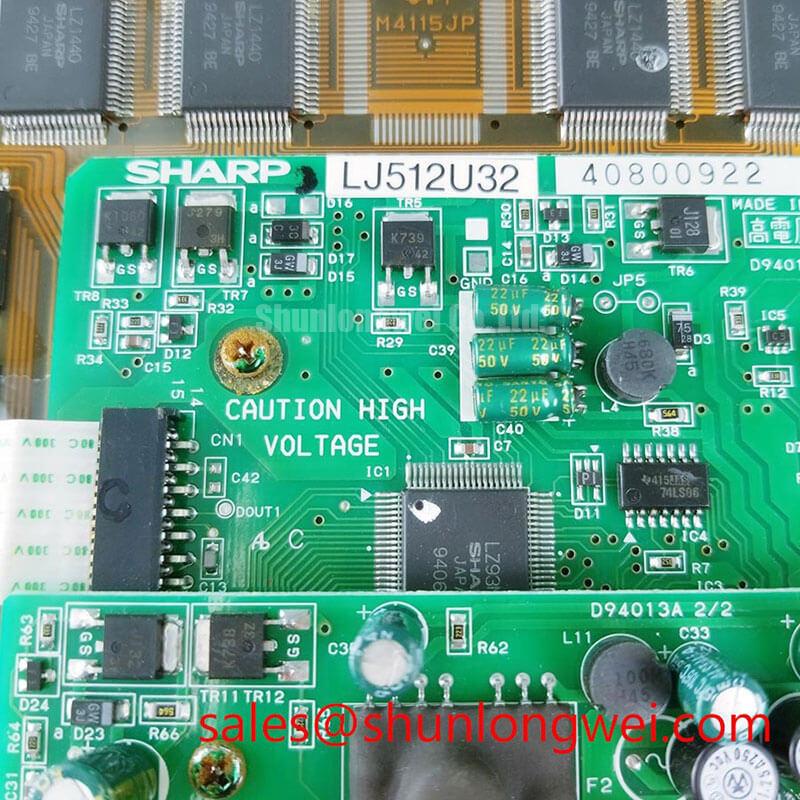
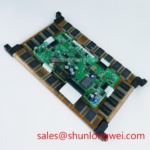
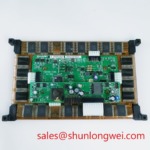
The Sharp LJ512U32 is a high-reliability 512x256 Electroluminescent (EL) display, engineered for unparalleled readability and operational endurance in extreme temperature, shock, and vibration environments. Delivering crisp, high-contrast monochrome visuals, its core specifications include a 512 x 256 pixel resolution, an exceptionally wide >160° viewing angle, and a broad operating temperature range of -20 to 65°C. This solid-state design provides two critical engineering benefits: extreme environmental resilience and superior visual clarity without a backlight. The technology inherently resists the mechanical failures common in liquid crystal displays, answering the implicit need for a durable display in high-stress industrial and field applications. For legacy industrial or military HMIs requiring steadfast performance from -20°C to 65°C, the LJ512U32 offers unmatched durability.
Key Parameter Overview
Decoding the Specs for Environmental and Functional Reliability
The technical specifications of the LJ512U32 are a direct reflection of its design for harsh-environment performance. Each parameter underscores its suitability for applications where standard displays would falter.
| Optical Characteristics | |
|---|---|
| Display Technology | Electroluminescent (EL) |
| Resolution | 512 x 256 Pixels |
| Luminance | 90 cd/m² (Typical) |
| Viewing Angle | >160° (Horizontal/Vertical) |
| Emitting Color | Monochrome (Orange) |
| Electrical Characteristics | |
| Logic Supply Voltage (Vdd) | 5V DC |
| Display Supply Voltage (Vdisp) | 200V AC (Typical, generated by external driver) |
| Interface | 4-bit Parallel Data |
| Mechanical & Environmental Specifications | |
| Active Area | 195.0 x 97.48 mm |
| Module Dimensions | 242.0 x 143.0 x 20.0 mm |
| Operating Temperature | -20°C to +65°C |
| Storage Temperature | -40°C to +85°C |
Application Scenarios & Value
Achieving System-Level Reliability in Industrial and Field Equipment
The LJ512U32 is purpose-built for applications where failure is not an option. Its value is most evident in environments that subject electronics to constant mechanical shock, vibration, and extreme temperatures—conditions that can cause delamination, freezing, or failure in conventional TFT-LCDs. One high-fidelity engineering scenario is the retrofitting of legacy CNC milling machines or industrial press controls. These machines often operate in environments with high vibration and fluctuating temperatures, causing frequent failures of older CRT or early LCD panels and leading to significant production downtime.
By integrating the LJ512U32, maintenance engineers can achieve a dramatic increase in system uptime. Its solid-state Electroluminescent (EL) technology is inherently immune to the micro-vibrations that degrade LCD backlight connections and liquid crystal alignment over time. This makes it an ideal drop-in upgrade for enhancing the reliability of critical HMI systems. While the LJ512U32 excels in monochrome legacy applications, for new system designs that require color and higher resolution, a modern industrial TFT module such as the G084SN05 V9 may be considered. For a deeper understanding of the total cost of ownership benefits, exploring the differences between industrial and consumer-grade displays provides valuable context.
Frequently Asked Questions (FAQ)
Engineering-Focused Inquiries
How does the EL technology in the LJ512U32 contribute to its reliability in high-vibration environments compared to a traditional LCD?
Unlike a TFT-LCD, which is a complex assembly of a backlight, diffusers, polarizers, glass substrates, and a liquid crystal layer, the LJ512U32's EL panel is a solid-state device. Its light-emitting pixels are an integral part of the panel structure. This monolithic construction has no internal moving parts or delicate layers to misalign or fail under continuous shock and vibration, offering fundamentally superior mechanical robustness.
What are the key interface considerations when integrating the LJ512U32 into a system designed for a different display technology?
The LJ512U32 utilizes a 4-bit parallel data interface, which is common in legacy industrial controller and embedded systems. When replacing a CRT or a different type of panel, engineers must ensure their video controller or FPGA can output the required parallel data signals, along with timing signals like frame clock, line clock, and pixel clock. Additionally, a dedicated high-voltage driver is necessary to generate the AC voltage required to excite the display's phosphors, a key difference from the typical DC logic and backlight voltages needed for an LCD.
Technical Deep Dive
The Solid-State Advantage of Electroluminescent Technology
The exceptional durability of the Sharp LJ512U32 stems directly from its Sharp-pioneered EL technology. At its core, an EL display functions by passing an electric current through a thin layer of phosphorescent material, which then emits light. This process is fundamentally different from that of an LCD. Think of it like a printed light source; unlike an LCD which acts like a set of microscopic shutters (the liquid crystals) modulating a separate lamp (the backlight), the EL panel's pixels are the lamps themselves. This integrated, solid-state structure eliminates the most common failure points of LCDs in harsh environments: the backlight and the fragile liquid crystal layer, which can be damaged by shock or perform poorly in extreme cold. This architectural simplicity is key to its long-term reliability in applications like displays in heavy machinery.
Application Vignette
Upgrading a Legacy Test and Measurement Instrument for Field Use
Consider a portable spectrum analyzer from the 1990s, a critical piece of equipment for field technicians. Its original monochrome LCD has become dim, with slow response times in cold weather and poor readability in bright ambient light. This directly impacts the technician's efficiency and accuracy. Replacing the failing display with an LJ512U32 provides a robust solution. The challenge is not just finding a mechanically compatible display, but one that restores and enhances original performance. The LJ512U32's 512x256 resolution is a perfect match for the instrument's graphical output. The primary engineering benefit is the immediate improvement in readability; its high luminance and contrast ratio make waveforms sharp and clear. The display's wide viewing angle provides clarity from any angle, similar to how a classic analog gauge can be read from the side, a critical feature when an operator is maneuvering the instrument in a tight space. Most importantly, its -20°C to +65°C operating range guarantees reliable performance whether the technician is working in a winter field test or a hot equipment room, eliminating a major source of operational failure.
To assess the LJ512U32's durability and visual performance for your legacy system upgrade or new ruggedized design, contact our technical specialists to discuss your specific project requirements and integration strategy.