Content last revised on July 24, 2026
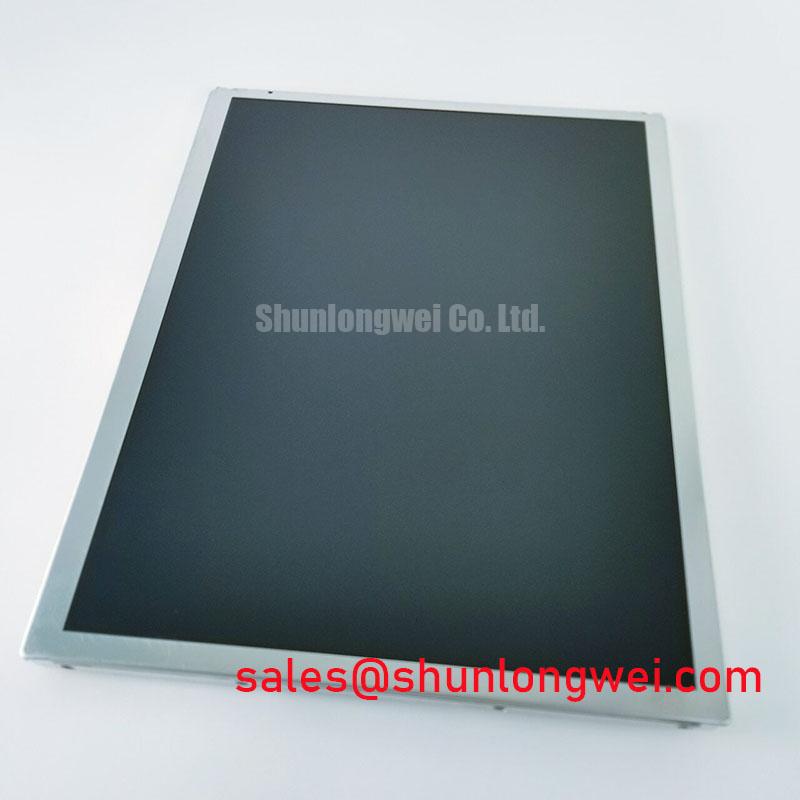
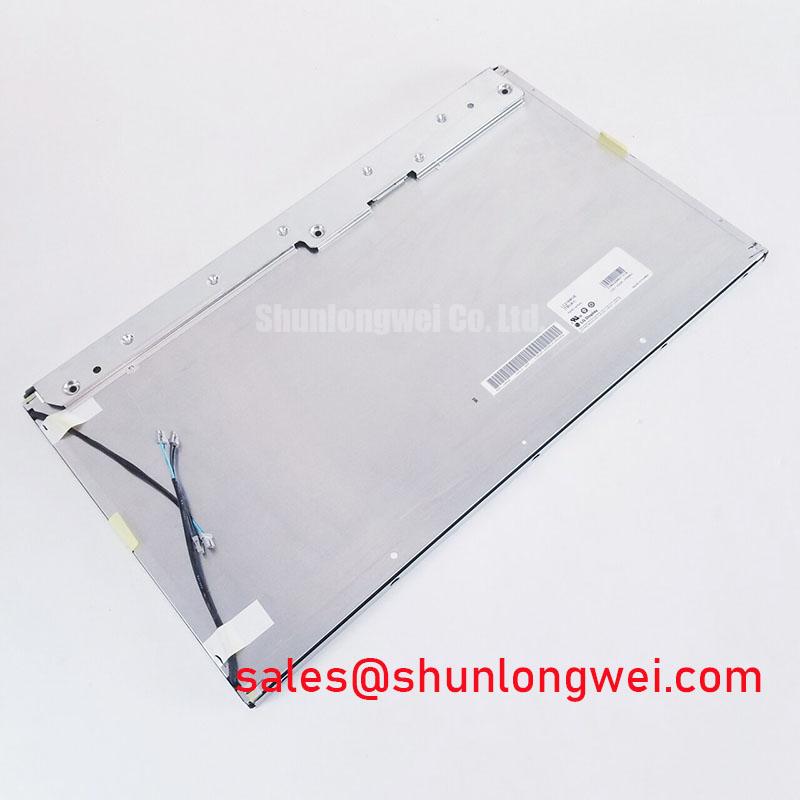
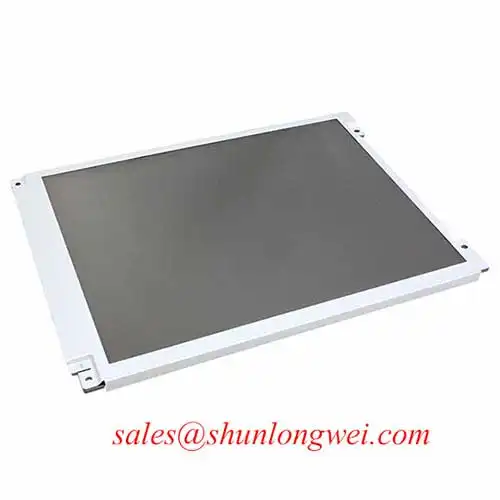
LG.Philips LCD LM151X3-B3PL 15.1-Inch TFT-LCD Display Panel
How do you source a reliable, drop-in 15.1-inch replacement screen for legacy industrial systems without redesigning the entire enclosure? Finding components that align with original hardware footprints and electrical specifications is a major bottleneck for engineers maintaining mature machinery. The LG.Philips LCD LM151X3-B3PL, a legacy active-matrix liquid crystal display, addresses this critical demand.
Providing a robust XGA display with 3H hard coating and TMDS interface, optimized for legacy industrial HMI drop-in integration.
Specs: 15.1-inch | 1024 x 768 | 250 cd/m².
Key Benefits:
- Legacy compatibility avoids enclosure redesigns.
- 3H antiglare surface withstands harsh environments.
The LM151X3-B3PL solves the challenge of finding a compatible TMDS single-link screen for aging industrial monitors, offering an exact mechanical fit. For legacy industrial control monitors requiring a 4:3 ratio and hard coating, this 15.1-inch module is the optimal choice.
Frequently Asked Questions
Addressing Integration and Maintenance Challenges for Legacy Displays
Can the LM151X3-B3PL serve as a drop-in replacement for other 15.1-inch industrial monitors?
Yes, provided the target system supports a Single Link TMDS interface and matches the 352 x 263.5 x 16.3 mm outline dimensions. System engineers should verify both physical and electrical pin configurations prior to installation.
How does the 3H hard-coated antiglare surface impact performance in industrial environments?
The 3H hard coating protects the screen from physical scratching caused by stylus pens or debris. The antiglare treatment diffuses ambient light, reducing reflections and maintaining high legibility in brightly lit workspaces.
What are the electrical power requirements and signal connector types for this LCD panel?
It operates on a flexible 3.3V or 5.0V logic supply with a low power consumption of 2.1W to 3.0W. It connects via two distinct interfaces: a 20-pin DF19K-20P-1H and a 14-pin DF19L-14P-1H connector.
What backlight technology does the LM151X3-B3PL use, and what is its typical lifespan?
This model is equipped with a dual CCFL (Cold Cathode Fluorescent Lamp) edge-light assembly. Under standard operating conditions, the lamps provide a minimum service life of 30,000 hours before brightness drops to half.
How does the 300:1 contrast ratio and 250 cd/m² brightness affect its readability?
These specifications are optimized for indoor operations. They ensure that text-heavy industrial GUIs remain sharp and legible without generating excess heat inside sealed industrial enclosures.
Key Parameter Overview
Decoding the Mechanical and Optical Specs of LM151X3-B3PL
| Technical Specification | Value | Engineering & Design Value |
|---|---|---|
| Panel Model | LM151X3-B3PL | Guarantees exact replacement form-factor compatibility. |
| Display Size | 15.1-inch | Standard sizing for mature HMI frames. |
| Resolution | 1024 x 768 (XGA) | 4:3 aspect ratio aligns with legacy manufacturing GUIs. |
| Signal Interface | Single Link TMDS | Ensures low-noise digital transmission. |
| Surface Treatment | Antiglare, Hard coating (3H) | Protects against touch-wear and reflections. |
| Luminance | 250 cd/m² | Provides sufficient contrast for control rooms. |
| Backlight Type | 2 x CCFL (Edge-light) | Offers a reliable 30,000-hour operational lifespan. |
| Supply Voltage | 3.3V / 5.0V (VCC / VDD) | Flexible logic input options for various controllers. |
Download the LM151X3-B3PL datasheet for detailed specifications and performance curves.
Technical & Design Deep Dive
Mechanical Ruggedness and TMDS Signal Integrity in Industrial Environments
The mechanical architecture of the LM151X3-B3PL is tailored to withstand the physical demands of factory environments. Its polarizer features a hard coating (3H) surface treatment. This protective layer functions like a smartphone screen protector integrated directly into the display structure, creating an abrasion-resistant barrier that shields the underlying soft liquid crystal material from harsh industrial contact.
What is the primary benefit of the 3H coating? It prevents physical wear and scratches in industrial environments.
Furthermore, the electrical subsystem utilizes a Single Link TMDS interface. TMDS (Transition Minimized Differential Signaling) operates similarly to a high-speed highway with dedicated lanes and noise barriers. By transmitting signals differentially, it isolates and cancels out electromagnetic noise from adjacent industrial machinery, ensuring high-fidelity data transmission.
How does the TMDS interface benefit engineers? It reduces electromagnetic interference in high-noise plant environments.
This level of signal integrity prevents pixel jitter and display corruption, which are common issues when operating legacy screens near variable frequency drives or high-power motors.
Application Scenarios & Value
Ensuring Drop-In Reliability for Legacy Control Panels and Manufacturing Lines
In industrial automation, retrofitting obsolete displays is a persistent operational challenge. For instance, when a screen fails on an older CNC workstation or chemical processing terminal, replacing the entire display assembly and updating the enclosure can incur thousands of dollars in tooling and engineering costs. The LM151X3-B3PL provides a direct solution by maintaining the standard 15.1-inch active area and a 1024 x 768 resolution.
This native 4:3 aspect ratio aligns perfectly with older graphical user interfaces. Because it features a legacy single-link TMDS interface, it eliminates the need for modern converter boards, allowing direct connection to legacy controllers. With its dual CCFL lamp arrangement, the display works smoothly with standard industrial CCFL backlight inverters, ensuring rapid restoration of terminal functionality.
While the LM151X3-B3PL is ideal for standard 15-inch configurations, systems requiring modern widescreen displays can utilize the LM215WF3-SLA1 for larger Full HD applications, or the G150XTN04.0 for systems transitioning to high-brightness LED-backlit screens.
For details on TFT-LCD technology in industrial control, refer to the ultimate guide to TFT-LCD. Additionally, understanding the differences between legacy technologies and modern panels is discussed in TN vs IPS display selection guide. For a full analysis of long-term costs, see the guide on industrial vs consumer displays TCO.
To ensure long-term stability, we recommend sourcing displays that feature standard TN, normally white transmissive operating modes. This keeps power consumption low and ensures uniform color reproduction when viewed at a standard viewing angle. The panel’s underlying TFT-LCD structure guarantees consistent pixel response times, preventing ghosting on dynamic monitoring dashboards.
When evaluating this module for legacy systems, design engineers should measure signal alignment and enclosure spacing to ensure seamless drop-in compatibility.