

Content last revised on January 31, 2026
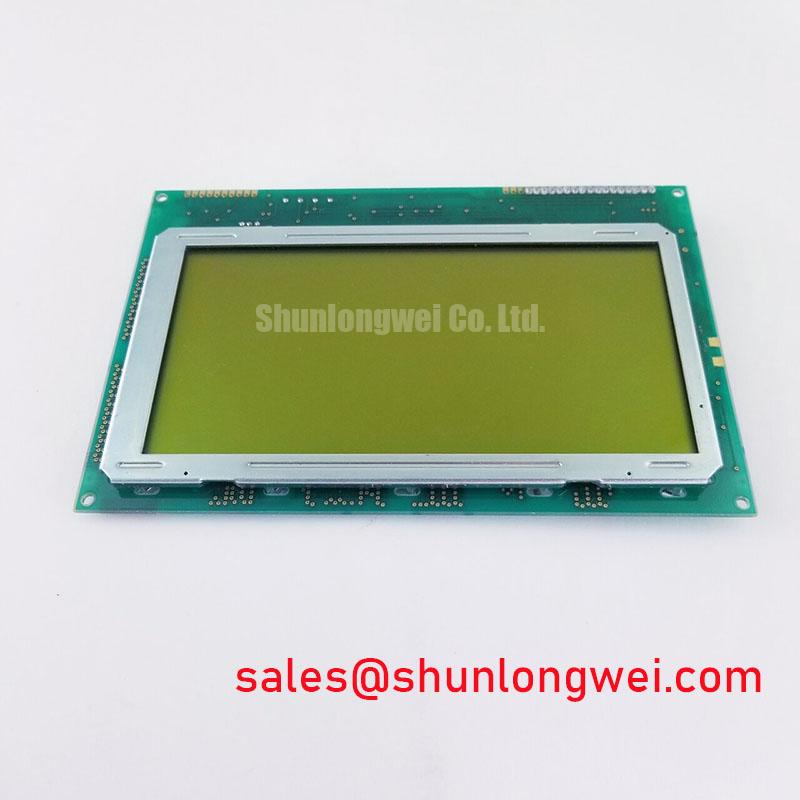
LM238XB: 5.9-inch STN Monochrome Graphic Display Module for Industrial Instrumentation
Application Scenarios & Value
Delivering Essential Readability for Instrumentation and Control Systems
The Hitachi LM238XB is a 5.9-inch STN (Super-Twisted Nematic) monochrome liquid crystal display module engineered for clear and reliable data presentation in industrial applications. Its 240x128 pixel resolution provides the necessary detail for displaying alphanumeric characters, simple graphics, and system status indicators. The primary value of the LM238XB lies in its straightforward integration and focused functionality, making it a durable choice for equipment where essential data must be conveyed without the complexity or power requirements of a full-color TFT display. For systems requiring a much higher resolution and full-color capabilities for advanced graphical user interfaces, a panel such as the G238HAN01.0 may be a relevant consideration.
Its robust design is well-suited for deployment in environments such as factory floor control panels, test and measurement equipment, and point-of-sale terminals. The module's integrated HD61830 controller simplifies the design process by managing the display logic, reducing the overhead on the host processor. What is the primary benefit of its integrated controller? A streamlined development cycle and reduced system complexity. This focus on essential, reliable performance makes it an effective component for systems where operational uptime and clarity are paramount.
Key Parameter Overview
Decoding the Specs for System Integration and Reliability
The technical specifications of the Hitachi LM238XB are tailored for long-term performance in dedicated industrial and commercial equipment. The parameters underscore a design philosophy centered on reliability and ease of use over cutting-edge display features, ensuring predictable behavior and longevity in the field.
| Parameter | Specification | Engineering Value & Interpretation |
|---|---|---|
| Display Type | STN-LCD, LCM (Yellow/Green, Positive Mode) | Provides high-contrast, monochrome readability that is energy efficient and clearly visible under typical indoor lighting conditions. The "Yellow/Green" mode is a classic choice for instrumentation due to its comfortable viewing characteristics. |
| Resolution | 240 x 128 Pixels | Offers sufficient screen real estate for basic graphical user interfaces, multiple lines of text, and status icons without overwhelming the system's processing capabilities. Think of it as a digital canvas perfectly sized for essential machine data. |
| Active Area | 131.95(W) × 70.35(H) mm | The physical display area available for the user interface. This dimension is critical for mechanical enclosure design and ensuring the user interface elements are appropriately scaled. |
| Signal Interface | 8-bit Parallel, 20 pins | A widely understood and straightforward interface, allowing for direct connection to many microcontrollers without complex signal conversion. This simplifies hardware design and firmware development. |
| Built-in Controller | HD61830 or compatible | This integrated controller LSI is the module's brain, handling tasks like RAM management and character generation. This offloads the main system CPU, simplifying software and freeing up resources for the primary application tasks. |
| Operating Temperature | 0°C to 40°C | Defines the ambient temperature range for reliable operation, suitable for controlled indoor industrial, commercial, and laboratory environments. Systems intended for wider temperature ranges would require different display solutions. |
Download the LM238XB datasheet for detailed specifications and performance curves.
Technical Deep Dive
A Closer Look at the Integrated Controller and Parallel Interface
The integration of the Hitachi HD61830 controller is a defining feature of the LM238XB module. This component acts as a bridge between the system's microprocessor and the raw LCD panel. For a design engineer, this is a significant advantage. Instead of managing pixel-level data, refreshing timings, and voltage generation, the engineer sends high-level commands and ASCII data to the controller via the 8-bit parallel interface. This is analogous to having a dedicated co-processor for the display; it simplifies the software architecture and allows the main processor to focus on its core functions, whether that's controlling a motor, processing sensor data, or managing a network connection. The 8-bit parallel data bus is a classic, robust communication method in embedded systems. While not as high-speed as modern serial interfaces like LVDS, its simplicity reduces potential points of failure related to signal integrity and EMI, a crucial consideration in many industrial environments. This makes the LM238XB a highly deterministic and reliable human-machine interface component.
Frequently Asked Questions (FAQ)
What type of applications is the LM238XB's 240x128 resolution best suited for?
The 240x128 resolution is ideal for applications that require clear, concise information display rather than complex graphics. This includes industrial control panels, medical monitoring devices, measurement instruments, and legacy system upgrades where a simple, robust HMI is needed to show text, status indicators, and basic graphical elements.
How does the built-in HD61830 controller simplify system design?
The integrated HD61830 controller handles all the low-level tasks of driving the LCD, such as managing display RAM, generating timing signals, and handling command instructions. This significantly reduces the software development burden on the host system's main processor and simplifies the hardware connection, leading to a faster and more straightforward integration process.
What is the significance of the STN (Super-Twisted Nematic) display technology?
STN is a mature and cost-effective passive-matrix LCD technology known for its low power consumption and high contrast in monochrome applications. Unlike active-matrix TFT displays, it does not require a backlight for visibility in well-lit conditions (though one can be added), making it an energy-efficient choice for battery-powered or power-sensitive equipment.
What are the key considerations for connecting the 8-bit parallel interface?
When connecting the 8-bit parallel interface, engineers should ensure the signal path lengths from the microcontroller to the display's 20-pin connector are reasonably matched to avoid data timing skew. It's also important to ensure the logic voltage levels of the microcontroller (e.g., 5V TTL) are compatible with the display's specified input high (VIH) and input low (VIL) voltage requirements.
Is the LM238XB suitable for outdoor or harsh environments?
With a specified operating temperature range of 0°C to 40°C, the LM238XB is designed primarily for indoor, controlled environments. It is not rated for direct sunlight exposure, extreme temperatures, or high-moisture conditions found in harsh outdoor applications. For such demanding use cases, specialized industrial displays with wider temperature ranges and higher IP ratings should be evaluated.
Engineering Perspective
From an engineering standpoint, the Hitachi LM238XB represents a class of components focused on executing a specific task with high reliability. Its value is not in a long list of features, but in its proven architecture. The combination of an STN panel with an integrated controller and a standard parallel interface creates a low-risk, predictable solution for adding an essential HMI to a wide array of industrial and instrumentation products. This module is a workhorse, designed for systems where clarity, simplicity, and long-term operational stability are the most critical design criteria.