Content last revised on October 24, 2026
Eye-Diagram Voltage Margin & Differential Noise Floor Verification in High-Vibration Bays
Pixel jitter and horizontal noise bands near variable-frequency motor drives should be investigated at the complete signal path rather than at the LCD glass alone. First isolate whether the host controller uses LVDS, TTL, or another display interface, then compare the signal at the source and at the panel connector with the machine operating in its normal motor-switching state.
When the host uses LVDS, inspect the differential pair routing, return path, connector seating, and cable shield termination. A 360-degree shield connection can reduce the exposed loop area, while common-mode filtering may help when conducted or radiated noise couples into the display harness. These are Design Considerations, not confirmed internal features of the LP150X05-A2K3. The filter selection and grounding arrangement remain system-level decisions because excessive filtering can also affect edge shape and timing margin.
Use an eye-diagram measurement to compare opening height, crossing symmetry, and edge displacement against a known-good machine or the original display assembly. If the panel documentation specifies LVDS mapping, verify whether the source follows JEIDA or VESA data ordering before changing the cable. A visually similar connector does not prove that the color-bit arrangement or clock polarity is compatible.
Ambient light evaluation should be performed with the display installed behind its actual window, bezel, and protective cover. A contrast target such as greater than 500:1 at 50,000 lux may be used as a Design Consideration for a sunlight-exposed control station, but it must not be treated as an official rating for this model without the applicable AUO specification. Check glare, black-level lift, and text readability while the drive cabinet and display backlight operate together.
💡 Pro Tip: Keep the differential pair reference path continuous and control pair-length mismatch during cable replacement, then confirm pixel-clock stability at the panel connector rather than relying only on a static desktop image.
For broader enclosure, grounding, and HMI integration context, review Industrial Display & HMI Solutions when assessing the complete installation rather than treating the panel as an isolated noise-control device.
Surface Anti-Glare (AG) & Anti-Reflective (AR) Etched Coating for High Ambient Readability
High-ambient readability depends on the optical stack, cover window, viewing direction, image gamma, and surrounding reflections. Do not infer an AG or AR treatment from the product model number. During incoming evaluation, inspect the installed panel at the operator’s normal eye position and compare dark-screen reflections, white-screen uniformity, and grayscale legibility under the same lighting conditions used by the machine operator.
Viewing-angle behavior also requires identification of the actual panel technology. TN panels can show grayscale inversion or color changes away from the normal axis, while IPS and MVA designs may provide different viewing-angle behavior. These are technology-level comparisons, not confirmed construction details for the LP150X05-A2K3. The optical behavior should be checked against the original panel documentation and a physical sample.
For background on how liquid-crystal viewing angle affects perceived image quality, consult Viewing Angle Characteristics in LCDs. The same inspection should include the bezel aperture: small shifts in panel position can expose reflective edges, reduce usable image area, or alter the operator’s viewing axis.
| Evaluation point | LP150X05-A2K3 identity | Replacement candidate checkpoint |
|---|---|---|
| Manufacturer | AUO | Must match the approved equipment documentation |
| Product category | Industrial Grade LCD/HMI Panel | Must support the intended HMI application |
| Display construction | TFT-LCD active matrix color display module | Confirm optical and timing compatibility |
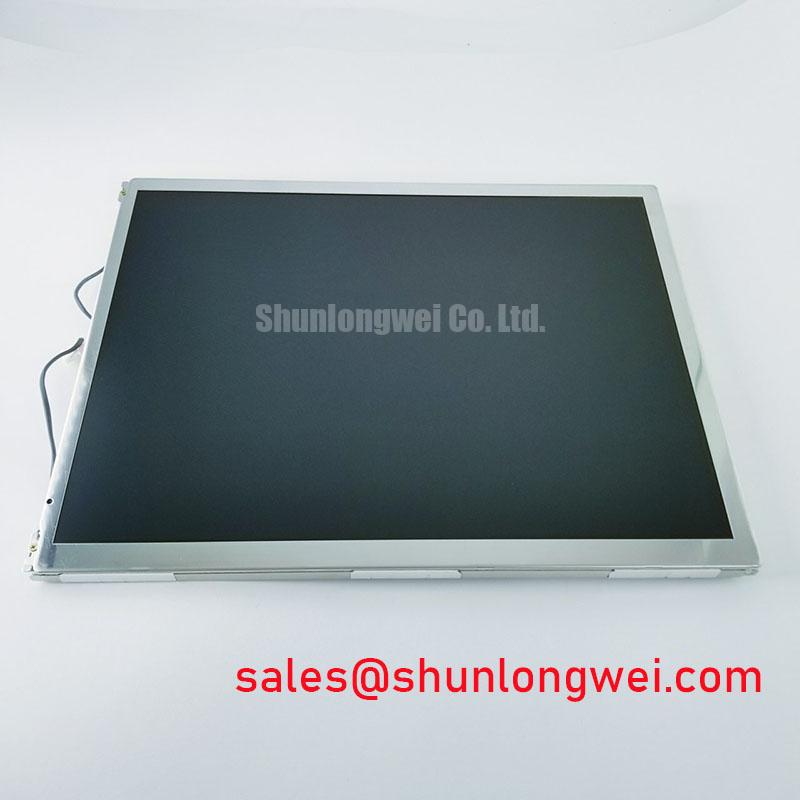
| Form factor status | Decoded baseline / standard form factor | Compare mounting and bezel dimensions with the installed unit |
| Interface and backlight | Verify from original panel documentation | Do not assume connector pinout, supply, or backlight type |
High-speed interface validation should include differential impedance and skew analysis where the host documentation calls for it. A 100 Ω differential target with a ±10% tolerance and a 50 ps skew budget may be used as a Design Consideration for an LVDS design review, but the system engineer must apply the limits specified by the controller, cable, and receiver combination. The panel category alone does not establish those electrical values.
Mitigating Gray-to-Gray Response Time Escalation during Cold-Start Machine Power-Up
Cold-start image lag is commonly assessed by observing gray-to-gray transitions during the complete power-up sequence, especially when the machine enclosure is exposed to sub-zero conditions. Liquid-crystal viscosity can change with temperature, so a static image test may appear normal while moving text, alarm banners, or tool-position graphics show transition smearing.
Evaluate the display after the host controller, timing-control board, and backlight reach their normal operating state. The T-CON timing sequence, grayscale voltage generation, gamma correction, and source-driver behavior should be compared with the original panel assembly. Do not alter gamma settings to compensate for a timing mismatch; first confirm that the incoming pixel format, synchronization signals, and power-up order are aligned.
An operating range such as −30°C to +85°C must be treated as an application evaluation boundary unless it is explicitly listed in the applicable product documentation. Thermal cycling can also affect perimeter sealing, bezel pressure, connector retention, and optical uniformity. Inspect for localized haze, edge leakage, intermittent lines, or mechanical stress after the enclosure reaches its cold and hot conditions.
Backlight assessment should separate image-response behavior from illumination decline. If the assembly uses LED backlighting, evaluate the constant-current driver, thermal distribution behind the panel, local bright spots, and dimming response. A claimed half-brightness life such as 50,000 hours is a source-controlled reliability value and should not be assigned to this model without the relevant manufacturer test conditions. If the original unit uses another backlight architecture, the system integrator should verify the required supply and driver arrangement from the original panel documentation.
The amorphous silicon TFT technology reference is useful when reviewing general TFT switching behavior, but it should not be used to infer undocumented internal construction or performance limits for this AUO display.
CCFL High-Voltage Resonant Inverter Striking Voltage & Ignition Debugging
Backlight troubleshooting must begin by identifying whether the installed LP150X05-A2K3 assembly is paired with a CCFL inverter or an LED constant-current driver. The product identity supplied for this listing does not establish either architecture, so a technician should compare the original inverter label, harness, connector pinout, and host backlight-control signals before applying power.
For a CCFL system, cold ignition behavior involves a high-voltage resonant circuit, lamp balance, inverter feedback, and insulation clearance. A proposed striking range of 1,500 to 1,650 Vrms is not an official LP150X05-A2K3 rating and must not be applied as a universal repair target. Use the inverter manufacturer’s test procedure and suitable high-voltage instrumentation. Acoustic buzz may result from magnetic, mechanical, or control-loop behavior, so correlate sound with lamp current, brightness stability, and enclosure resonance.
For an LED system, inspect the constant-current driver enable signal, dimming method, thermal path, and current regulation during cold start. A 1,000:1 PWM dimming ratio or a 200 Hz to 1 kHz control frequency may be used as a system-level evaluation reference only when supported by the driver and controller documentation. Check duty-cycle linearity, visible flicker, and audible artifacts at the actual operating brightness rather than assuming compatibility from connector fit.
Disconnect power before removing the display harness, and allow the inverter section to discharge according to the equipment service procedure before touching the backlight connector.