Content last revised on September 10, 2026
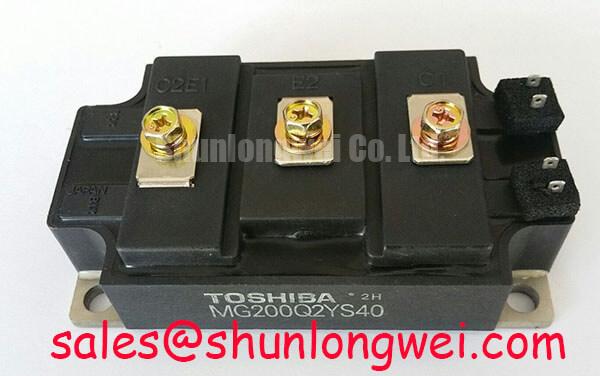
MG200Q2YS65H Toshiba Dual IGBT Module: 1200V 200A Power Control
Constructed to deliver uncompromising thermal reliability, the Toshiba MG200Q2YS65H provides robust power control with a 2.5kV isolated baseplate to simplify cooling and enhance system longevity in heavy-duty inverters. This silicon N-channel IGBT features a 1200V and 200A rating, alongside a typical VCE(sat) of 3.0V. By leveraging these metrics, engineers achieve lower conduction losses and streamlined EMC integration. What is the primary benefit of its 2.5kV isolated baseplate? It simplifies heatsink integration while ensuring robust electrical safety. For heavy-duty UPS inverters prioritizing thermal margin, this 1200V/200A module is the optimal choice.
Key Parameter Overview
Decoding the Specs for Enhanced Thermal Reliability
A systematic evaluation of the electrical and thermal characteristics reveals why this module excels in high-stress environments. The following high-lighted metrics dictate the core performance boundaries.
| Critical Specification | Rated Value | Engineering Implication |
|---|---|---|
| Collector-Emitter Voltage (VCES) | 1200V | Adequate voltage headroom for 400V–690V industrial AC line applications. |
| Continuous Collector Current (IC) | 200A | Sustains heavy continuous loads in high-power drives. |
| Peak Pulse Current (Icp) | 400A (1 ms) | Guarantees safety during transient overloads or motor startups. |
| Collector-Emitter Saturation Voltage | 3.0V (typ. at 200A, 25°C) | Minimizes static power dissipation, directly reducing thermal load. |
| Isolation Voltage | 2.5kVRMS / 1 min | Facilitates direct heatsink mounting without compromising safety. |
| Module Weight | Approx. 430g | Reflects a heavy-duty physical construction for mechanical durability. |
Download the MG200Q2YS65H datasheet for detailed specifications and performance curves.
Application Scenarios & Value
Achieving System-Level Benefits in High-Frequency Power Conversion
Engineers consistently face the challenge of managing transient thermal loads in systems like industrial motor drives (VFD) and heavy-duty servo drives. The MG200Q2YS65H addresses this directly through its robust thermal mass and isolated package. In UPS inverter stages, the equipment must handle sudden current spikes when transferring from grid to battery power. The ability of this module to withstand a 400A peak pulse for 1 ms ensures that these critical transitions occur without silicon failure.
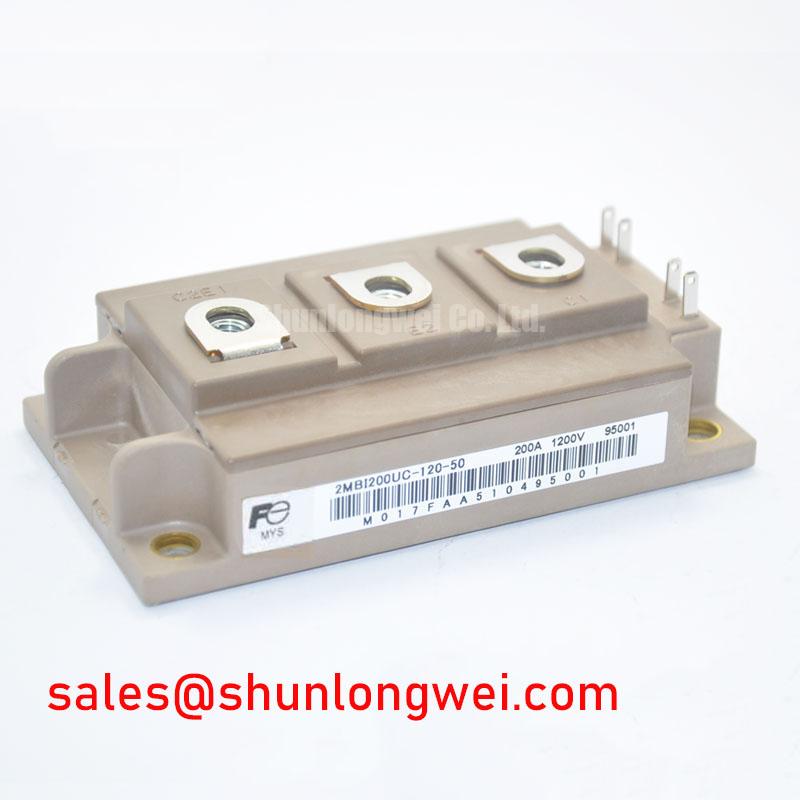
Furthermore, maintaining compliance with strict IEC 61800-3 emission standards requires careful chassis layout. The 2.5kV isolated baseplate allows designers to bolt the module directly to a grounded heatsink, substantially reducing parasitic capacitance loops and simplifying the overall grounding architecture. While this module excels in mainstream 1200V applications, systems demanding alternative footprint geometries might consider the CM200DY-24A or the 2MBI200U4D-120 for comparable 200A handling capabilities.
Technical Deep Dive
A Closer Look at the Isolated Baseplate and Commutation Dynamics
The internal architecture of the MG200Q2YS65H relies on a dual IGBT half-bridge topology paired with fast antiparallel free-wheel diodes. This configuration is pivotal for modern power stages. The 2.5kV isolated baseplate functions as a thermal highway with a high-voltage guardrail, allowing heat to escape rapidly into the heatsink while strictly blocking hazardous electrical currents. This structural advantage is highly critical when mastering IGBT thermal management in confined industrial enclosures.
Equally critical is the reverse recovery performance of the integrated diodes. Exhibiting a reverse recovery time (trr) of just 0.1 µs, the diode acts like a high-speed mechanical valve that snaps shut instantly. This mechanism prevents electrical reverse flow and drastically minimizes switching energy waste during the freewheeling phase. Lower dynamic losses mean less stress on the cooling infrastructure, making this module a highly efficient engine for high-frequency switching tasks.
Frequently Asked Questions
Expert Answers on Deployment and Performance
- How does the 2.5kV isolated baseplate directly improve inverter design?
The isolation barrier allows the silicon substrate to be electrically separated from the external cooling block. This permits direct bolting to a grounded, common heatsink, which reduces the overall thermal resistance and simplifies structural assembly without risking short circuits. - What makes the 400A peak pulse rating critical for motor drives?
During initial motor startup or sudden mechanical jamming, inductive loads draw a massive inrush current. The 400A (1 ms) rating provides a vital safety buffer, preventing the silicon from entering thermal runaway during these momentary but severe overload events. - How does the VCE(sat) of 3.0V impact overall cooling requirements?
A typical 3.0V saturation voltage at a continuous 200A translates to roughly 600 watts of static conduction loss. This relatively low figure allows designers to utilize smaller, more cost-effective cooling solutions compared to older generation modules with higher voltage drops.
Navigating the complexities of modern power conversion demands components that guarantee both electrical and physical resilience. By integrating high-speed commutation with a structurally sound thermal path, this module secures long-term operational stability. For engineers seeking a deeper practical guide to voltage, current, and thermal management or advanced Thermal Design principles, prioritizing robust baseline specifications remains the cornerstone of superior system architecture.