


Content last revised on November 6, 2026
MG25Q2YS40 Identification and Repair Assessment
- Isolate the power stage, verify DC-link discharge, and compare cold-state collector, emitter, and gate measurements with the equipment’s service procedure.
- Trace each gate connection and its emitter return against the module circuit drawing before reconnecting the driver.
- Inspect the mounting surface, thermal interface, terminal seating, and surrounding insulation clearances.
- Check auxiliary driver supplies and hardware inhibit signals with high-voltage power disconnected.
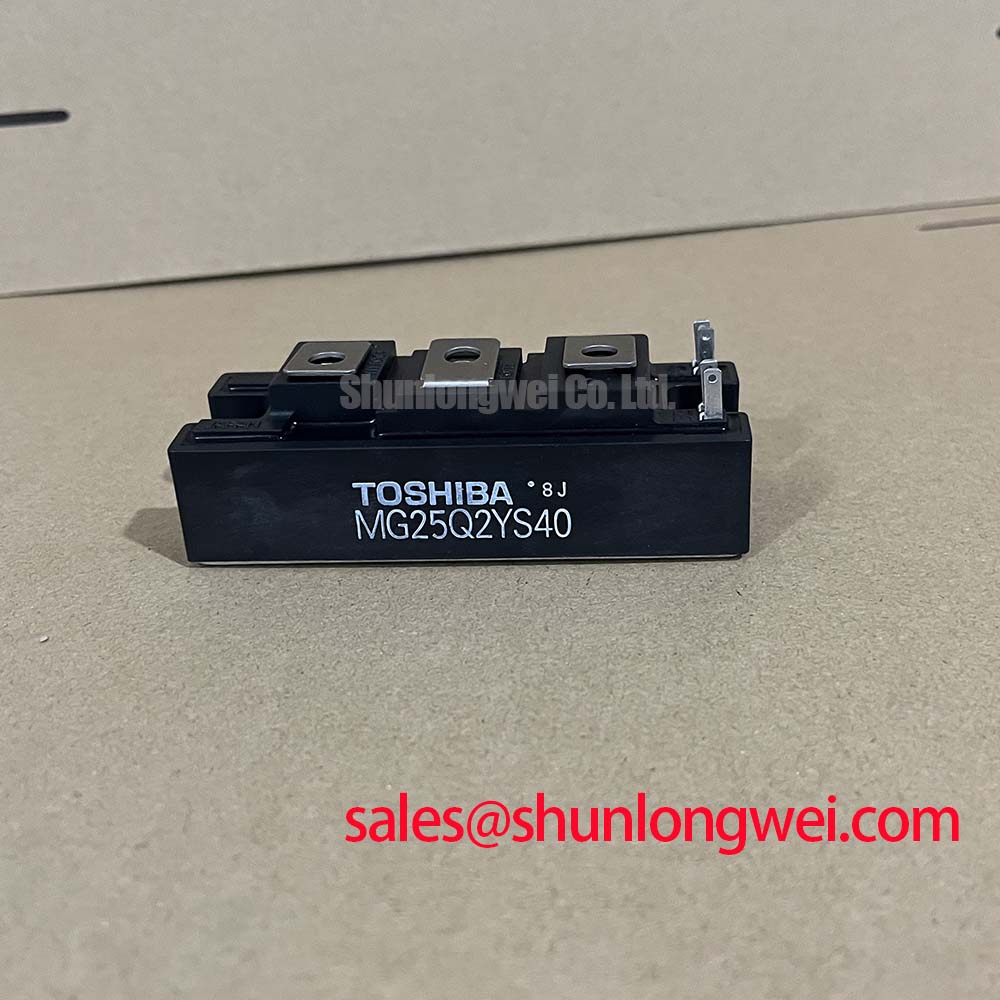
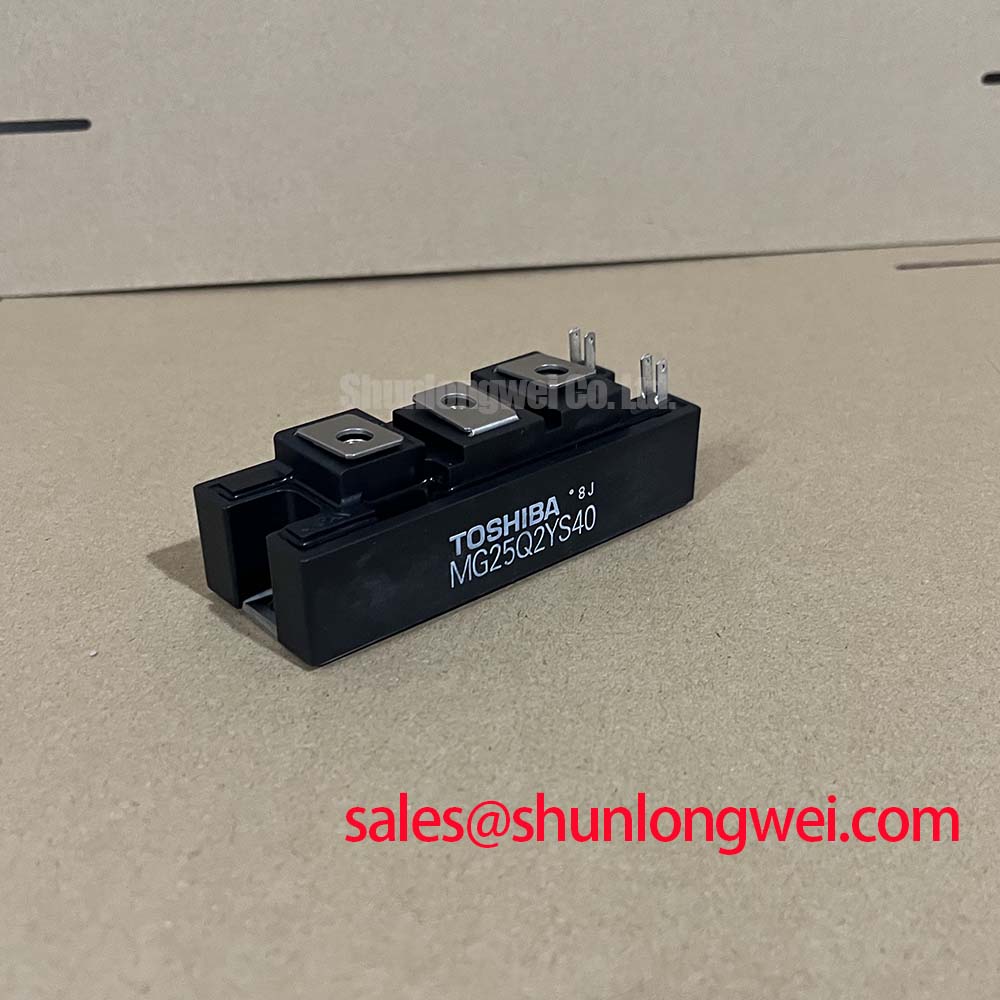
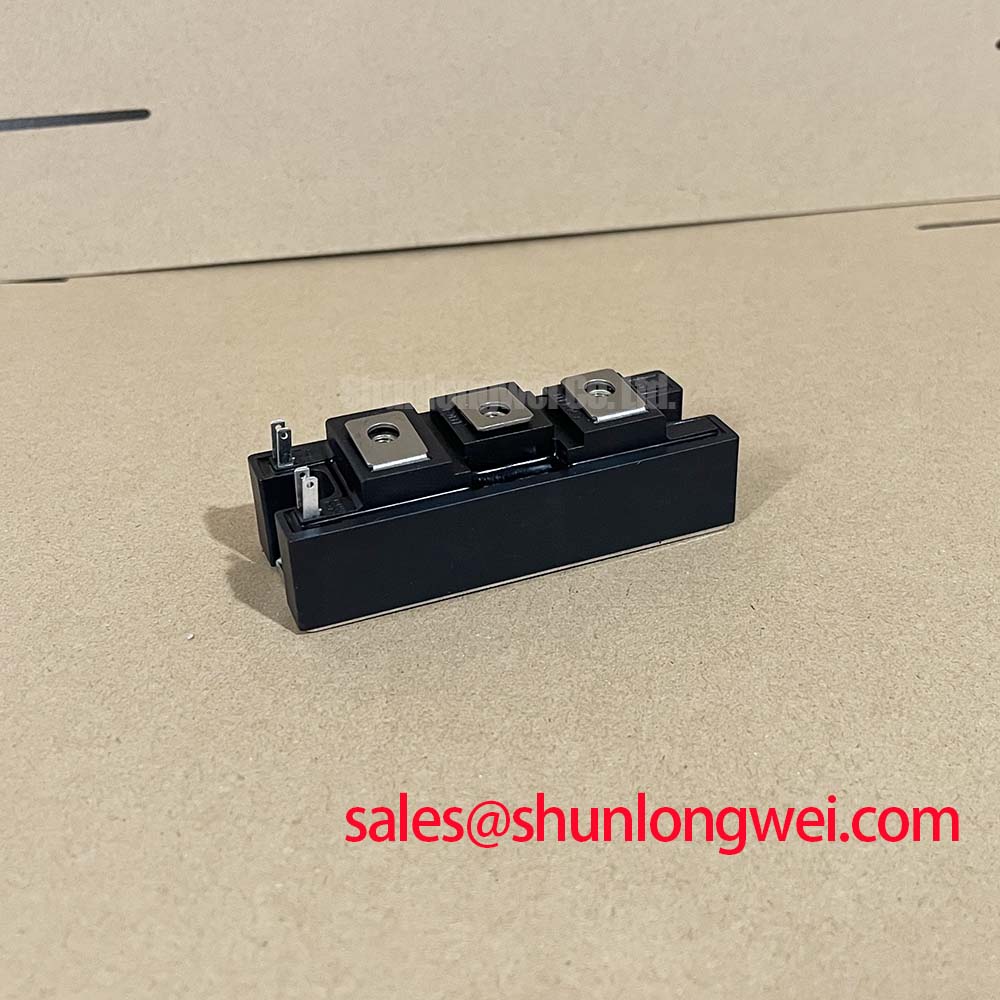
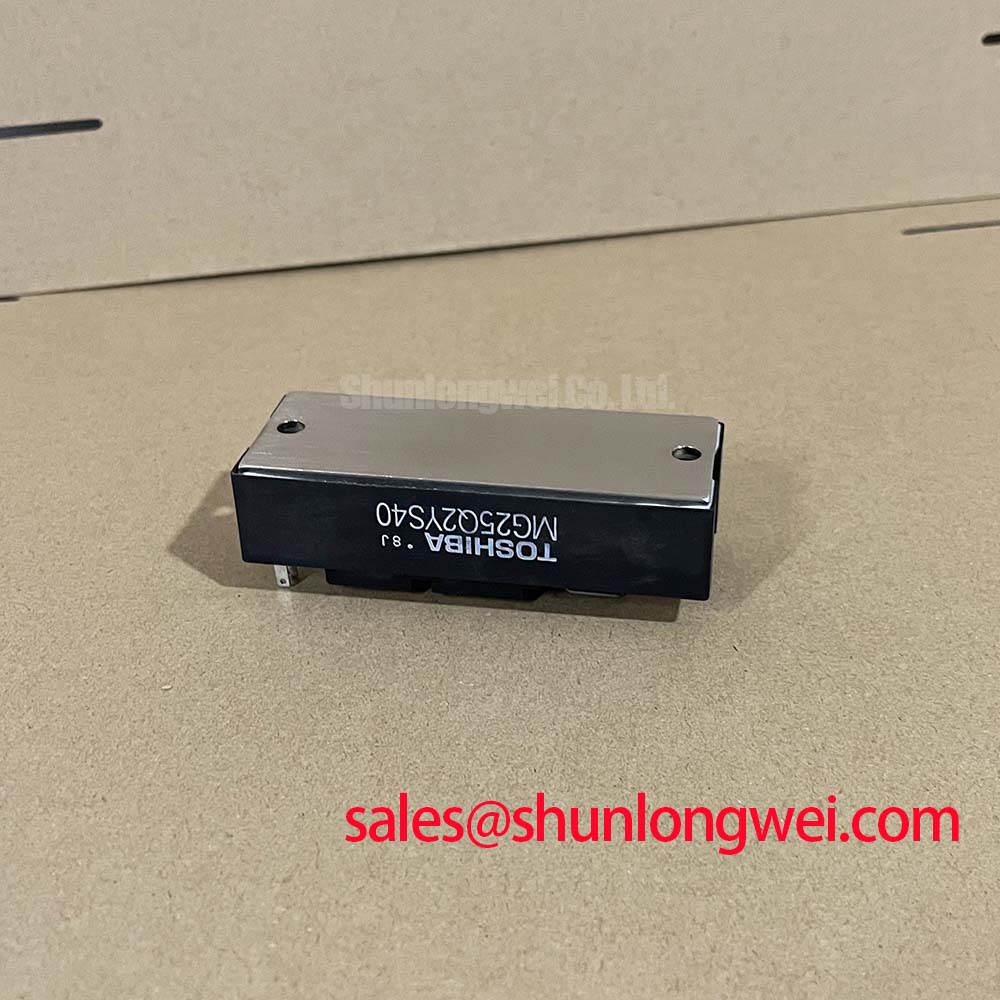
Use the MG25Q2YS40 Toshiba IGBT module identification and electrical limits below to anchor the repair assessment. Toshiba describes this device as an enhancement-mode, silicon N-channel IGBT module containing a complete half bridge. The product identity fields distinguish the searchable package and configuration descriptions from the electrical ratings. (Toshiba datasheet)
| Product Identity | Value |
|---|---|
| Manufacturer | Toshiba |
| Part Number | MG25Q2YS40 |
| Product Category | IGBT Module |
| Package | Toshiba Module |
| Configuration / Topology | IGBT Power Stage |
| Official Specification | Value | Condition or Classification |
|---|---|---|
| Collector-Emitter Voltage (Vces) | 1200.0 V | Maximum rating |
| Continuous Collector Current (Ic) | 25.0 A | DC collector-current rating under the datasheet’s specified conditions |
| Gate-Emitter Voltage | ±20 V | Absolute maximum rating |
| Pulsed Collector Current | 50 A | 1 ms pulse rating |
| Collector Power Dissipation | 250 W | Per IGBT; case temperature 25°C |
| Collector-Emitter Saturation Voltage | 3.0 V typical; 4.0 V maximum | Collector current 25 A; gate-emitter voltage 15 V |
| Fall Time | 0.5 µs maximum | Specified switching-test conditions |
These electrical entries are Official Specifications, not recommended simultaneous operating points. In particular, the gate-voltage limit is not a gate-drive setting, and the dissipation rating depends on the stated case-temperature condition. (Toshiba datasheet)
MG25Q2YS40 Operational Boundaries: Evaluating Dynamic Gate Impedance Control for Robust Limits
Capture the off-state gate-emitter waveform while the opposite switch commutates, using a measurement arrangement suitable for the switching node’s common-mode voltage. As a Design Consideration, correlate any positive gate excursion with collector voltage and current rather than diagnosing shoot-through from gate ringing alone. Collector-to-gate capacitive coupling can inject current into the off-state drive path; the resulting gate excursion depends on that path’s impedance. (Analog Devices)
An active Miller clamp provides a local, low-impedance route for this displacement current after the gate has entered its off-state region. Its usefulness depends on the selected driver’s clamp threshold, current capability, operating supply conditions, and connection geometry. Engineering Recommendation: place the clamp connection close to the module gate and return it to the associated emitter reference, avoiding a long shared path through the control board. The clamp is external driver functionality, not an integrated feature claimed for MG25Q2YS40. (Infineon)
Negative gate bias is another system-level approach to increasing resistance to unwanted turn-on. Its magnitude should follow the selected driver architecture and switching evaluation, with gate excursions remaining inside the module’s absolute limits. A negative supply does not remove the need to examine turn-off impedance or common-emitter inductance. As a Design Consideration, compare the local gate-emitter voltage with the driver output waveform to distinguish gate-loop behavior from noise introduced by shared current-return wiring. (Infineon)
Keep the outgoing gate conductor and its emitter return closely coupled, and separate this loop from the high-current commutation path. Engineering Recommendation: review driver decoupling, connector routing, and return continuity before changing gate resistance. A stronger driver connected through an inductive loop can leave the local gate waveform poorly controlled. Source and sink capability should be assessed against gate-charge behavior and the complete drive-path impedance, not selected from the module’s collector-current rating. (Infineon)
Dead time addresses commanded overlap, whereas Miller suppression addresses unwanted turn-on during an intended off interval. As a Design Consideration, evaluate propagation-delay differences, actual current decay, and controller timing together. The published fall-time limit is a characterization result, not a standalone dead-time prescription. Record both gate commands and power-stage current when assessing overlap, and retain the driver’s documented hardware interlock behavior during the test. (Mitsubishi Electric)
For broader device-family context, STMicroelectronics STPOWER IGBTs & Power Transistors provides a manufacturer reference on IGBT offerings and application positioning. It is useful for understanding selection categories, but its device characteristics do not transfer to this Toshiba module or establish interchangeability. (STMicroelectronics)
MG25Q2YS40 Thermal-Electrical Optimization: Diode Softness and Practical Tuning
Observe freewheeling-diode current during commutation before attributing a turn-on current peak entirely to the IGBT. As a Design Consideration, reverse recovery can add a transient current component when the opposite transistor turns on. Evaluate the peak, recovery shape, and associated voltage ringing under controlled conditions; a single current peak does not independently establish diode damage or excessive recovery severity. Gate-controlled commutation speed influences this interaction. (Danfoss)
Diode softness describes the shape of the recovery transition, not simply its duration. Engineering Recommendation: document the waveform intervals and measurement convention before assigning a softness factor, and compare captures at matching current, temperature, and commutation conditions. Gate-resistor tuning changes the imposed switching conditions; it does not create a new guaranteed intrinsic diode specification. For this product assessment, keep measured recovery behavior separate from published device ratings. (Danfoss)
The turn-on gate resistor influences the transistor’s switching energy and the opposite freewheeling diode’s recovery stress. As a Design Consideration, increasing turn-on resistance can moderate commutation, but the accompanying switching-loss change must also be evaluated. Separate turn-on and turn-off paths allow these transitions to be adjusted independently where the driver supports them. Select resistance through controlled waveform and loss comparisons rather than transferring a value from an unrelated module. (Danfoss)
Assess driver sourcing and sinking performance at the actual output swing and operating temperature. Engineering Recommendation: include output-stage voltage drop, external resistance, and supply behavior when reviewing available gate current. A headline peak-current rating does not describe every point of the switching transition. Confirm that resistor pulse loading and driver dissipation remain acceptable during the intended switching pattern, including repeated operation rather than only isolated test pulses. (Infineon)
An RC snubber is a system-level damping option when measured commutation ringing warrants it. As a Design Consideration, its placement and interconnect inductance matter alongside component selection. Assess the resulting voltage peak, damping, and additional dissipation under the same test conditions used for the unsnubbed circuit. Reduced ringing at one measurement point does not establish equipment-level EMC compliance; emissions assessment belongs to the assembled equipment and its applicable test arrangement. (Mitsubishi Electric)
Practical design reminder: keep commutation busbar outgoing and return paths closely coupled and geometrically balanced, then assess turn-off voltage margin through controlled double-pulse testing. (Mitsubishi Electric)
Thermal evaluation should distinguish transistor conduction loss, transistor switching loss, and diode loss over the actual duty cycle. Engineering Recommendation: inspect heatsink contact and cooling performance alongside electrical measurements when investigating temperature rise. Shunlongwei’s High-Temperature IGBTs Technical Reference offers supplementary thermal background; it is not a manufacturer qualification report for this part. Use the module’s own thermal limits and equipment validation requirements when defining acceptance criteria, without assigning an unsupported operating-life estimate. (Toshiba datasheet)
Field Diagnostics & Commissioning: Driver Sequencing and Start-Up Inrush Mitigation in MG25Q2YS40 Topologies
Hold switching commands inhibited while checking that the driver’s auxiliary supplies and readiness signals settle into their documented operating states. As a Design Consideration, examine startup, shutdown, and interrupted-supply behavior separately. Undervoltage lockout protects against inadequate driver supply conditions, but its thresholds, monitored rails, and output response belong to the chosen driver. Do not assume that one UVLO indication supervises every rail in a bipolar supply arrangement. (Texas Instruments)
If the system uses negative turn-off bias, verify its availability before enabling high-voltage operation and examine its behavior during auxiliary-supply collapse. Engineering Recommendation: correlate supply rails, ready or fault signals, and gate-emitter voltage during sequencing tests. An active Miller clamp also has operating conditions and timing requirements; its presence on a schematic does not establish gate control while the driver is unpowered. The selected driver documentation determines the necessary inhibit and monitoring arrangement. (Texas Instruments)
Separate DC-link charging current from unintended power-stage conduction when investigating startup trips. As a Design Consideration, retain the equipment’s precharge and interlock functions while comparing the charging sequence with driver enable timing. Check whether the recorded event occurs before PWM release, during supply recovery, or after switching begins. This timing evidence helps distinguish charging-path behavior from a gate-control problem without treating an overcurrent indication as a unique diagnosis. (Mitsubishi Electric)
Short-circuit protection requires a coordinated response rather than reliance on the 50 A pulse rating. Engineering Recommendation: evaluate current or desaturation detection, blanking behavior, shutdown delay, and controlled turn-off against the device’s documented operating limits. Semiconductor-fuse clearing characteristics serve a different protection role from rapid gate shutdown. Do not infer an I²t withstand value, a short-circuit duration, or guaranteed fault containment from the collector-current rating. (Analog Devices)
For compatibility assessment, a compact industrial inverter or high-speed CNC spindle drive is a potential equipment context, subject to its original power-stage requirements. Review circuit arrangement, terminal assignment, mounting fit, cooling, driver behavior, and protection coordination together. The related Toshiba MG200J2YS1 is a comparison reference, not an established direct replacement: its published voltage and current class differs, so a shared brand does not establish electrical compatibility. (Toshiba datasheet)
Engineering Recommendation: release the repaired stage through the equipment’s controlled commissioning procedure, recording auxiliary-rail behavior, gate waveforms, collector-voltage peaks, and protection responses at each permitted operating condition. Preserve test conditions with the captures so later comparisons remain meaningful. If a fault recurs, use the recorded sequence to identify whether the first deviation occurs in the supply, gate drive, or power path before changing another component. (Mitsubishi Electric)