Content last revised on September 10, 2026
CM600HA-24A | 1200V 600A IGBT Module for High-Reliability Power Systems
Introduction to the CM600HA-24A High-Current IGBT
Engineered for Thermal Stability in Demanding Power Conversion
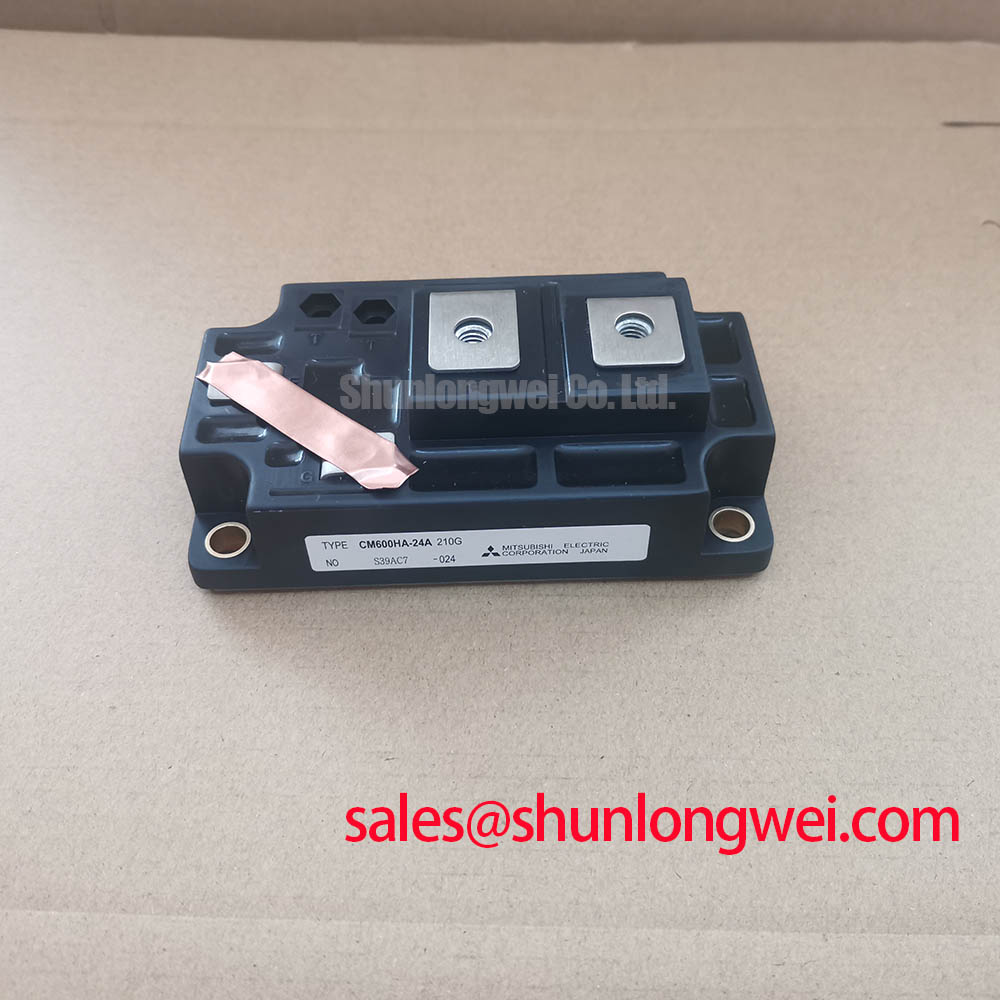
The Mitsubishi CM600HA-24A is a high-performance H-Series IGBT module designed for robust power switching applications. This 1200V IGBT module delivers exceptional 600A performance, architected specifically for superior thermal management and long-term operational reliability. Key specifications include a Collector-Emitter Voltage of 1200V, a continuous DC Collector Current of 600A, and a low junction-to-case thermal resistance of 0.042°C/W. Its core engineering benefits are excellent heat dissipation and the capability to support high power density designs. For engineers developing high-power industrial drives and power supplies, this module is an optimal choice where thermal stability is paramount for system longevity.
Key Parameter Overview
Decoding the Specs for Enhanced Thermal Reliability
The technical specifications of the CM600HA-24A are foundational to its performance in high-stress environments. The following parameters, drawn from the official datasheet, are critical for system design and thermal modeling.
| Parameter | Symbol | Conditions | Value |
|---|---|---|---|
| Collector-Emitter Voltage | VCES | VGE = 0V | 1200V |
| Gate-Emitter Voltage | VGES | VCE = 0V | ±20V |
| Collector Current (DC) | IC | TC = 25°C | 600A |
| Collector Current (Pulse) | ICP | 1ms pulse width | 1200A |
| Collector-Emitter Saturation Voltage | VCE(sat) | IC = 600A, VGE = 15V | 2.7V (Typ.) / 3.2V (Max.) |
| Thermal Resistance (Junction to Case) | Rth(j-c) | IGBT Part | 0.042°C/W |
| Thermal Resistance (Junction to Case) | Rth(j-c) | FWD Part | 0.07°C/W |
| Isolation Voltage | Visol | AC, 1 minute | 2500Vrms |
| Operating Junction Temperature | Tj | - | -40 to +150°C |
Download the CM600HA-24A datasheet for detailed specifications and performance curves.
Application Scenarios & Value
Achieving System-Level Benefits in High-Current Power Conversion
The CM600HA-24A is engineered for applications where current handling and thermal stability are non-negotiable. Its robust design makes it a primary choice for the power stages of large-scale industrial equipment.
- Variable Frequency Drives (VFD): In VFDs for multi-kilowatt motors, managing heat generated by continuous high currents is a primary engineering challenge. The module's low thermal resistance allows for more effective thermal management, ensuring the IGBT operates within its safe temperature limits, thereby preventing premature failure and costly system downtime.
- Uninterruptible Power Supplies (UPS): For data centers and industrial facilities, the reliability of a UPS system is critical. The CM600HA-24A provides the high-current switching capability needed for the inverter stage, while its thermal efficiency contributes to a longer operational life and reduces the cooling burden on the overall system.
- Welding Power Supplies: The high pulse current rating (1200A) allows the module to handle the demanding, cyclical loads characteristic of industrial welding applications, delivering consistent power without thermal degradation.
By focusing on efficient heat extraction, the CM600HA-24A enables designers to either shrink heatsink dimensions for a more compact system or increase the power output for a given thermal budget. For systems requiring lower current, the related CM400HA-24H offers similar voltage characteristics in a comparable package.
Technical Deep Dive
Analyzing Thermal Resistance for Enhanced System Longevity
A key differentiator for the CM600HA-24A is its thermal performance, quantified by the junction-to-case thermal resistance, Rth(j-c). What is the benefit of a low Rth(j-c)? Enhanced long-term reliability by minimizing thermal stress. The module's impressive Rth(j-c) of 0.042°C/W is not just a number; it is a direct indicator of the efficiency with which heat can be removed from the active silicon chip.
Think of thermal resistance as the width of a highway for heat. A lower Rth(j-c) value, like that of the CM600HA-24A, acts as a wide, multi-lane superhighway, allowing large amounts of thermal energy to escape the semiconductor junction quickly. A higher value would be akin to a narrow country road, causing heat 'traffic jams' that elevate the junction temperature, accelerate material aging, and ultimately lead to device failure. This efficient thermal path, established between the IGBT die and the module's baseplate, is fundamental to its reliability under the stress of 600A continuous operation. Achieving this specified performance in the field is contingent on correct mounting procedures, including applying the recommended torque of 5-7 N·m to the mounting screws to ensure a void-free connection to the heatsink.
Frequently Asked Questions (FAQ)
What is the critical role of the VCE(sat) of 2.7V in the CM600HA-24A's performance?
The Collector-Emitter Saturation Voltage (VCE(sat)) is the voltage drop across the IGBT when it is fully on. A lower VCE(sat) means lower conduction power losses (calculated as VCE(sat) × IC). At 600A, the typical VCE(sat) of 2.7V directly translates into reduced heat generation, improving overall system efficiency and easing the requirements for the cooling system.
How does the module's low thermal resistance (Rth(j-c) = 0.042°C/W) impact the overall design of a high-power inverter?
This low thermal resistance provides significant design flexibility. It allows engineers to use a smaller, more cost-effective heatsink for a given power level, or to operate the module at a higher output current while maintaining a safe junction temperature. This directly contributes to higher power density and can reduce the overall size, weight, and cost of the final product, such as a large **Variable Frequency Drive (VFD)**.
What is the specified mounting torque for the CM600HA-24A, and why is it important for reliability?
The datasheet specifies a mounting screw torque of 5-7 N·m and a terminal screw torque of 3.5-4.5 N·m. Adhering to these values is critical. Insufficient torque creates gaps between the module and the heatsink, dramatically increasing the Thermal Resistance and leading to overheating. Excessive torque can warp the module's baseplate, causing mechanical stress and compromising the internal structure, which can also lead to premature failure.
System Reliability and Total Cost of Ownership
Selecting a power module extends beyond initial specifications; it is a strategic decision that impacts long-term system reliability and total cost of ownership (TCO). The robust thermal design of the CM600HA-24A, validated by its low thermal resistance and high current rating, directly translates into a more durable power stage. This inherent reliability minimizes the risk of field failures, service calls, and associated revenue loss, making it a sound engineering choice for high-power industrial systems manufactured by industry leaders like Mitsubishi Electric where operational uptime is a key performance metric.