
Content last revised on February 26, 2026
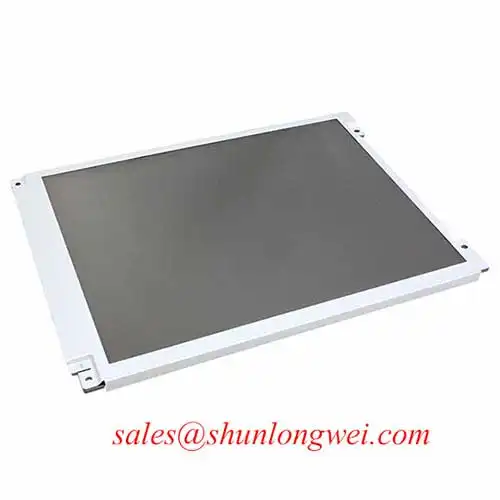
MV2-15FHM-N71: A 21.5-inch Full HD AHVA LCD Module for High-Clarity Industrial & Medical Displays
The BOE MV215FHM-N71 is a 21.5-inch a-Si TFT-LCD module engineered for applications demanding superior visual fidelity and simplified system integration. It delivers a compelling combination of high resolution, exceptional color accuracy, and wide viewing angles, making it a strategic choice for next-generation user interfaces. Key specifications include: 21.5-inch Diagonal | 1920x1080 Full HD | 89/89/89/89 Viewing Angle. Its primary engineering benefits are excellent off-axis image consistency and a design that streamlines mechanical integration. This addresses the critical need for displays that are clearly readable by multiple users from various positions, a common requirement in collaborative or public-facing environments. For systems demanding high-detail visualization in a standard 21.5-inch format, the MV215FHM-N71 provides an optimal balance of performance and integration readiness.
Application Scenarios & Value
Delivering System-Level Benefits in Demanding Visual Environments
The MV215FHM-N71 is engineered to deliver precise, stable, and color-accurate visuals, making it a prime candidate for applications where diagnostic or operational decisions depend on image quality. For systems requiring clear off-axis readability, its ADS technology—a variant of IPS (In-Plane Switching)—is a decisive factor. This technology ensures that contrast and color remain true even when viewed from extreme angles (89/89/89/89 degrees typical), a critical requirement in multi-person viewing environments.
Consider the design of a modern industrial Human-Machine Interface (HMI) for process control. Operators on a factory floor must be able to glance at the display from various locations and angles and receive unambiguous information. The MV215FHM-N71's combination of Full HD (1920x1080) resolution and wide viewing angles ensures that detailed schematics, status indicators, and text are rendered with sharpness and consistency, minimizing the risk of misinterpretation. The standard LVDS (2 ch, 8-bit) interface simplifies the connection to common industrial controller boards, reducing development time and integration complexity. For applications that require a significantly larger display area for more complex data visualization, the related G270HAN01.0 offers a 27-inch alternative.
Key Parameter Overview
Specifications Profile with Engineering Value Interpretation
The technical specifications of the MV215FHM-N71 are tailored for performance and straightforward integration into professional-grade systems. Below is a breakdown of its key parameters and their direct impact on application design.
| Specification | Value | Engineering Implication |
|---|---|---|
| Panel Size | 21.5 inches | Provides a substantial viewing area suitable for detailed GUI, commonly used in all-in-one PCs, medical monitors, and industrial control panels. |
| Resolution | 1920(RGB)×1080, Full HD | Ensures sharp, clear rendering of text, graphics, and video content, which is critical for reducing operator eye strain and improving data accuracy. |
| Display Technology | ADS (IPS-type), Normally Black | This is the core of its superior visual performance, delivering wide viewing angles and high color fidelity. The "Normally Black" characteristic provides deeper blacks for an enhanced contrast ratio. |
| Brightness | 250 cd/m² (Typ.) | Offers sufficient luminance for typical indoor environments such as control rooms, laboratories, and hospital settings. |
| Contrast Ratio | 1000:1 (Typ.) | Creates a clear distinction between light and dark areas of an image, enhancing depth and readability. This is akin to the dynamic range in a photograph, making visuals appear more vibrant. |
| Signal Interface | LVDS (2 ch, 8-bit), 30 pins | A widely adopted, robust interface that simplifies electrical integration with a vast ecosystem of driver boards and single-board computers. For more on this interface, see this LVDS Application Note. |
| Surface Treatment | Antiglare (Haze 25%), Hard coating (3H) | Reduces reflections from ambient light sources, improving screen viewability. The 3H hard coat adds a layer of durability, protecting against incidental scratches in busy environments. |
Frequently Asked Questions (FAQ)
What is the primary advantage of the ADS (Advanced Super Dimension Switch) display mode used in the MV215FHM-N71?
ADS is a proprietary IPS-type technology from BOE. Its primary advantage is providing exceptionally wide and symmetrical viewing angles (typically 89 degrees in all directions) without significant color shift or contrast degradation. This ensures that multiple viewers can see a consistent, accurate image from various positions around the display, which is crucial for collaborative medical diagnostics or team-based industrial monitoring.
How does the 1920x1080 resolution on a 21.5-inch screen benefit industrial HMI design?
This combination results in a pixel density of approximately 102 PPI (Pixels Per Inch), which offers a sharp, clean presentation of complex graphical user interfaces, fine text, and detailed schematics. For an industrial HMI, this means less ambiguity in reading values, clearer status alerts, and the ability to display more information on a single screen without appearing cluttered, ultimately enhancing operator efficiency and reducing errors.
What are the key considerations for driving the MV215FHM-N71 via its LVDS interface?
The module uses a standard LVDS (2 channel, 8-bit) interface with a 30-pin connector. Key considerations for system designers include ensuring the controller board's LVDS output matches this specification, proper impedance matching of the signal traces (typically 100 ohms differential), and providing a stable 5.0V power supply. The widespread use of this interface means that compatible off-the-shelf driver boards are readily available, simplifying the design process. Refer to our guide on TFT LCD basics for further integration insights.
Is the anti-glare surface sufficient for brightly lit environments?
The anti-glare surface with a 25% haze value is highly effective at diffusing reflections from common indoor light sources, such as overhead fluorescent lighting found in factories, labs, and hospitals. This significantly improves readability compared to a glossy screen. While it enhances performance in bright indoor settings, it is not specifically designed for direct sunlight readability, which typically requires much higher brightness levels (e.g., 1000 cd/m² or more).
Application Vignette
Enhancing Operator Awareness in Automated Manufacturing
In an automated pharmaceutical packaging line, precision and clarity are non-negotiable. The central control station HMI must display a wealth of real-time data, from conveyor speeds and robotic arm positions to quality control camera feeds and batch information. The engineering challenge is to present this dense information in a way that is immediately comprehensible to prevent costly errors.
Integrating the MV215FHM-N71 addresses this directly. Its Full HD 1920x1080 resolution allows for a clean, well-organized dashboard layout where multiple data streams can be monitored simultaneously without sacrificing legibility. The display's high color fidelity, covering 73% of the NTSC color space, is critical for color-coded alerts; a red warning for a jam or a green indicator for a successful quality check is rendered accurately and vividly, enabling instant recognition. This ensures operators can react swiftly and correctly, maintaining line efficiency and product integrity. The deployment of a high-fidelity display like the MV215FHM-N71 becomes a strategic asset in a modern industrial HMI, directly contributing to operational uptime and quality assurance.
The strategic selection of a display module with robust visual characteristics like the MV215FHM-N71 is foundational to creating user interfaces that are not just functional, but also enhance safety, efficiency, and decision-making in high-stakes professional environments.