

Content last revised on August 28, 2026
NHD-24064WG-ATFH-VZ Graphic LCD: Simplifying Industrial HMI Integration
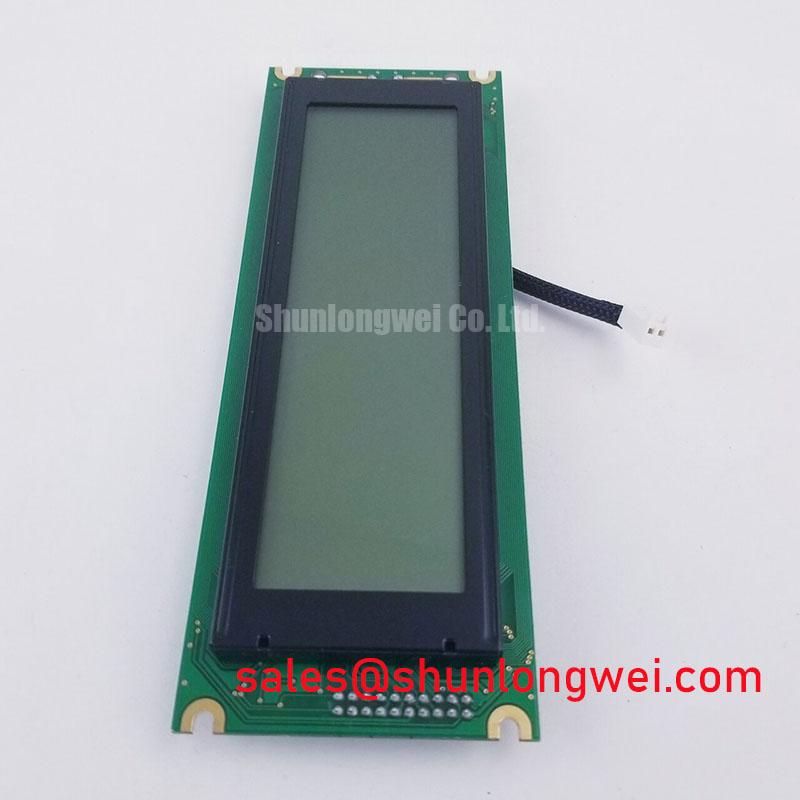
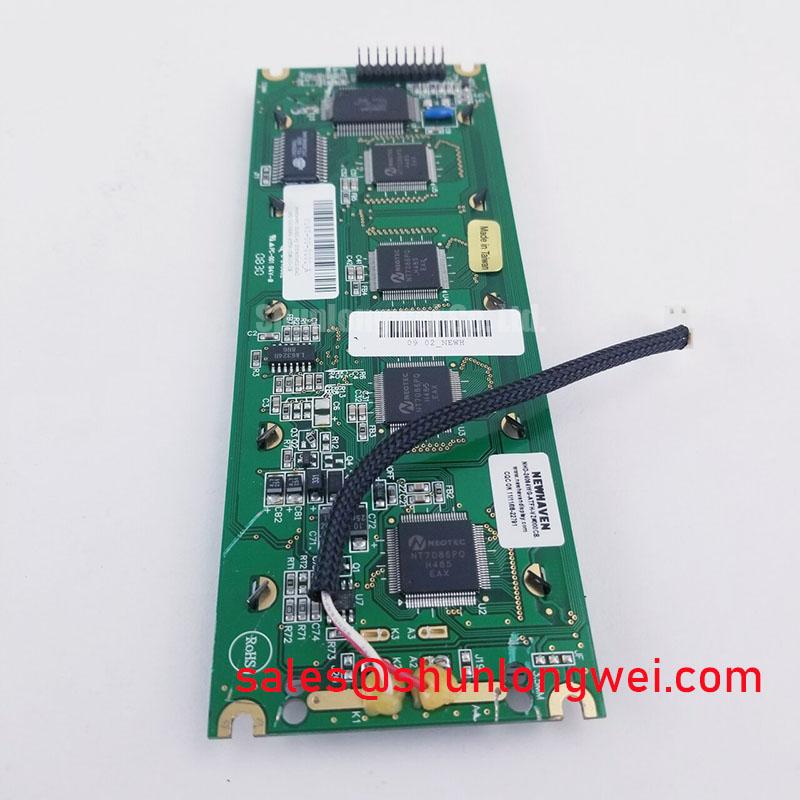
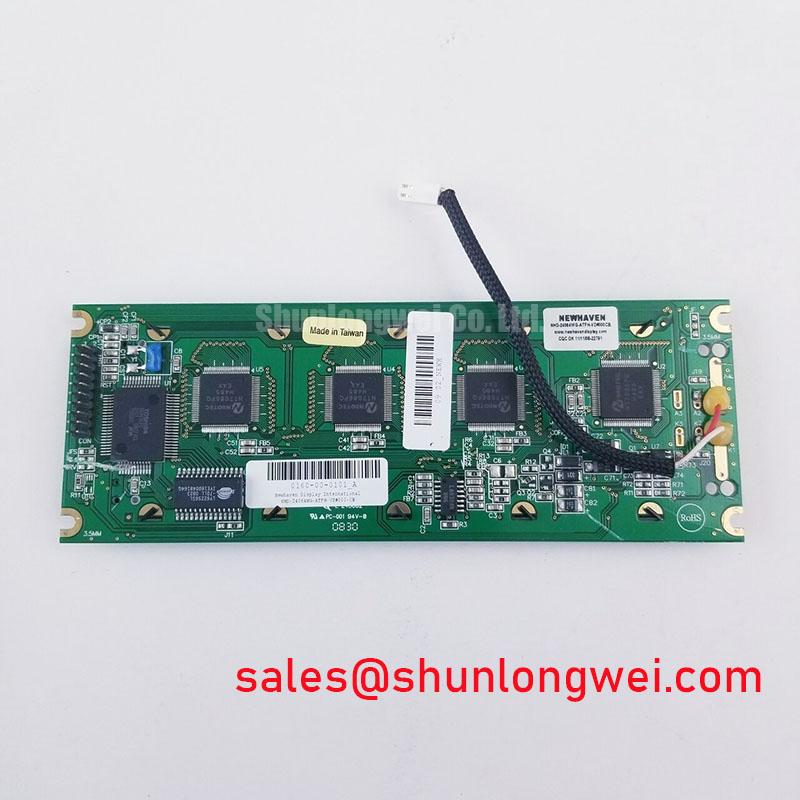
Are you struggling to source a high-contrast display that bridges the gap between modern visibility standards and legacy control architectures? The NHD-24064WG-ATFH-VZ by Newhaven Display addresses this precise engineering bottleneck. What is the primary advantage of the RA6963N1 controller? It streamlines firmware development by offering robust compatibility for legacy 8-bit 8080 parallel bus architectures. This 240x64 graphic LCD features a transflective FSTN panel and a white LED backlight, delivering sharp visualization across a -20°C to +70°C operating temperature range. It resolves the search for a rugged, sunlight-readable module that minimizes hardware redesign. For automated test equipment requiring immediate sunlight readability and backward compatibility, this 240x64 FSTN module is the optimal choice.
Frequently Asked Questions
Resolving Integration Bottlenecks for Graphic Displays
What are the specific power supply requirements for the NHD-24064WG-ATFH-VZ logic and contrast?
The module requires a standard 5.0V DC input for logic (VDD). The contrast circuit relies on a negative voltage supply, which is generated internally, but requires careful tuning of the V0 pin to approximately -7V for optimal viewing.
How does the transflective FSTN technology perform in outdoor environments?
Transflective displays reflect ambient sunlight to enhance contrast in bright conditions, while the built-in white LED backlight illuminates the screen in low-light environments, ensuring consistent readability regardless of ambient lighting.
What is the impact of the built-in negative voltage (-10V) output?
The dedicated VEE pin (-10V) eliminates the need for an external DC-DC converter on your mainboard. This reduces the bill of materials (BOM) and saves precious PCB footprint when designing the contrast adjustment circuit.
Can the RA6963N1 controller directly replace older T6963 setups?
Yes, the RA6963N1 is highly compatible with legacy T6963 instruction sets. This allows engineers to retrofit existing industrial HMIs without rewriting the entire core firmware library.
How does the 8-bit 8080 interface facilitate MCU synchronization?
The 8-bit 8080 parallel bus utilizes active-low read (/RD) and write (/WR) strobes. This deterministic hardware handshake prevents data collisions and ensures precise timing when pushing bitmap data to the 240x64 resolution grid.
Key Parameter Overview
Decoding the Specs for Industrial Display Reliability
| Parameter | Specification | Value Interpretation |
|---|---|---|
| Resolution | 240 x 64 pixels | Provides sufficient pixel density for complex bitmaps, menus, and structured UI elements. |
| Display Mode | FSTN Positive Transflective | Delivers excellent contrast ratios and wide viewing angles, critical for readability in variable lighting. |
| Logic Voltage (VDD) | 5.0V (4.5V Min, 5.5V Max) | Compatible with standard 5V industrial microcontrollers, avoiding the need for logic level shifters. |
| Supply Current (IDD) | 16.5mA Typ (at 5.0V) | Low logic power consumption extends the operational window in battery-backed backup scenarios. |
| Operating Temp. | -20°C to +70°C | Ensures stable liquid crystal response times even in unconditioned factory environments. |
Technical Deep Dive
Simplifying the 8-Bit Architecture and Backlight Drive
Integrating a graphic LCD into an existing control system hinges on the efficiency of the data bus and the reliability of the illumination circuit. The NHD-24064WG-ATFH-VZ utilizes an 8-bit 8080 parallel interface driven by the RA6963N1 controller. You can think of this 8-bit parallel bus as a multi-lane highway; it transfers a full byte of display data per clock cycle, which eliminates the latency and bottlenecking typically seen in serial SPI displays during full-screen UI refreshes.
Furthermore, the white LED backlight requires careful current management. The datasheet specifies a typical backlight supply current of 80mA. Driving this backlight is analogous to managing a precision water valve. You must regulate the current (the flow) rather than simply applying a static voltage (the pressure). Utilizing a constant-current driver prevents thermal runaway across the LED die array. This strict thermal management ensures the backlight achieves its rated 50,000-hour lifespan, lowering the long-term maintenance overhead for the end-user. Designers can reference TFT-LCD design principles to understand the evolutionary step from passive matrix STN configurations toward modern active display panels.
Application Scenarios & Value
Enhancing Visibility in Automated Test Equipment
Engineers face significant hurdles when dealing with legacy system retrofits. Upgrading an aging piece of automated test equipment usually requires replacing obsolete displays without overhauling the primary CPU board. The NHD-24064WG-ATFH-VZ excels in this exact scenario. Because it accepts a 5.0V logic signal and natively understands T6963-style commands, the display acts as a drop-in electrical replacement for older industrial HMIs.
Consider a diagnostic terminal used on a factory floor. The operator needs clear visibility under both harsh fluorescent lighting and direct sunlight from nearby loading bays. The transflective FSTN panel utilizes ambient light to boost contrast, while the internal LED backlight ensures visibility during night shifts. By leveraging the built-in VEE (-10V) output, the hardware team eliminates redundant power supply components, streamlining the printed circuit board layout. While this monochrome module is ideal for rugged data logging, systems requiring an upgrade to full-color interfaces might consider the related LQ064V3DG06, which offers advanced TFT capabilities for more demanding graphical needs.
Ultimately, by minimizing hardware modifications and preserving existing software libraries, this display accelerates deployment timelines and significantly reduces overall engineering costs.