


Content last revised on January 21, 2026
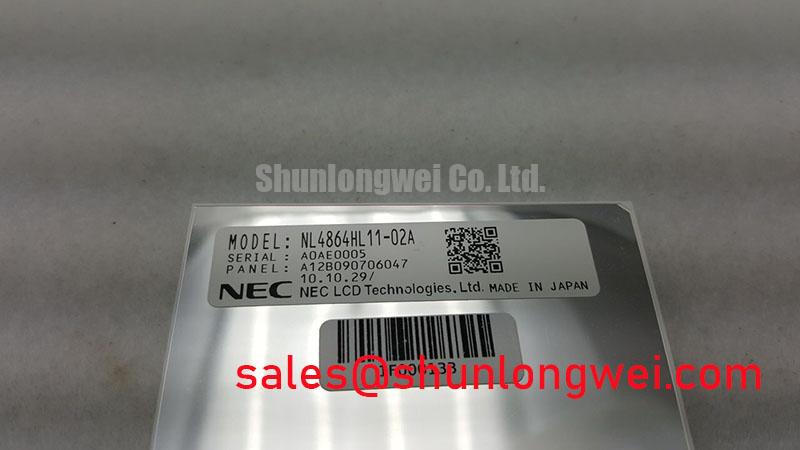
NL4864HL11-02A: 3.5" TFT for Resilient Industrial HMI Design
Engineered for Operational Consistency in Demanding Environments
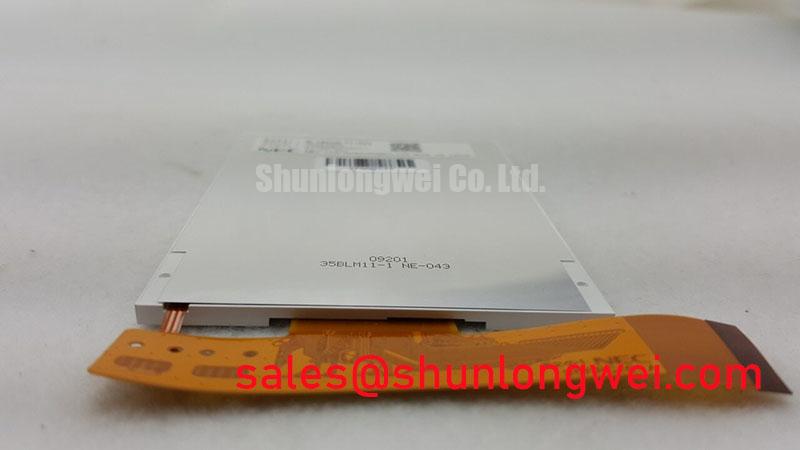
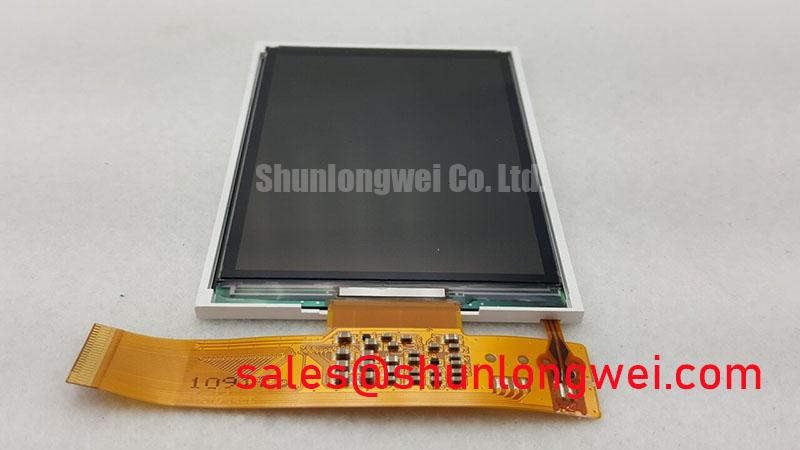
As industrial automation pushes instrumentation and control interfaces into more challenging operational theaters, the demand for components with inherent environmental resilience intensifies. The NL4864HL11-02A is a 3.5-inch LTPS TFT-LCD module designed to deliver sustained visual performance and reliability across wide thermal and lighting conditions. With core specifications of 480x640 VGA | 220 cd/m² Brightness | -20°C to +70°C Operating Temp, this display provides a robust foundation for next-generation industrial devices. Key benefits include dependable legibility in fluctuating ambient light and consistent operation in unconditioned environments. For engineers questioning if a compact display can maintain functionality in a hot factory or cold logistics bay, its wide operating temperature range and transflective properties provide the necessary assurance for reliable deployment.
Technical In-Depth Analysis: Deconstructing the NL4864HL11-02A's Resilient Architecture
The NL4864HL11-02A integrates several design attributes that directly contribute to its suitability for industrial applications. The amorphous silicon TFT active matrix is built on a Low-Temperature Polysilicon (LTPS) substrate, a technology that enables higher pixel density and lower power consumption within a compact form factor. Its portrait-mode 480x640 resolution is well-suited for data-centric handheld devices and vertical-format control panel readouts.
A key element for environmental resilience is the module's transflective optical design. This hybrid approach combines the properties of transmissive displays (requiring a backlight) and reflective displays (using ambient light). What is the primary benefit of its transflective nature? Enhanced readability across a broader range of lighting conditions, from dimly lit control rooms to outdoor settings with bright, indirect sunlight. The integrated WLED backlight with a typical luminance of 220 cd/m² ensures clarity indoors, while the reflective mode leverages external light to maintain contrast outdoors, significantly improving usability and reducing power draw when the backlight can be dimmed.
Industry Perspective & Strategic Value: Meeting the Edge-Computing Demand for Environmentally Robust Displays
The strategic value of the NL4864HL11-02A lies in its alignment with the growing trend of decentralized control and edge computing. As intelligence moves from centralized control rooms to on-machine HMIs and portable diagnostic tools, display components must evolve beyond standard commercial specifications. This module directly addresses the needs of systems deployed in sectors like logistics, field service, and mobile industrial machinery, where environmental controls are minimal.
Investing in displays with a wide operational temperature range (-20°C to 70°C) and robust optical characteristics is a strategic decision that enhances total system reliability and lowers the total cost of ownership. It can reduce the need for auxiliary heating or cooling components within the device housing, simplifying mechanical design and reducing potential points of failure. Further reading on the evolution and application of this core technology can be found in The Ultimate Guide to TFT LCD.
Deployment Vignettes: Proven Performance in Real-World Industrial Environments
While specific customer deployments are proprietary, modules with the characteristics of the NL4864HL11-02A are typically integrated into systems where failure is not an option. Consider these representative scenarios:
- Handheld Diagnostic Tools: Automotive and aerospace technicians often work in hangars or garages with fluctuating temperatures and unpredictable lighting. A transflective display ensures that critical diagnostic codes and live data streams are legible whether the user is in a dark service bay or next to a sunlit hangar door.
- Cold Chain Logistics Scanners: For devices used in refrigerated warehouses and on loading docks, the ability to operate reliably at -20°C is essential. This display's certified low-temperature performance prevents sluggish response times and screen freezing that can hamper productivity.
- Outdoor Metering Equipment: Utility field workers require devices that are readable in broad daylight. The reflective properties of the screen are vital for accurate readings without forcing the backlight to maximum brightness, thereby conserving battery life.
Comparative Data for Decision Support
To assist in your evaluation process, the following table highlights key parameters of the NL4864HL11-02A. This data is intended to provide a factual basis for comparing this module against other potential solutions for your specific design requirements. For systems that may require a larger viewing area with similar rugged characteristics, the G065VN01 V2 offers a 6.5-inch alternative.
| Parameter | Specification | Engineering Implication |
|---|---|---|
| Screen Size | 3.5 inch (Diagonal) | Optimized for compact, portable, and space-constrained applications. |
| Operating Temperature | -20°C to +70°C | Enables deployment in environments without active climate control, from cold storage to sun-loaded cabins. |
| Storage Temperature | -30°C to +70°C | Provides resilience against extreme temperature swings during shipping and storage. |
| Display Mode | TN, Normally White, Transflective | Ensures screen readability in both low and high ambient light conditions, enhancing versatility. |
| Brightness | 220 cd/m² (Typical) | Provides a clear, bright image for indoor and shaded outdoor use. |
| Interface | CMOS (1 ch, 6-bit) + SPI | A well-established parallel interface suitable for direct connection to many microcontrollers and application processors. |
Application Arenas & Engineering Benefits
The specific design attributes of the NL4864HL11-02A make it a strong candidate for a focused set of industrial and commercial applications. The engineering behind its construction delivers tangible benefits in demanding use cases.
Primary Application Domains:
- Portable Test & Measurement Equipment: The compact size, low power profile, and environmental resilience are ideal for devices that are carried into the field.
- Industrial Handheld Computers & Scanners: In logistics, manufacturing, and retail, devices must withstand drops, temperature changes, and varied lighting. This module provides a durable visual interface.
- Medical Monitoring Devices: The clear, high-density display is suitable for patient-side monitoring equipment that requires unambiguous data presentation.
- Small-Form-Factor HMI Panels: For auxiliary control panels on large machinery or primary interfaces on smaller equipment, this display offers a compact and reliable solution. For a broader view on designing for such environments, see our guide on Engineering for Extremes.
For industrial control systems requiring dependable VGA resolution in environments with fluctuating ambient light and temperatures from -20°C to 70°C, the NL4864HL11-02A's combination of transflective optics and thermal latitude presents a reliable HMI foundation.
Key Specifications at a Glance
This section provides a summary of the essential specifications for the NL4864HL11-02A amorphous silicon TFT-LCD module to facilitate rapid evaluation for your system design.
Highlighted Performance Metrics:
- Resolution: 480 (RGB) x 640 (VGA) in a portrait orientation.
- Contrast Ratio: 180:1 (Transmissive, Typical). The contrast ratio is like the clarity of a traffic signal in dense fog; a higher ratio means a sharper, more defined separation between "on" and "off" pixels, which is critical for error-free data interpretation.
- Viewing Angles (CR≥10): 30°/30°/30°/35° (Left/Right/Up/Down).
- Backlight System: White LED (WLED) with a typical lifetime of 12,000 hours.
- Outline Dimensions: 63.5(W) x 85.0(H) x 3.2(D) mm.
- Active Area: 53.28(W) x 71.04(H) mm.
Frequently Asked Questions
1. The datasheet is sometimes listed as "preliminary" or "tentative." What is the engineering significance of this?
A "tentative" or "preliminary" status on a datasheet typically indicates that the document was released based on initial characterization or pre-production samples. While the core specifications are generally reliable for initial design and evaluation, it is recommended to verify final production specifications, especially regarding parameters that can vary slightly in mass production, such as brightness uniformity or color coordinates.
2. How does the transflective screen of the NL4864HL11-02A improve usability in a factory setting?
In a factory, ambient lighting can vary dramatically—from the direct glare of overhead high-bay lights to shadows cast by machinery. A purely transmissive display would need a very powerful backlight to overcome the glare, increasing power consumption and heat. A purely reflective display would be unreadable in dark areas. The NL4864HL11-02A's transflective design uses its backlight for clarity in dimmer conditions and leverages the bright ambient light to enhance screen contrast under glare, providing a more consistently legible interface for operators.
3. What are the main thermal management considerations when integrating this display for operation near its 70°C limit?
When designing for the upper temperature limit, ensure adequate ventilation around the display module and its driver circuitry. Avoid placing heat-generating components directly behind the LCD. It is also crucial to consider the heat generated by the WLED backlight itself. If the end device will be sealed, conducting a thermal analysis or simulation is advisable to ensure the localized temperature around the module does not exceed the 70°C maximum rating, which could impact performance and operational lifetime.
Fostering Long-Term System Viability
Selecting a display module like the NL4864HL11-02A is a strategic choice that prioritizes long-term operational integrity. By integrating a component designed from the outset to withstand thermal and environmental stresses, engineers can create more robust, reliable end-systems. This approach not only enhances the user experience but also reinforces the product's reputation for durability, reducing potential field failures and supporting a lower total cost of ownership over the product lifecycle. Building dependable systems starts with specifying components engineered for the environments they will actually face.