

Content last revised on September 10, 2026
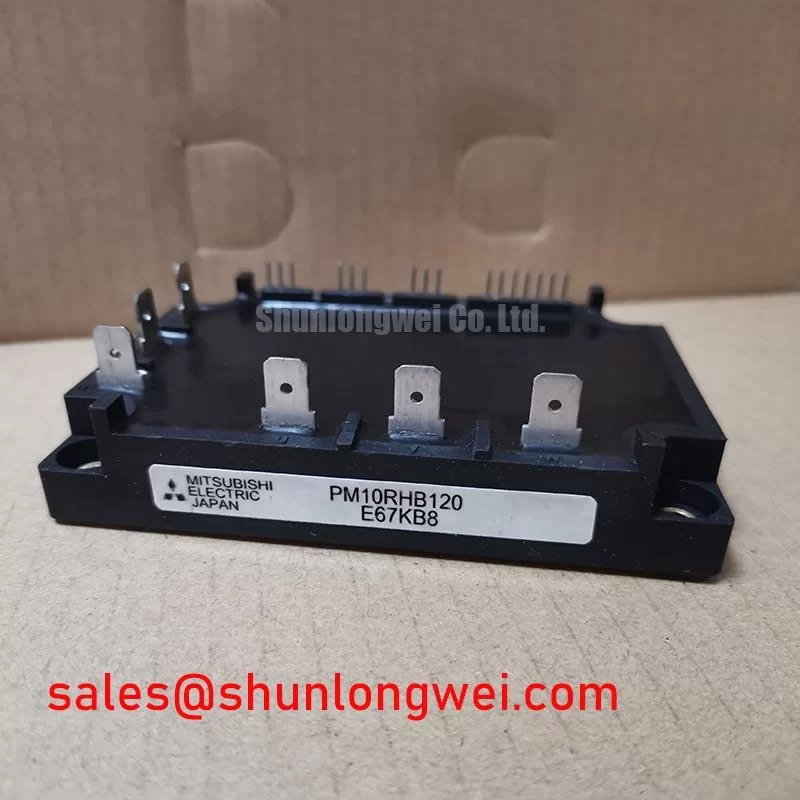
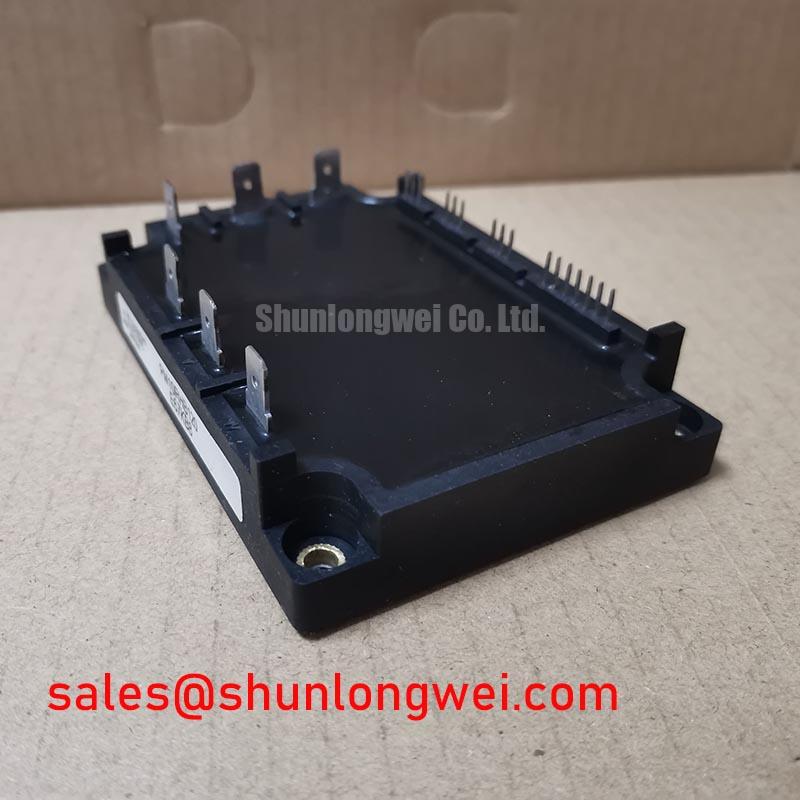
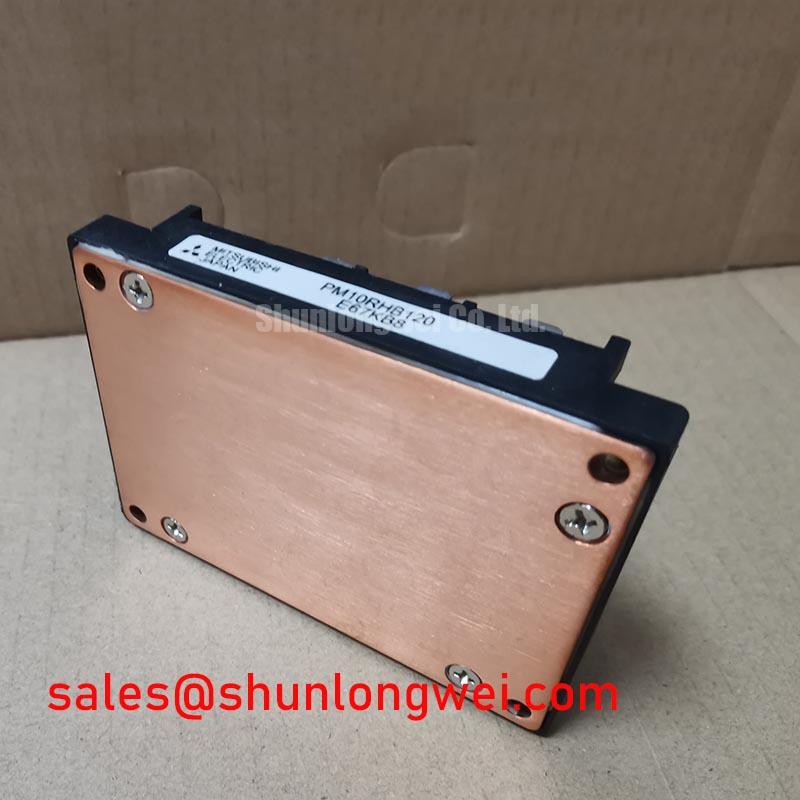
Mitsubishi PM10RHB120 | Integrated 1200V, 10A PIM for Compact Motor Control
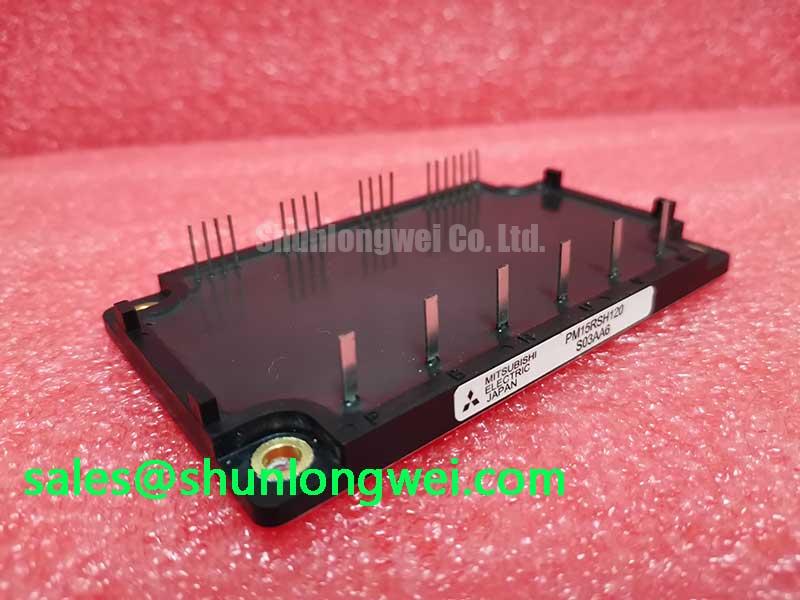
The Mitsubishi PM10RHB120 is a high-integration Power Integrated Module (PIM) designed to streamline the development of low-power three-phase motor drives and power conversion systems. By co-packaging a three-phase converter, brake chopper, and a three-phase inverter into a single, compact B-type module, this device offers a significant reduction in system complexity, assembly time, and overall bill of materials (BOM).
Key Performance Characteristics
Engineers value data-driven decisions. The table below outlines the critical parameters of the PM10RHB120 that define its performance envelope. For a complete dataset, you can download the official Mitsubishi Electric datasheet.
| Parameter | Value |
|---|---|
| Collector-Emitter Voltage (VCES) | 1200V |
| Collector Current (IC) | 10A |
| Collector-Emitter Saturation Voltage (VCE(sat)) - Inverter Part (Typ.) | 2.2V (at IC = 10A) |
| Maximum Junction Temperature (Tj(max)) | 150°C |
| Topology | 3-Phase Converter + Brake + 3-Phase Inverter |
| Package Type | B-Type PIM |
Engineered for Low-Power Industrial Applications
The PM10RHB120 is not a generic power switch; it is an engineered solution tailored for specific industrial challenges where space, cost, and reliability are paramount. Its integrated design makes it a superior choice for:
- Small Variable Frequency Drives (VFDs): For motors under 1.5 kW, such as those in conveyor belts, fans, and pumps, the all-in-one nature of this module drastically simplifies the power stage design and reduces the PCB footprint.
- Robotic Servo Drives: In applications like pick-and-place robots or articulated arms, powering precision servo motors is key. The PM10RHB120 provides a compact, reliable power core, allowing designers to focus on control logic and kinematics rather than discrete power component layout.
- Uninterruptible Power Supplies (UPS): The module's built-in converter and inverter stages are ideal for the rectification and inversion processes in smaller, line-interactive or online UPS systems, ensuring dependable backup power.
- General Purpose Inverters: Any application requiring efficient AC-DC-AC power conversion in the low single-digit kilowatt range can benefit from the simplified thermal management and assembly offered by this PIM.
Technical Deep Dive: The Advantage of Integrated Architecture
The core value proposition of the PM10RHB120 lies in its PIM (Power Integrated Module) architecture. Instead of sourcing, qualifying, and assembling over a dozen discrete components (rectifier diodes, brake IGBT/diode, six inverter IGBTs/diodes), engineers get a single, thermally optimized component. This approach delivers several key engineering advantages:
- Reduced Parasitic Inductance: The internal layout is optimized by Mitsubishi to minimize stray inductance between the switches and diodes, which is a common source of voltage overshoot and EMI in discrete designs. This leads to cleaner switching and simplifies EMC compliance.
- Simplified Thermal Management: All heat-generating semiconductor dies are mounted on a single isolated substrate. This allows for the use of one heatsink, simplifying mechanical design and ensuring more uniform thermal performance across all components. Understanding how thermal resistance impacts performance is critical, and a PIM simplifies this analysis.
- Enhanced Reliability: Manufactured by Mitsubishi, a leader in power electronics, this module leverages proven IGBT and diode technologies like their renowned CSTBT™ (Carrier Stored Trench-Gate Bipolar Transistor) for a balance of low conduction loss and robust switching. This translates to higher system reliability compared to a less-controlled assembly of discrete parts.
Frequently Asked Questions (FAQ)
Q1: What is the primary benefit of the built-in brake chopper?
The integrated brake chopper is essential for motor drive applications involving rapid deceleration or overhauling loads. When a motor is slowed down, it acts as a generator, sending regenerative energy back to the DC bus. The brake chopper circuit safely dissipates this energy through an external resistor, preventing DC bus overvoltage faults and protecting the inverter stage.
Q2: Is the PM10RHB120 suitable for hard-switching topologies only?
Yes, this module is primarily designed and characterized for standard hard-switching PWM-controlled inverter applications. Its VCE(sat) and switching loss characteristics are optimized for the typical switching frequencies found in motor drives (2-15 kHz). For soft-switching or resonant topologies, a different set of device parameters would be prioritized.
For applications demanding higher power or different topologies, browse our full catalog of IGBT modules or contact our technical team to discuss your specific design requirements.