



Content last revised on September 11, 2026
Benchtop Waveform Tuning: Mitigating Stress by Evaluating Thermal Capacitance and Heat Sink Behavior for SEMIX703GB126HDS
| Manufacturer | Semikron |
|---|---|
| Product Category | IGBT Module |
| Housing | SEMiX Module |
| Working Voltage | Standard Industrial Rating |
| Rated Current | Standard Operating Current |
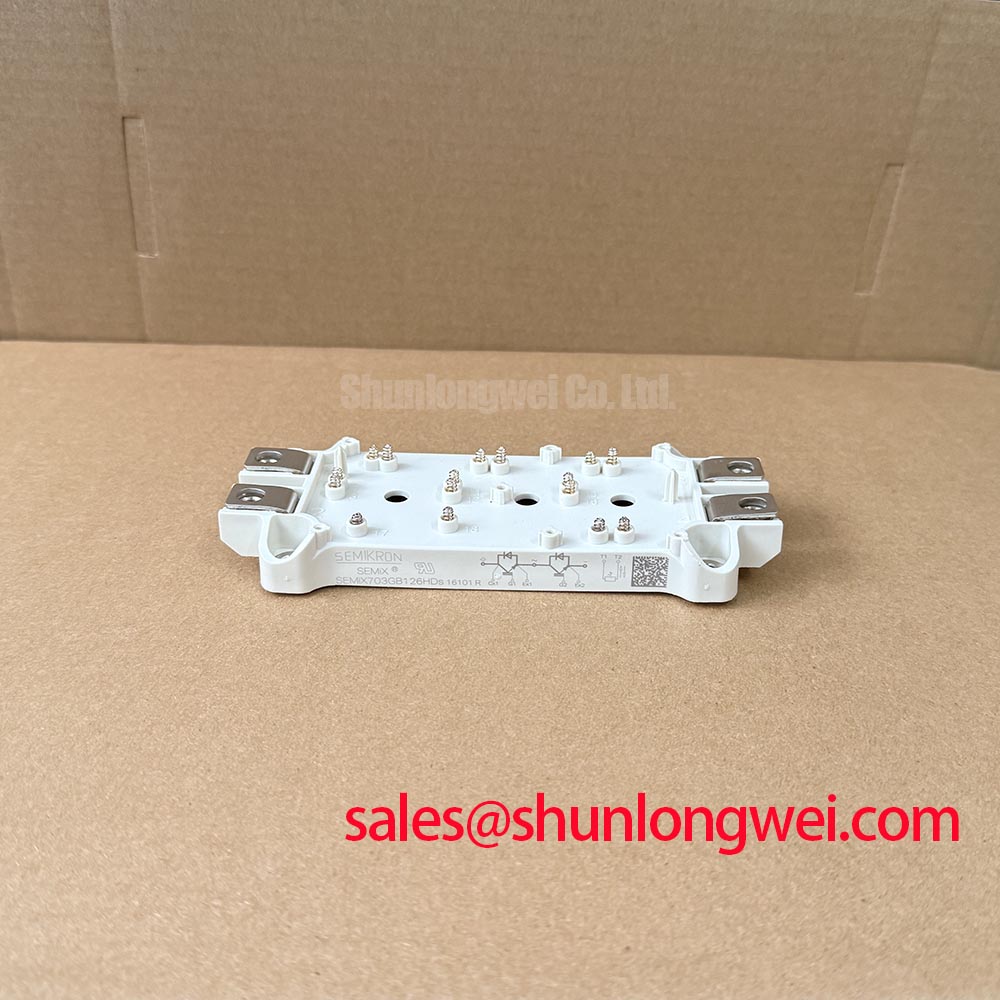
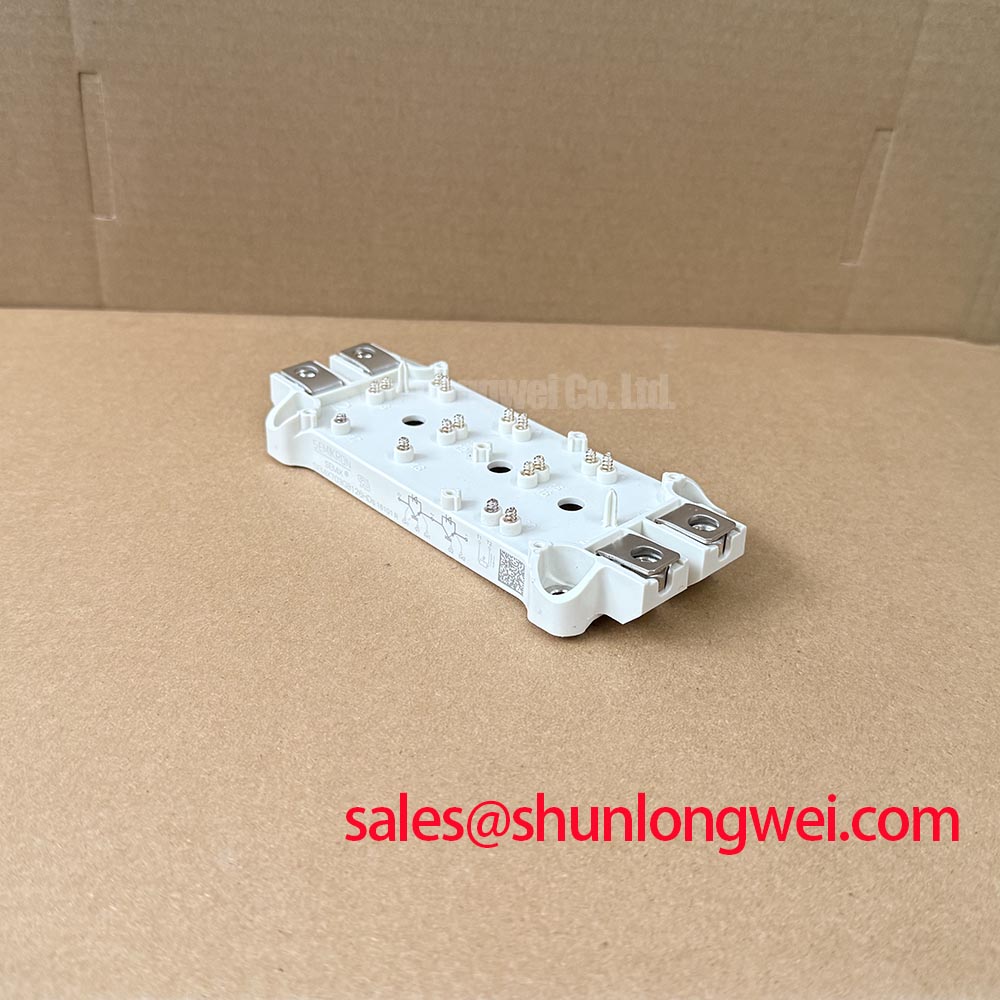
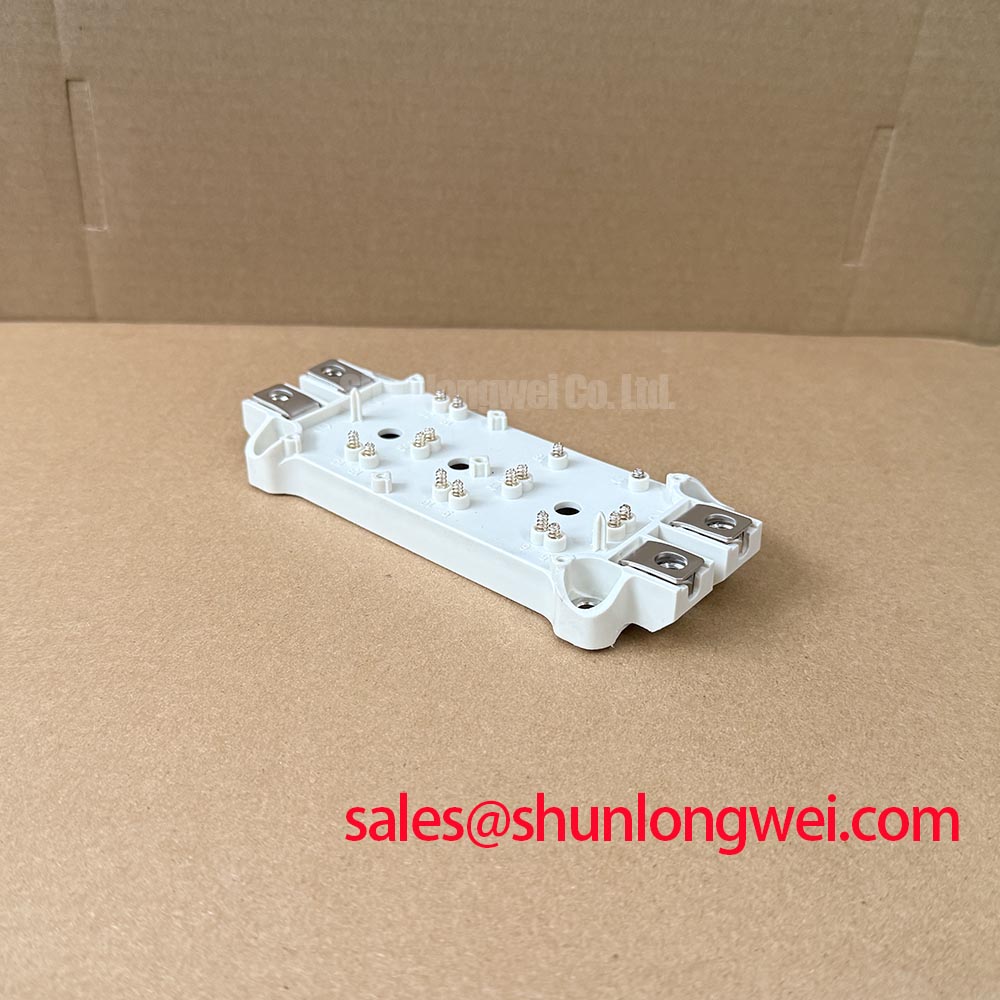
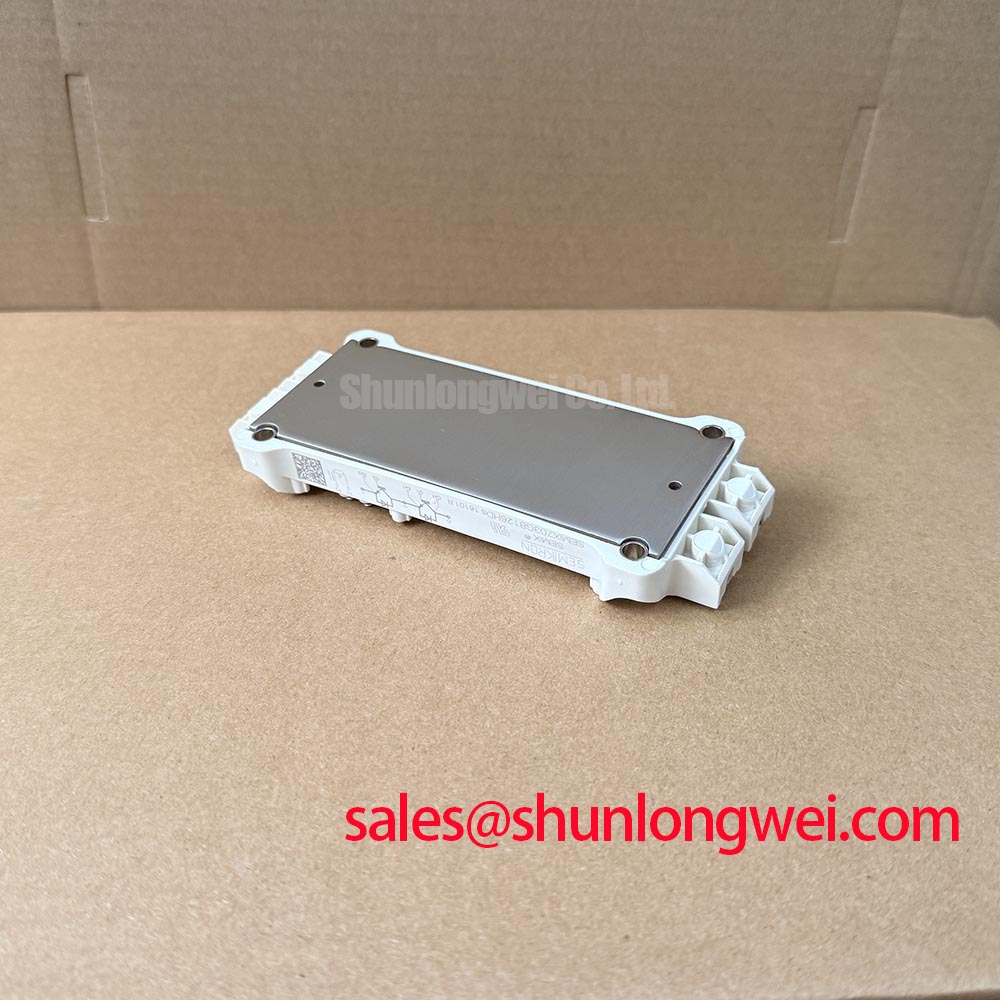
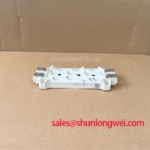
Capture collector current, collector-emitter voltage, and heat sink temperature together during the highest recurring load pulse, then compare the temperature rise pattern with the known switching sequence. The SEMIX703GB126HDS is supplied in a SEMiX Module housing, so the mechanical interface, thermal compound condition, busbar contact quality, and cooling-path cleanliness all affect the measured result.
Use a transient thermal model as a Design Consideration when evaluating pulsed overload duty. Junction temperature does not immediately follow heat sink temperature because heat stored in the semiconductor and module structure moves through several thermal paths over time. A short, high-current pulse can therefore produce a junction excursion that is not visible from a slow heat sink sensor. Oscilloscope captures should be correlated with pulse width, repetition rate, cooling-fan operation, and ambient temperature rather than judged from one steady-state temperature reading.
Keep the power loop compact to limit inductive voltage overshoot during turn-off, particularly where laminated busbars, DC-link capacitors, and module terminals meet. This is an Engineering Recommendation intended to suppress parasitic-loop effects; the system engineer should verify peak margins against the actual DC-link voltage during switching tests. Inspect the heat sink surface for flatness, trapped debris, hardened thermal material, and uneven clamp loading before interpreting a waveform as an electrical defect.
💡 Pro Tip: Record terminal and heat-sink contact temperature trends after every planned cooling-path cleaning, because a gradual increase can reveal degraded thermal transfer before an unplanned trip.
Field Diagnostics & Commissioning: Fault-Clearing Dynamics and Type-I/II Desaturation in SEMIX703GB126HDS Topologies
Probe the gate-emitter waveform and desaturation response at the driver output while applying a controlled commissioning load, checking that the measured protection sequence matches the installed driver documentation. Desaturation protection belongs to the gate-driver and system protection architecture, not to an independent claim about the IGBT module itself. Type-I and Type-II response strategies should be reviewed against the driver’s documented blanking, detection, and soft-turn-off behavior.
A two-stage soft turn-off sequence is commonly evaluated as a Design Consideration where a hard gate removal could create excessive inductive overshoot. The protection path must be checked with the real commutation inductance, DC-link arrangement, and load condition present in the inverter. A distorted collector-emitter waveform can arise from gate-drive reference movement, unsuitable probing technique, busbar inductance, or an actual switching abnormality; compare it with a known-good phase and inspect the complete driver path.
For high-side circuits, size the bootstrap supply from verified gate-charge data, driver quiescent current, switching interval, allowable supply droop, and any external circuitry on that supply. The system integrator should obtain these values from the selected gate-driver and module documentation instead of applying a generic capacitor value. Where a rectifier or complementary power stage is under review, SKM50GB128D can be referenced as a separate device for topology comparison, subject to terminal, electrical, thermal, and driver compatibility checks.
SEMIX703GB126HDS Thermal-Electrical Optimization: High-Altitude Cosmic-Ray-Induced SEB Failure Considerations
Log the installation altitude, DC-link operating envelope, enclosure temperature, and switching transients before assigning a cause to an unexplained high-voltage failure. No device-specific FIT rate, cosmic-ray failure probability, altitude derating figure, or single-event burnout limit is stated here. Those values require applicable manufacturer qualification data and system-specific operating conditions.
As a Design Consideration, systems operating at elevated altitude should be assessed for insulation coordination, cooling capability, condensation control, and voltage-transient margins as a combined installation problem. The required creepage and clearance distances are determined by the complete assembly, pollution degree, material group, working voltage, and applicable equipment standard. Maintain clean terminal regions and ensure that conductive dust, moisture deposits, or damaged insulation cannot reduce the intended spacing around the SEMiX module.
For a broader comparison of high-voltage switching technology in three-phase conversion, consult The 1200 V CoolSiC™ MOSFET Advantage in Three. Product-family context is also available through the Semikron-Danfoss Power Modules Catalog, which helps engineers distinguish module-platform information from system-level reliability validation.
Preventing Spurious Faults: Thermal Stress Alleviation Guidelines for Bidirectional SEMIX703GB126HDS Applications
Compare phase-current direction, gate command timing, DC-link ripple, and heatsink temperature during both charge and discharge operation to isolate the operating state that precedes a nuisance fault. In commercial string inverter and micro-grid energy-storage evaluations, bidirectional power flow can alter current paths and thermal cycling even when RMS current appears similar between modes.
Check terminal fasteners for consistent mechanical condition, inspect busbar alignment without forcing stress into the module housing, and verify that control wiring is routed away from high-current commutation paths. Common-mode disturbance can couple into optocouplers or digital isolators and may appear as an intermittent control event. Use differential measurement methods and compare the affected channel with a known-good signal path before changing gate-drive components.
Long motor or transformer-connected cable runs also deserve waveform review because reflected voltage can change the stress seen at the inverter output. Select filtering and cable-treatment measures through system testing, with attention to load type, cable construction, grounding arrangement, and measured transient behavior. For replacement evaluation within related Semikron module families, SKM200GB12T4 provides a separate comparison reference rather than a presumed direct substitution.
Maintain the cooling system through scheduled dust removal, fan verification, thermal-interface inspection, terminal-tightness checks, and enclosure moisture control. The Semikron MiniSKiiP® Power Modules page is useful for platform-level package context, while the installed system schematic remains the controlling reference for integration decisions.