
Content last revised on September 10, 2026
SKD82/12 Semikron: 1200V 80A Three-Phase Bridge Rectifier for Rugged Motor Drives
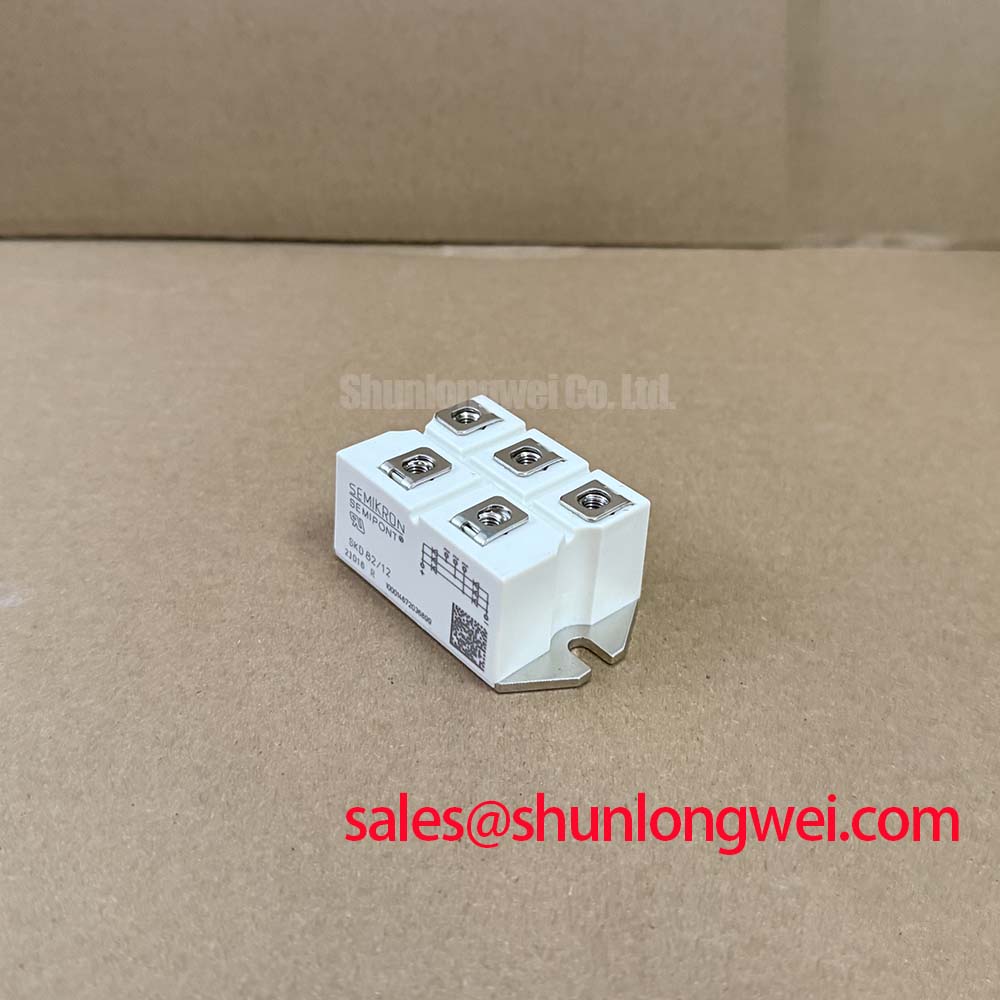
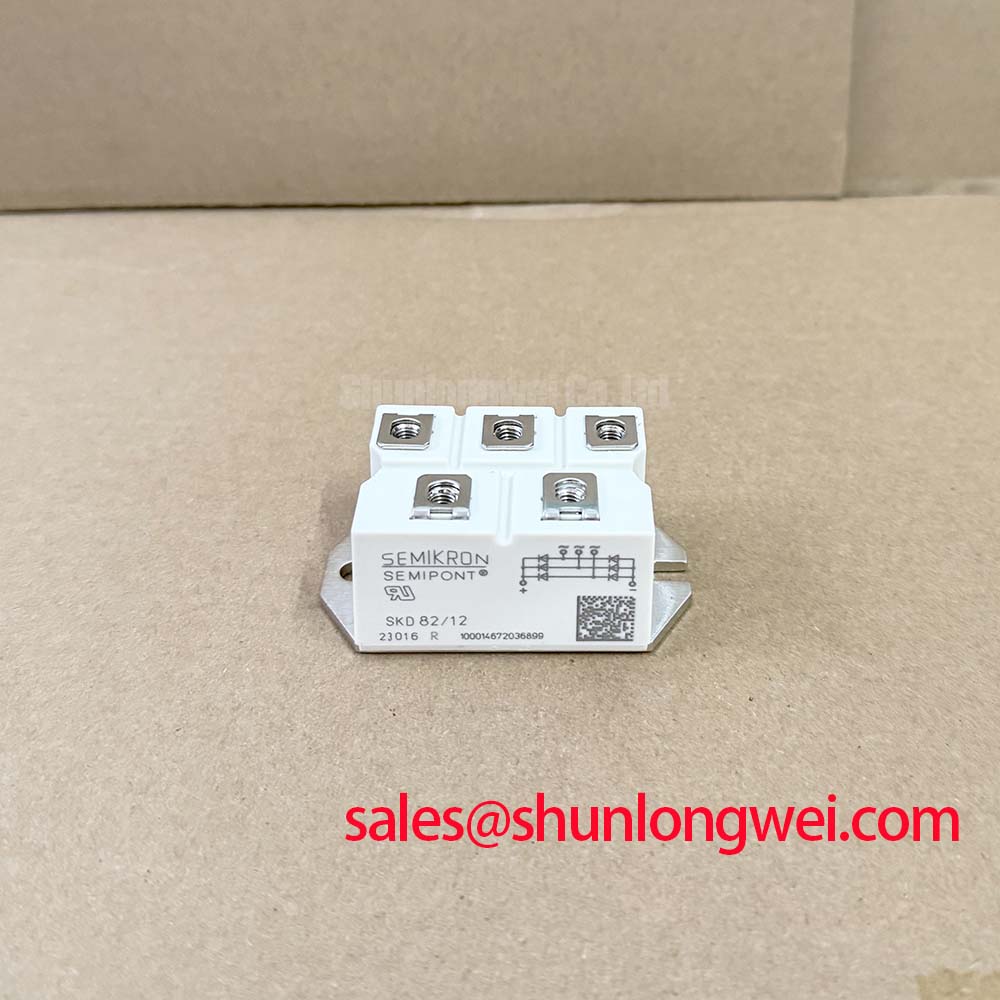
Engineered for exceptional thermal reliability and surge endurance, the SKD 82/12 provides a formidable three-phase rectification backbone for demanding industrial environments. Featuring a 1200V repetitive peak reverse voltage and an 80A average forward current rating, this component excels under heavy loads. The module offers an impressive I(FSM) of 750A and a Visol of 3600V. These specifications yield tangible engineering benefits: the isolated base plate simplifies chassis mounting, while the high surge capacity withstands immense inrush currents without degradation. Utilizing a screw-terminal module with an isolated base plate eliminates the complex thermal management required by discrete diodes, ensuring long-term operational stability.
Application Scenarios & Value
Solving Inrush Current Challenges in Variable Frequency Drives
For 400V variable frequency drives prioritizing thermal margin and surge resilience, this 1200V module is the optimal choice. Engineers often face complex challenges when designing input rectifiers for industrial Variable Frequency Drive (VFD) systems. High inrush currents during motor startup or capacitor bank charging can rapidly degrade unprotected silicon. The SKD 82/12 directly mitigates this risk with its robust 750A surge forward current capability (at 10ms). This substantial overhead ensures the rectifier bridge survives transient spikes without failing.
Beyond standard drives, this module serves as a highly reliable input stage for DC motor field supplies and heavy-duty battery chargers. Integrating this single component streamlines the power architecture compared to using multiple discrete devices. For systems operating on higher 690V industrial line voltages, the related SKD160/16 offers a 1600V rating to provide the necessary design headroom.
Technical Deep Dive
Thermal Mechanics of the SEMIPONT 3 Package
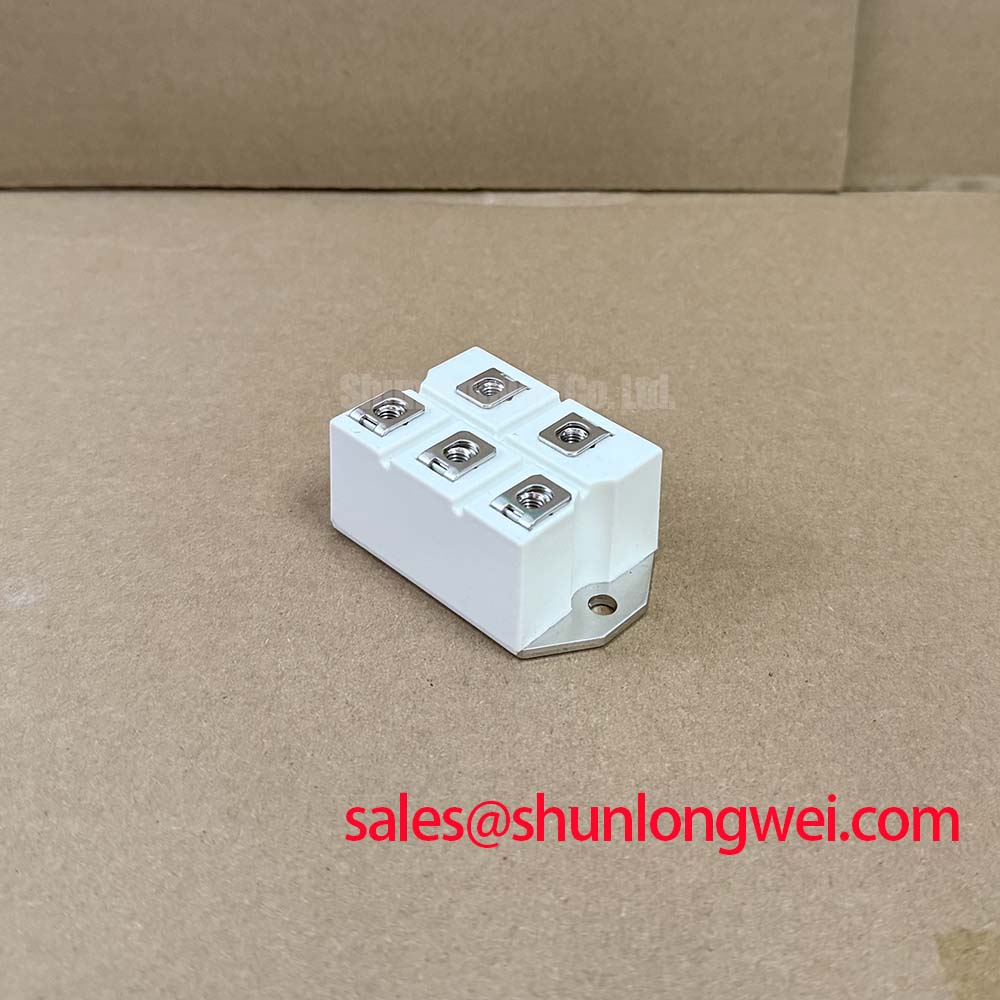
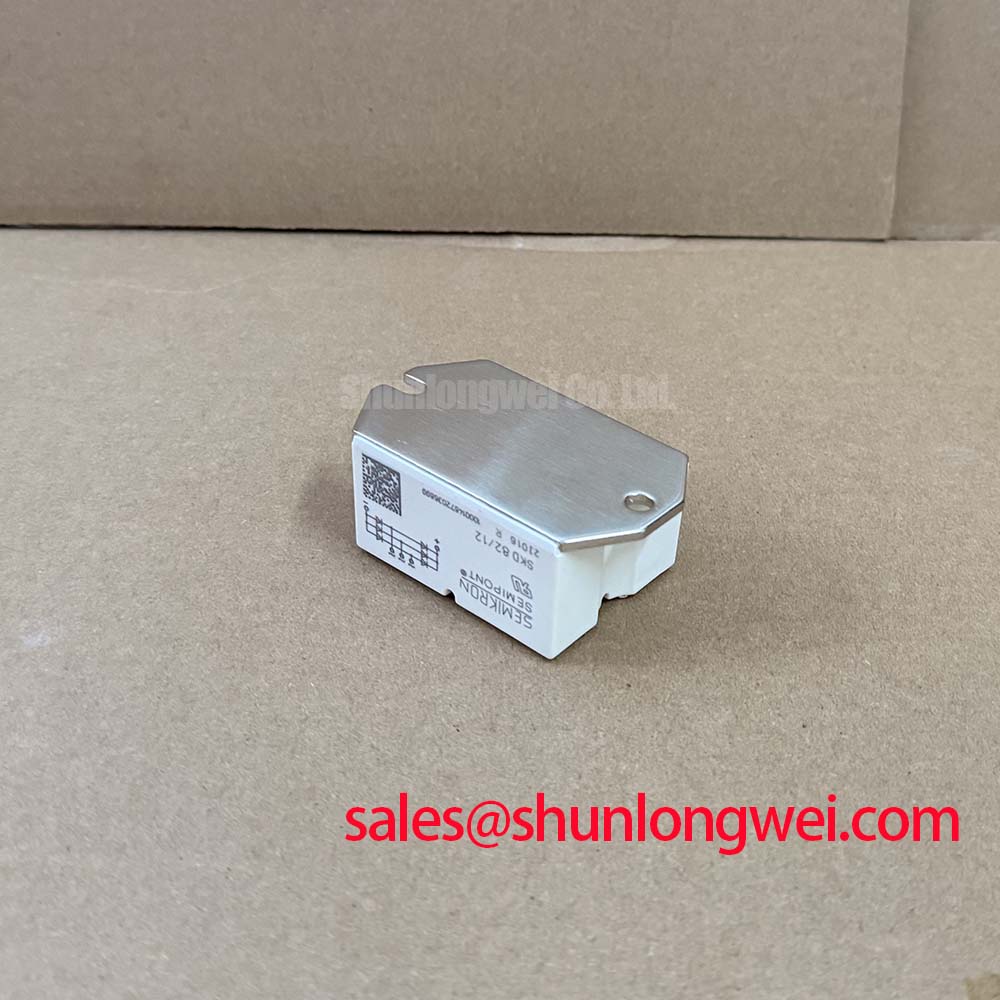
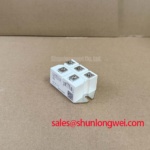
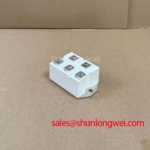
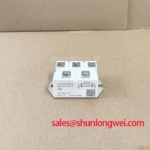
The true engineering triumph of the SKD 82/12 lies in its physical construction. Encased in the robust G36 (SEMIPONT 3) package from semikron, the module is designed for mechanical resilience. What is the primary benefit of the isolated base plate? It enables direct chassis mounting, significantly reducing thermal resistance.
The isolated base plate functions much like a high-speed thermal superhighway, routing excess heat directly to the external heatsink while keeping electrical paths strictly isolated up to 3600V. This separation is crucial for maintaining safety and preventing ground faults in noisy industrial settings. Furthermore, the heavy-duty screw terminals act as rugged anchors. Much like the reinforced suspension of an off-road vehicle, these terminals ensure mechanical stability and reliable electrical contact even under the severe vibration profiles common in heavy machinery. Understanding thermal resistance dynamics is essential for maximizing the lifespan of these industrial applications.
Key Parameter Overview
Decoding the Specs for Enhanced Thermal Reliability
| Technical Specification | Value | Engineering Interpretation |
|---|---|---|
| U(RRM) (Repetitive Peak Reverse Voltage) | 1200V | Provides a safe operating margin for standard 400V/480V three-phase industrial grids, protecting against voltage transients. |
| Id (Average Forward Current) | 80A (Tc = 110 °C) | Delivers continuous, reliable power for medium-sized motor drives even at elevated case temperatures. |
| I(FSM) (Surge Forward Current) | 750A (10ms, 25°C) | Crucial for absorbing the initial inrush current during capacitor charging phases without damaging the diode junctions. |
| Rth(j-c) total (Thermal Resistance) | 0.183 K/W | Indicates highly efficient heat transfer from the silicon junctions to the case, simplifying heatsink sizing. |
| Visol (Isolation Voltage) | 3600V (1 sec) | Ensures stringent electrical safety when the module is mounted directly onto a grounded metallic chassis. |
Download the SKD 82/12 datasheet for detailed specifications and performance curves.
FAQ
Field Engineer Inquiries: Performance and Integration
Why is the I(FSM) of 750A critical for battery charger rectifiers?
Battery chargers often face a near-short-circuit condition when initially connected to a depleted battery bank. The 750A rating allows the rectifier to safely pass this massive initial energy surge without suffering thermal breakdown.
How does the Visol of 3600V influence system design?
This high isolation voltage permits engineers to bolt the SKD 82/12 directly to the main equipment enclosure or a shared heatsink. This eliminates the need for complex, secondary insulating barriers, thereby reducing assembly time and component count.
What makes the G36 (SEMIPONT 3) package suitable for high-vibration environments?
The G36 package utilizes robust screw terminals rather than solder pins. These mechanical connections resist the metal fatigue and micro-cracking that typically plague soldered joints in industrial motor applications.
How should engineers manage the total Rth(j-c) of 0.183 K/W?
To fully exploit this low thermal resistance, engineers must apply a high-quality thermal interface material (TIM) and adhere strictly to the manufacturer's specified mounting torque. This minimizes the case-to-heatsink resistance layer.
Can the SKD 82/12 operate reliably at its maximum 150°C junction temperature?
While the device is rated to survive 150°C, continuous operation at this absolute maximum will accelerate aging. Derating the operating current to keep the junction temperature lower will exponentially increase the long-term reliability of the rectifier.
Evaluating the mechanical interface and thermal pathways of a bridge rectifier is just as critical as analyzing its electrical limits. By leveraging the isolated base plate and substantial surge capacity of this module, design teams can build power conversion stages that survive the harsh realities of the factory floor, minimizing costly downtime.


