Content last revised on September 10, 2026
SKiM401TMLI12E4B 1200V 400A IGBT Module: 3-Level Topology for High-Reliability Drives
How do engineers achieve superior thermal cycling capabilities in 3-level NPC topologies without compromising power density? The SKiM401TMLI12E4B provides a decisive answer. Engineered around advanced Trench Gate Technology and an Al2O3 Direct Copper Bonded substrate, this power semiconductor delivers exceptional thermal management for demanding environments. Key specifications include a 1200V rating, 400A current capacity, and a low-inductance SKiM 4 housing layout. These attributes drastically mitigate thermomechanical stress and simplify gate driver integration through a specialized spring contact system. What is the primary benefit of its pressure-contact design? It enhances long-term reliability by eliminating solder fatigue. For heavy-duty industrial drives prioritizing thermal margin, this 1200V module is the optimal choice.
Frequently Asked Questions
How does the low-inductance case of the SKiM401TMLI12E4B influence switching behavior?
By severely minimizing internal stray inductance, this housing design suppresses destructive voltage overshoots during fast switching transients. This allows the internal IGBT 4 trench gates to operate much closer to their theoretical voltage limits without requiring excessively large, loss-inducing snubber circuits at the system level.
Why is the integrated spring contact system critical for long-term vibration resistance?
This unique interface method decouples the driver PCB from the main power module mechanically. By doing so, it prevents the severe thermomechanical stress from fracturing conventional soldered control pins during rigorous automotive or heavy industrial operation, thereby drastically reducing the risk of unexpected open-circuit failures.
Key Parameter Overview
Decoding the Specs for Enhanced Thermal Reliability
| Functional Group | Key Specification | Rated Value |
|---|---|---|
| Electrical Characteristics | Collector-Emitter Voltage (VCE) | 1200V |
| Electrical Characteristics | Nominal Current (IC) | 400A |
| Electrical Characteristics | Topology Type | 3-Level (NPC / TMLI) |
| Electrical Characteristics | Short Circuit Withstand | 6 x IC (Self-limiting) |
| Thermal & Mechanical | Isolation Substrate Material | Al2O3 DCB (Direct Copper Bonded) |
| Thermal & Mechanical | Thermal Interface Technology | Pressure Contact |
| Thermal & Mechanical | Physical Dimensions (LxWxH) | 123 x 107 x 35 mm |
Download the SKiM401TMLI12E4B datasheet for detailed specifications and performance curves.
Technical Deep Dive
A Closer Look at the Solder-Free Architecture and Interface Dynamics
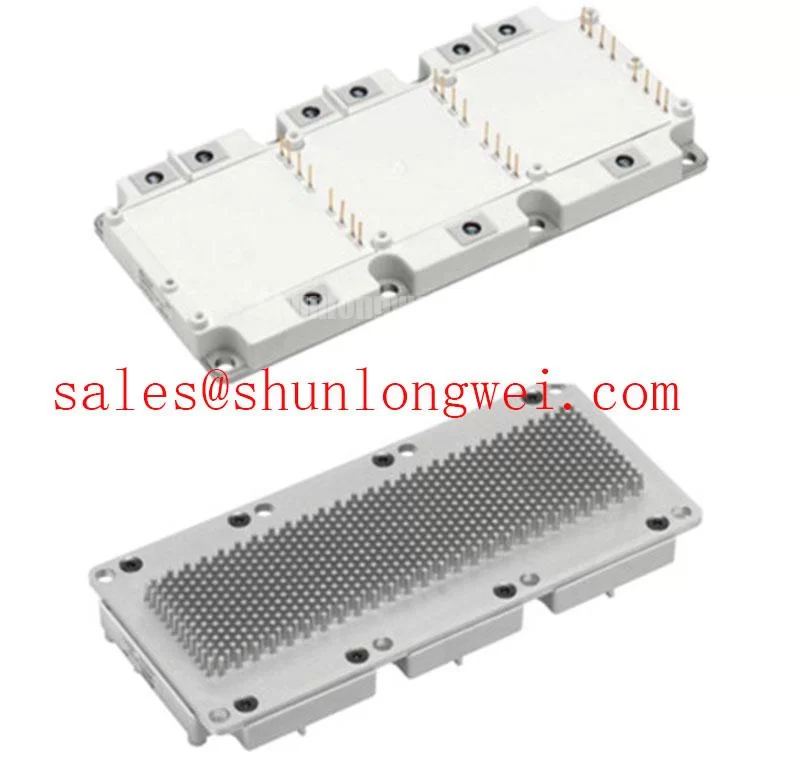
The architectural brilliance of this device lies in its complete departure from traditional heavy baseplate designs. By leveraging proprietary pressure contact technology alongside an Al2O3 Direct Copper Bonded (DCB) ceramic substrate, the module fundamentally alters heat dissipation dynamics. Think of the pressure contact system like a highly tuned mechanical suspension: it maintains continuous, uniform downward force across the thermal interface, dynamically adjusting to microscopic expansions and contractions during severe power cycling. This design completely bypasses the vulnerability of large-area solder layers, which are historically notorious for void propagation and ultimate thermal runaway in high-power applications.
Furthermore, the integration of 4th generation Trench Gate Technology guarantees that the VCE(sat) exhibits a reliable positive temperature coefficient. This specific attribute drastically simplifies parallel operation, automatically balancing current sharing across multiple internal chips without complex external compensation networks. The spring contact system for the driver PCB extends this solder-free philosophy directly to the control terminals, immunizing the auxiliary connections against heavy vibrational loads. For deeper insights into advanced packaging evolution, exploring thermal resistance properties reveals how eliminating vulnerable structural interfaces elevates overall component longevity.
Application Scenarios & Value
Achieving System-Level TCO Reductions in Automotive and Renewable Systems
For engineers designing automotive traction controllers and renewable energy grid-ties, managing switching losses and absolute thermal limits simultaneously remains a paramount challenge. In a high-reliability AC inverter wind application, designers must frequently implement a 3-level Neutral Point Clamped (NPC) topology. Implementing a 3-level topology is much like introducing a multi-gear transmission to a vehicle; it allows the system to transition smoothly between voltage states, thereby halving the electrical stress on individual silicon switches and substantially reducing output harmonic distortion. The SKiM401TMLI12E4B naturally fits this exact architecture. Its pre-configured 3-level internal layout minimizes the parasitic elements and stray inductance that typically plague discrete component assemblies.
Consider the formidable challenge of thermal bottlenecks within a highly compact automotive inverter chassis. By capitalizing on the module's Al2O3 substrate and the availability of optimized thermal interfaces—such as the pre-applied Wacker P12 thermal paste variant—the thermal resistance from the semiconductor junction to the external heatsink is strictly controlled. This precise thermal management enables the sensitive DC-link capacitor banks to operate in a cooler surrounding ambient zone, indirectly extending the operational life of the entire powertrain assembly. How does the integrated temperature sensor improve operational safety? It provides real-time junction feedback for proactive over-temperature protection. While this specific component is meticulously tuned for 400A profiles, infrastructure systems demanding even greater ampacity might leverage the related SKIM601TML12E4B, which securely pushes the current handling boundary to 600A while maintaining a highly similar physical footprint. To discuss integration strategies for your next-generation high-efficiency inverter, contact our engineering support team to evaluate how this 3-level solution aligns with your exact system parameters.