
Content last revised on September 10, 2026
SKM600GB066D: A Deep Dive into the High-Current 600V IGBT Module
An Engineering Perspective on Thermal Performance and System Reliability
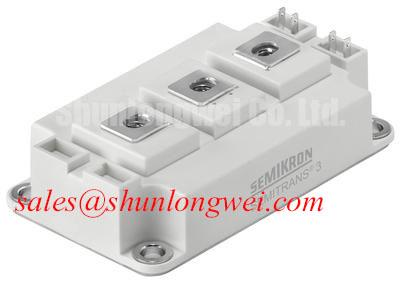
The SKM600GB066D is a high-current half-bridge IGBT module from the SEMITRANS 2 family, engineered for exceptional thermal performance and robust operation in demanding power conversion systems. With core specifications of 600V and 600A, and a typical collector-emitter saturation voltage (VCE(sat)) of 1.75V, this module prioritizes efficiency and reliability. Key benefits include low conduction losses for enhanced system efficiency and a robust thermal design that supports long-term operational stability. It provides a definitive solution for engineers developing high-capacity industrial motor drives, uninterruptible power supplies, and welding converters. For high-current industrial drives requiring robust thermal performance, the SKM600GB066D's low VCE(sat) and proven package design make it an optimal choice.
Key Parameter Overview
Decoding the Specs for Thermal Efficiency and Robust Switching
The technical specifications of the SKM600GB066D are foundational to its performance in high-power applications. Two parameters are particularly critical for design engineers: the low VCE(sat) and the thermal resistance from junction to case (Rth(j-c)). The low saturation voltage directly translates to reduced conduction losses, a dominant factor in overall system efficiency, especially in applications with high duty cycles. Think of VCE(sat) as the 'friction' the current encounters when the switch is on; this module's low value is like a well-lubricated bearing, minimizing energy wasted as heat. This efficiency gain simplifies thermal management, potentially allowing for smaller, more cost-effective heatsink solutions. The equally important Rth(j-c) quantifies how effectively heat can be transferred from the active semiconductor junction to the module's case, which is a cornerstone of its reliability and power handling capability.
| Parameter | Value |
|---|---|
| Collector-Emitter Voltage (Vces) | 600V |
| Continuous Collector Current (Ic) @ 25°C | 600A |
| Collector-Emitter Saturation Voltage (Vce(sat)) @ Ic,nom | 1.75V (typ.) |
| Gate-Emitter Voltage (Vges) | ±20V |
| Thermal Resistance, Junction to Case (Rth(j-c)) per IGBT | ≤ 0.075 K/W |
| Short Circuit Withstand Time (tsc) @ VGE ≤ 15V | 10 µs |
| Maximum Junction Temperature (Tj,max) | 150°C |
Download the SKM600GB066D datasheet for detailed specifications and performance curves.
Application Scenarios & Value
System-Level Advantages in High-Current Motor Drives and Power Converters
The SKM600GB066D is engineered to address critical challenges in high-power industrial systems. Its primary value is demonstrated in applications such as Variable Frequency Drives (VFDs), large-scale Uninterruptible Power Supplies (UPS), and industrial welding equipment. Consider a high-power Variable Frequency Drive (VFD) controlling a heavy-duty motor. A key engineering challenge is managing the significant heat generated, particularly during high-torque, low-speed operation which stresses the inverter stage. The module's combination of a high 600A current rating and low thermal resistance provides a direct solution. The low conduction and switching losses inherent to its design reduce the total heat generated, while its efficient thermal interface to the heatsink ensures this heat is evacuated effectively. This robust thermal management capability prevents the device from reaching its thermal limits, ensuring consistent performance and preventing premature failure, which is critical for maintaining uptime in industrial environments. While the SKM600GB066D is optimized for 230-400V AC line applications, systems operating on higher voltage grids may require a device like the SKM400GB128D, which offers a 1200V blocking capability.
Technical Deep Dive
Analyzing the SEMITRANS® 2 Package for Superior Thermal Management
The long-term reliability of the SKM600GB066D is intrinsically linked to its SEMITRANS 2 package design. This industry-standard housing is not merely a container; it is a key component of the module's thermal management system. The architecture features an Aluminum Oxide (Al2O3) ceramic substrate, which serves a dual purpose. It provides robust electrical isolation rated for thousands of volts while simultaneously offering a highly effective path for thermal conduction away from the IGBT and diode chips. This heat is then efficiently transferred to a solid copper baseplate. The copper baseplate acts like a thermal reservoir and spreader, similar to how a wide, shallow pan distributes heat more evenly on a stove than a small, deep pot. This design prevents localized overheating on the semiconductor chips by ensuring a more uniform temperature distribution before the heat is passed to the final heatsink. This structural integrity is fundamental to achieving the module's low Rth(j-c) value and enables it to withstand the mechanical and thermal stresses of repeated power cycling, a common condition in motor drive applications.
Frequently Asked Questions (FAQ)
Engineering Insights on the SKM600GB066D
How does the low VCE(sat) of the SKM600GB066D benefit my system design?
A low VCE(sat) directly reduces power loss during conduction (P = VCE(sat) * Ic). This results in higher overall inverter efficiency and less waste heat. For designers, this means a reduced need for bulky and expensive cooling solutions, enabling more compact and cost-effective system designs.
What is the significance of the CAL (Controlled Axial Lifetime) freewheeling diodes in this module?
CAL diodes are engineered for soft and fast reverse recovery characteristics. What is the primary benefit of this design? Reduced voltage overshoots and oscillations during switching. This translates to lower electromagnetic interference (EMI), which can simplify the design and cost of system-level filtering required to meet EMC standards.
Can I parallel SKM600GB066D modules for higher current output?
Yes, paralleling these modules is a common practice for achieving higher output currents. For successful implementation, it is critical to ensure proper thermal and electrical balancing. This involves using a symmetrical busbar layout and ensuring modules have closely matched VCE(sat) and gate threshold voltage (Vge(th)) characteristics, as detailed in the manufacturer's application notes. For more on this topic, see our guide to achieving balanced current sharing.
How does the thermal resistance (Rth(j-c)) impact the selection of a heatsink?
The Rth(j-c) is a critical value for thermal calculations. A lower Rth(j-c), like the 0.075 K/W of this module, signifies more efficient heat transfer from the silicon to the module case. This allows the junction to run cooler for a given power dissipation or, alternatively, allows for a higher power dissipation for a given maximum junction temperature. This gives engineers more flexibility in heatsink selection, potentially allowing for a heatsink with a higher thermal resistance (and thus smaller or less expensive) while still maintaining a safe operating temperature for the IGBT. For a deeper understanding, explore the fundamentals of Thermal Resistance.
Strategic Application and Long-Term Value
Integrating the SKM600GB066D into a power system is a strategic decision that favors long-term reliability and efficiency over minimal upfront component cost. Its robust thermal design, based on the proven SEMITRANS 2 platform, ensures predictable performance and a long operational lifespan, reducing the total cost of ownership in critical industrial applications where system downtime can lead to significant financial losses. This focus on reliability and performance makes it a cornerstone component for next-generation power electronics.