Content last revised on September 10, 2026
SKIIP32NAB12T45: Eradicating Solder Fatigue in 1200V Industrial Drives
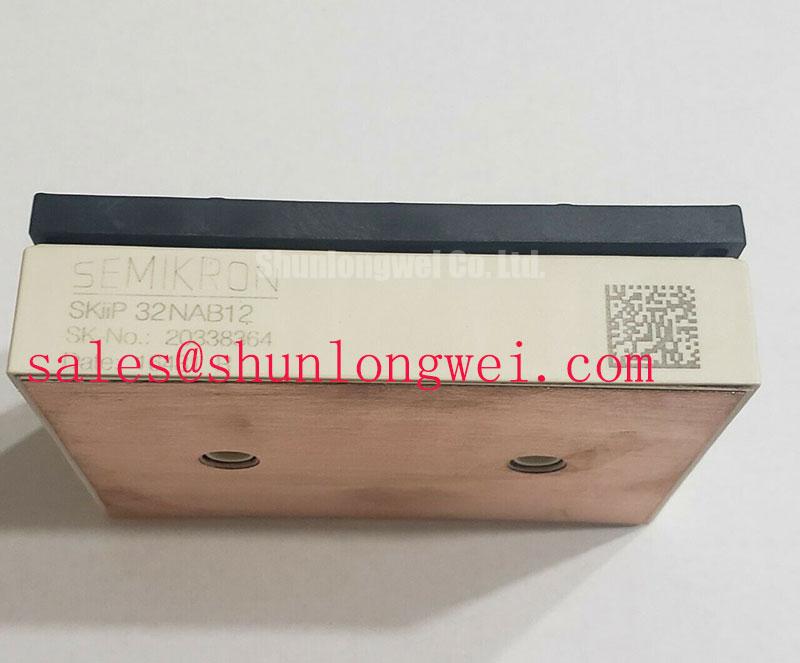
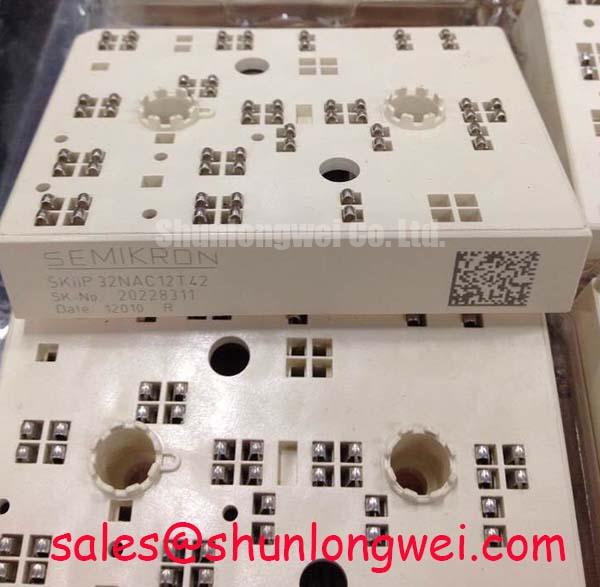
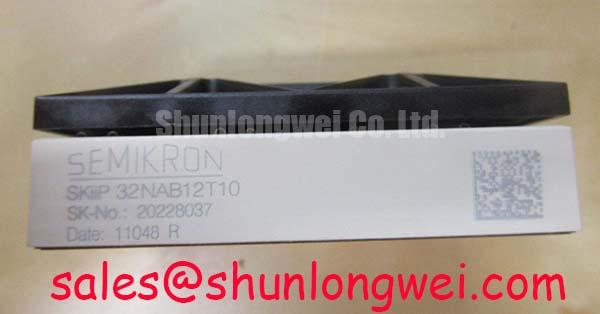
The SKIIP32NAB12T45 utilizes spring-based pressure contacts to eliminate solder fatigue, delivering unmatched mechanical resilience for high-vibration motor control. Top Specifications: 1200V | CIB Topology (Converter-Inverter-Brake) | Trench 4 IGBT. Key Benefits: Eradicates solder joint failures. Simplifies PCB mounting processes. What is the primary benefit of its pressure-contact design? Enhanced long-term reliability by eliminating solder fatigue. For 1200V industrial drives prioritizing mechanical robustness and assembly simplification, the SKIIP32NAB12T45 is the optimal choice.
Key Parameter Overview
Decoding the Specs for Enhanced Thermal Reliability
| Electrical Ratings | Collector-Emitter Voltage (VCES) | 1200V |
| IGBT Architecture | Trench 4 | |
| Integration & Topology | Circuit Configuration | CIB (Rectifier + Chopper + Inverter) |
| Thermal Management | Direct Bonded Copper (DBC) Substrate | |
| Mechanical Assembly | Connection Method | Spring-loaded Pressure Contacts |
| Case Style | MiniSKiiP 3 |
Application Scenarios & Value
Achieving System-Level Benefits in High-Vibration Motor Drives
Engineers often face catastrophic system failures due to fractured solder joints in heavy machinery. Industrial conveyor systems operate under severe mechanical vibration and frequent motor starting surges. The SKIIP32NAB12T45 excels here. Its Trench 4 chips handle aggressive starting currents. Simultaneously, the pressure-contact assembly withstands constant mechanical shaking.
Traditional soldered pins often crack under these combined electro-mechanical stresses. By adopting the MiniSKiiP architecture, designers eliminate this vulnerability entirely. This ensures uninterrupted operation on the factory floor. This mechanical resilience is equally valuable in rugged UPS installations. It also secures the reliability of an active PFC stage. Reliable connections dictate compliance with stringent industrial standards like IEC 61800-3.
While this module optimizes spring-contact assembly, systems demanding conventional soldered connections might consider the related FP50R12KT4. The FP50R12KT4 provides a comparable 1200V CIB setup for legacy PCB layouts. For comprehensive design frameworks, explore this practical guide to voltage and thermal management.
Technical Deep Dive
A Closer Look at the Pressure-Contact Design and Trench 4 Efficiency
The SKIIP32NAB12T45 completely departs from conventional power module packaging. SKiiP® Technology relies on spring contacts. These springs connect the Direct Bonded Copper (DBC) substrate directly to the control PCB. This removes the need for expensive wave soldering processes.
Think of traditional soldered joints like rigid concrete bridges during an earthquake. They inevitably fracture under continuous thermal and mechanical stress. The silver-plated pressure contacts act like advanced shock absorbers. They allow lateral micro-movements during intense thermal expansion. This prevents the electrical connection from degrading over thousands of operational cycles. This fundamentally resolves the thermal cycling limitations inherent in high-power 1200V converters.
Furthermore, the integrated Trench 4 IGBT silicon dramatically reduces switching and conduction losses. The DBC ceramic substrate acts like a multi-lane highway for heat. It rapidly spreads localized thermal loads away from the active silicon junctions. This efficient thermal transfer prevents dangerous hotspots. This dual approach maximizes both electrical efficiency and long-term mechanical longevity. Discover more about related architectures in our industrial applications knowledge base.
Frequently Asked Questions
Addressing Field Concerns for MiniSKiiP Implementation
- How does the pressure-contact technology of the SKIIP32NAB12T45 specifically prevent failure?
By removing hard solder joints, the module permits varying rates of thermal expansion between the PCB and the ceramic substrate. This eliminates the mechanical shear stress that causes solder cracking. - Why is the CIB (Converter-Inverter-Brake) topology advantageous for compact drives?
The CIB configuration integrates a three-phase rectifier, a braking chopper, and a three-phase inverter into one housing. This drastically reduces external wiring, lowering parasitic inductance and shrinking the overall footprint. - What role does the Trench 4 architecture play in thermal management?
Trench 4 IGBTs feature a lower saturation voltage. This reduces on-state power dissipation. Consequently, the module generates less heat, alleviating the burden on the cooling infrastructure.
Ready to upgrade your motor drive reliability? Contact our engineering team today to secure pricing and evaluate how this module fortifies your next-generation industrial designs.