
Content last revised on February 6, 2026
TM121SV-02L03: A 12.1-inch SVGA Display for Sustained Industrial Performance
Engineered for Reliability and Seamless Integration
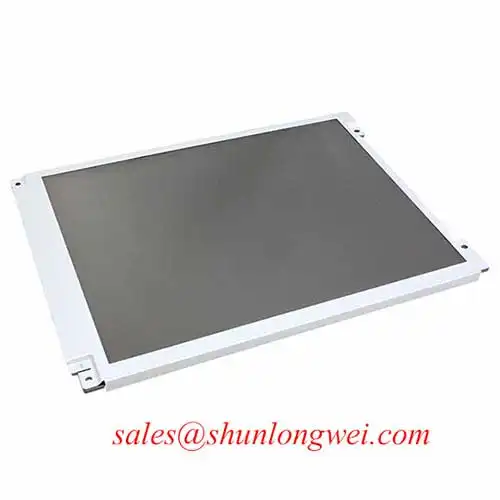
The TM121SV-02L03 is a 12.1-inch a-Si TFT-LCD module designed for consistent, long-term performance in industrial applications. It delivers a stable and reliable human-machine interface solution with key specifications including a 12.1-inch diagonal, 800x600 SVGA resolution, a standard LVDS interface, and a CCFL backlight. Its primary engineering benefits are found in its straightforward integration into existing system architectures and its role in extending the operational life of established industrial equipment. This panel is engineered as a direct-fit component for systems built around the 800x600 SVGA standard, ensuring compatibility and minimizing redesign efforts.
Key Parameter Overview
Decoding the Specs for System Compatibility
The technical specifications of the TM121SV-02L03 are tailored for applications prioritizing compatibility with established industrial hardware and software ecosystems. The combination of its resolution, interface, and backlight technology makes it a targeted solution for specific design requirements.
| Parameter | Specification | Engineering Value |
|---|---|---|
| Panel Size | 12.1 inches | Provides ample screen real estate for clear visualization of control data and status indicators. |
| Resolution | 800x600 (SVGA), 4:3 Aspect Ratio | Ensures software and graphical interface compatibility with a vast range of legacy and cost-effective industrial systems. |
| Interface | LVDS (1 channel, 6-bit) | Offers robust noise immunity and simplified cabling, a critical advantage in electrically noisy industrial environments. |
| Brightness | 100 cd/m² (Typ.) | Suitable for indoor control panel applications with controlled ambient lighting. |
| Contrast Ratio | 250:1 (Typ.) | Delivers clear differentiation for text and graphical elements in typical HMI applications. |
| Backlight System | CCFL with 20K Hour (Min.) Lifetime | Provides a proven illumination source compatible with existing CCFL inverter designs, simplifying repairs and maintenance. |
| Operating Temperature | 0°C to +50°C | Reliable performance for factory floor, control room, and other indoor industrial settings. |
Application Scenarios & Value
System-Level Benefits in Legacy and New Designs
For maintaining and deploying industrial systems built on the SVGA standard, the TM121SV-02L03 offers a proven, cost-effective display solution. Its primary value lies in lifecycle management and integration simplicity. Consider an industrial automation environment where a critical piece of test and measurement equipment from a decade ago suffers a display failure. The internal controller board is designed to output an 800x600 SVGA signal over a standard LVDS connection. The TM121SV-02L03 serves as a form-fit-function replacement, enabling technicians to restore functionality quickly without needing to source a scarce original part or engage in a costly and time-consuming redesign of the entire HMI subsystem. This minimizes equipment downtime and extends the return on investment of the original capital expenditure.
This focus on standard-resolution compatibility also benefits new designs for cost-sensitive applications where existing, proven software and hardware can be leveraged. For systems requiring higher data density and more modern backlight technology, the G121XCE-L01 presents an alternative with a higher XGA resolution.
Technical Deep Dive
A Closer Look at the LVDS Interface for Industrial Reliability
A key aspect of the TM121SV-02L03's suitability for industrial settings is its use of the LVDS (Low-Voltage Differential Signaling) interface. This interface technology is inherently robust against the electromagnetic interference (EMI) commonly generated by motors, relays, and power supplies on a factory floor. Unlike older single-ended parallel interfaces, LVDS transmits data using two wires with opposite polarity. The receiver interprets the difference between these signals, effectively canceling out common-mode noise that might be picked up along the cable length.
To understand this benefit, think of the LVDS signal as a quiet, private conversation in a loud factory. While older interfaces are like shouting across the room, susceptible to being drowned out by background noise, LVDS is a clear whisper directly into the receiver's ear. This differential signaling method not only ensures data integrity over longer cable runs but also generates less EMI itself, simplifying system-level emissions compliance for the final product—a critical consideration for TFT-LCD integration into sensitive medical or laboratory equipment.
Frequently Asked Questions
What is the primary advantage of the TM121SV-02L03's 800x600 SVGA resolution?
Its primary advantage is guaranteed compatibility with a wide installed base of industrial controllers and software designed for this specific resolution. This makes it an ideal component for repairs, refurbishments, and new products that leverage existing, validated system platforms, thereby reducing development and deployment costs.
Why would an engineer choose a display with a CCFL backlight today?
An engineer would specifically choose a CCFL display like the TM121SV-02L03 when servicing or manufacturing equipment that already uses a CCFL inverter. This allows for a direct component swap without needing to re-engineer the backlight power and control circuitry for a modern WLED system, saving significant design and validation time.
Are the viewing angles of 45/45/10/30 (L/R/U/D) suitable for all industrial applications?
These viewing angles, characteristic of TN panel technology, are best suited for applications where the operator is positioned directly in front of the screen, such as a dedicated machine control panel or instrument readout. What is the benefit of its TN panel technology? It provides a cost-effective solution with fast response times. For applications requiring wide, multi-viewer legibility, a display with IPS technology should be considered.
What does a '1 channel, 6-bit' LVDS interface signify for system design?
This specification indicates the display can render 262,144 colors (2^6 for each of the three primary colors) and requires a simple, low-cost LVDS transmitter on the host controller board. It is a straightforward and widely supported interface that simplifies the electrical connection and ensures compatibility with many standard single-board computers and graphics controllers used in a-Si TFT systems.
The strategic value of a component like the TM121SV-02L03 extends beyond its immediate technical function. For OEMs and system integrators who support long-lifecycle industrial products, securing a supply of reliable, specification-stable displays is fundamental to providing long-term customer support and managing the total cost of ownership for their end-users. This display represents a commitment to that stability, ensuring that critical systems built on the proven SVGA standard can be maintained and deployed for years to come.