
Content last revised on November 29, 2025
Engineering Analysis of the TV101WUB-NW6: A 10.1-Inch WUXGA Display for High-Clarity Industrial Applications
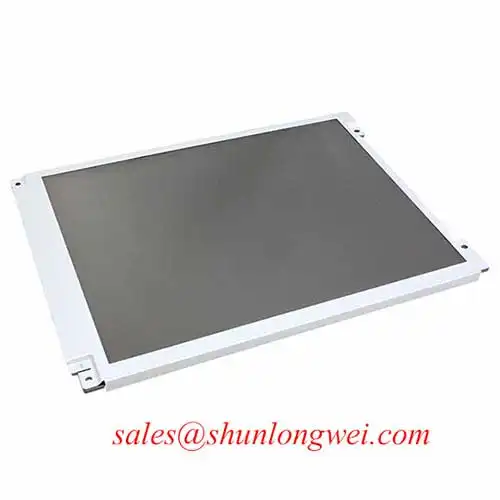
The BOE TV101WUB-NW6 is a 10.1-inch a-Si TFT-LCD module delivering exceptional visual performance through a combination of high resolution, high brightness, and a modern interface. With key specifications of 1920x1200 (WUXGA) resolution, a typical brightness of 1000 cd/m², and an eDP (Embedded DisplayPort) interface, this panel is engineered for applications demanding superior image clarity and simplified system design. Its primary engineering benefits include excellent readability in high ambient light and streamlined integration with contemporary System on Chip (SoC) platforms. For portable industrial tablets or medical devices requiring high-PPI visual accuracy in bright conditions, the TV101WUB-NW6 is a benchmark performer.
Application Scenarios & Value
System-Level Benefits in Advanced HMI and Portable Diagnostic Equipment
The TV101WUB-NW6 is designed to address critical challenges in modern Human-Machine Interface (HMI) design, particularly for portable and outdoor equipment. For an engineer developing a next-generation field service tablet or a portable medical diagnostic unit, the panel's specifications provide direct solutions. The 1000 cd/m² high brightness ensures the display remains crisp and readable even under direct sunlight, a crucial factor for reducing user error and improving operational safety in outdoor settings. You can learn more about designing such systems in this guide to sunlight-readable HMIs. Furthermore, its 1920x1200 WUXGA resolution on a compact 10.1-inch screen provides a high pixel density of 224 PPI. This allows for the rendering of intricate graphical interfaces, detailed schematics, or high-definition video feeds without pixelation, which is essential for accurate data interpretation. The integration is simplified by the eDP interface, which reduces pin count, minimizes EMI, and offers a direct connection to modern processors, lowering both design complexity and power consumption.
While the TV101WUB-NW6 excels in high-resolution applications, for systems where a standard HD resolution is sufficient but other industrial features are paramount, the G101EVN03.1 offers an alternative with its 1280x800 resolution in a similar form factor.
Key Parameter Overview
Decoding the Specs for High-Performance Display Integration
The technical specifications of the TV101WUB-NW6 are optimized for visual performance and robust integration. The following table provides a functional grouping of its key parameters.
| Optical Characteristics | |
| Panel Size | 10.1 inch |
| Resolution | 1200(RGB)×1920 (WUXGA) |
| Brightness | 1000 cd/m² (Typ.) |
| Viewing Angle | 80/80/80/80 (Typ.)(CR≥10) |
| Contrast Ratio | 1000:1 (Typ.) |
| Display Colors | 16.7M (8-bit) |
| Electrical and Interface | |
| Interface Type | eDP (Embedded DisplayPort) (4 Lanes) |
| Power Supply (Logic) | 3.3V (Typ.) |
| Backlight | WLED |
| Mechanical and Environmental | |
| Active Area | 135.36 × 216.576 mm |
| Outline Dimensions | 143.0 × 229.45 × 5.3 mm |
| Operating Temperature | -20 ~ 60 °C |
| Storage Temperature | -30 ~ 70 °C |
Technical Deep Dive
Dissecting the Impact of ADS Technology and High Pixel Density on Visual Performance
Two core technologies elevate the TV101WUB-NW6's performance: its ADS panel technology and high pixel density. ADS, or Advanced Super Dimension Switch, is an advanced implementation of IPS (In-Plane Switching) technology. It is engineered to maximize light transmittance while maintaining wide, consistent viewing angles. For an engineer, this means the display avoids the color shifting and contrast degradation common in older TN panels when viewed off-axis. Think of it like the difference between a spotlight and a lantern; a standard TN panel is a spotlight, clear only when viewed head-on, whereas an ADS panel is a lantern, casting a clear, consistent image in all directions. This is a non-negotiable feature in medical devices where multiple practitioners may need to view the screen simultaneously, or in an industrial setting where an HMI is mounted in a fixed position but must be read from various angles.
This is complemented by the panel's high pixel density of 224 PPI (Pixels Per Inch). At this density, the individual pixels become virtually indistinguishable to the human eye at a typical viewing distance. The engineering value is the ability to render vector graphics, small text, and fine lines with the smoothness of a printed page. This "retina" quality display capability is critical for applications where misinterpreting a character or a thin line on a diagnostic chart could have significant consequences. This combination makes the TV101WUB-NW6 a powerful tool for any application where visual accuracy is paramount. A deeper understanding of the underlying technology can be found in The Ultimate Guide to TFT LCD.
Frequently Asked Questions
Engineering-Centric Inquiries for the TV101WUB-NW6
How does the 1000 cd/m² brightness of the TV101WUB-NW6 benefit outdoor HMI design beyond simple visibility?
Beyond overcoming direct sunlight, the high brightness provides the headroom needed for optical bonding and applying anti-reflective or protective overlays. These additions can reduce reflections and improve impact resistance but inherently cause some light loss. Starting with a 1000-nit panel ensures that even after these crucial value-added processes, the final display assembly maintains excellent readability and a high contrast ratio in bright ambient conditions.
What are the specific advantages of the 4-lane eDP interface on the TV101WUB-NW6 compared to a traditional LVDS setup?
The eDP interface offers several engineering advantages. First, it requires significantly fewer conductors than a dual-channel LVDS interface to support the same WUXGA resolution, simplifying cable routing and reducing potential points of failure. Second, its packet-based architecture and embedded clock result in lower EMI emissions, a critical consideration for medical certifications and sensitive industrial environments. Finally, it enables more advanced power-saving features, such as panel self-refresh, which is a key benefit for battery-powered portable devices.
To further evaluate the TV101WUB-NW6 for your system design or to inquire about its integration capabilities, please contact our technical sales team for comprehensive support and documentation.