


Content last revised on March 11, 2026
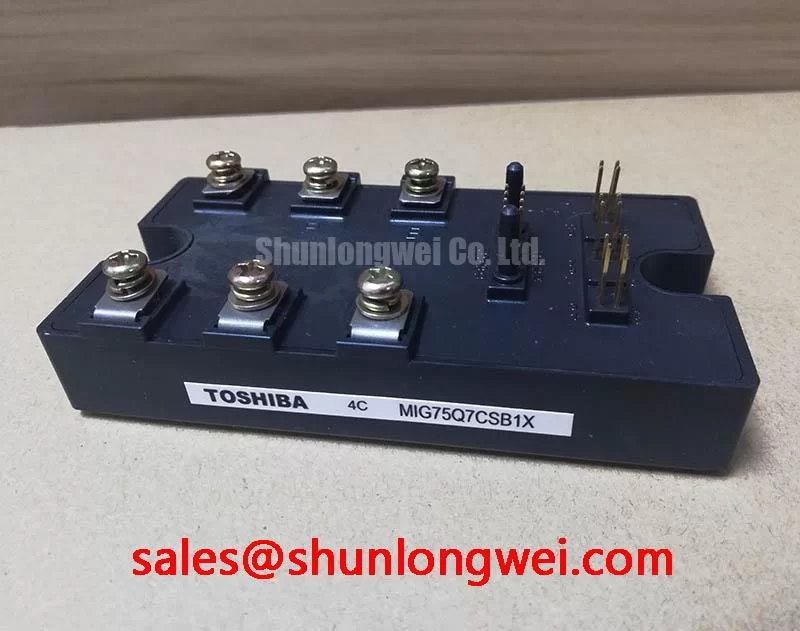
Mitsubishi MIG75Q7CSB1X | Integrated 7-in-1 IGBT for Compact Motor Drives
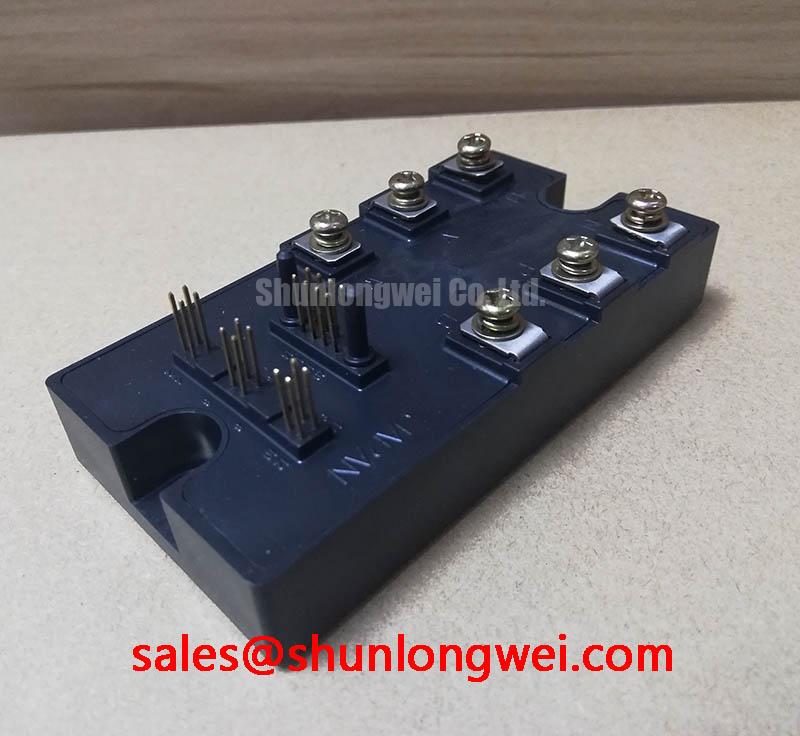
The Mitsubishi MIG75Q7CSB1X is a highly integrated Power Integrated Module (PIM) designed to streamline the development of compact and reliable motor control systems. By combining a three-phase inverter bridge with a dedicated brake chopper circuit into a single, thermally efficient package, this module offers a robust, all-in-one solution for engineers seeking to reduce system complexity, minimize assembly time, and enhance overall power density.
Key Product Highlights:
- Voltage and Current Rating: Engineered for demanding applications with a 1200V collector-emitter voltage (Vces) and a 75A continuous collector current (Ic).
- 7-in-1 Integrated Topology: Features a full three-phase inverter (six IGBTs and six free-wheeling diodes) plus an additional IGBT and diode for a dynamic brake chopper circuit.
- Optimized for Motor Control: The integrated brake unit simplifies the implementation of regenerative braking, essential for applications requiring rapid deceleration or control of overhauling loads.
- Simplified System Design: Reduces PCB complexity, minimizes stray inductance between components, and simplifies thermal management by consolidating the entire power stage onto a single heatsink.
Key Parameter Overview
For engineers requiring quick access to performance data, the following table summarizes the essential electrical characteristics of the MIG75Q7CSB1X. For a comprehensive list of specifications, you can download the official datasheet.
| Parameter | Value |
|---|---|
| Collector-Emitter Voltage (VCES) | 1200 V |
| Collector Current (IC) | 75 A |
| Collector-Emitter Saturation Voltage (VCE(sat)) @ Ic=75A | 2.7 V (Max) |
| Total Power Dissipation (PC) per IGBT | 480 W |
| Operating Junction Temperature (Tj) | -40 to +150 °C |
Application Scenarios & Engineering Value
The unique 7-in-1 configuration of the Mitsubishi MIG75Q7CSB1X makes it a standout choice for specific power conversion applications where integration provides a distinct competitive advantage.
- Variable Frequency Drives (VFDs): In compact VFD designs, the integrated brake chopper is a critical feature. It allows for the direct connection of an external braking resistor without the need for a separate, bulky braking module. This saves significant panel space, reduces wiring complexity, and lowers the overall bill of materials (BOM).
- Robotic and CNC Servo Drives: Precision motion control systems frequently require rapid acceleration and deceleration. The MIG75Q7CSB1X provides the core power switching for the motor and efficiently handles the regenerated energy during braking, ensuring stable DC bus voltage and protecting the system from overvoltage faults. This contributes directly to the reliability needed in high-precision robotic servo drives.
- General Purpose Inverters: For systems like industrial pumps, fans, and conveyor belts, reliability and ease of manufacturing are key. Using a single module like this simplifies the assembly process and reduces the number of potential failure points compared to a design based on multiple discrete components.
Technical Deep Dive: The Advantage of Integrated Architecture
The engineering philosophy behind the MIG75Q7CSB1X centers on the strategic benefits of integration. While discrete components offer design flexibility, an integrated module provides superior performance and reliability in a standardized footprint. The internal layout is optimized to minimize the parasitic inductance that can cause voltage overshoots during high-speed switching, a common challenge in power electronics design. This inherent optimization simplifies the gate drive design and often reduces the need for extensive snubber circuits.
This module utilizes robust planar gate IGBT technology, likely a variant of Mitsubishi's proven CSTBT™ (Carrier Stored Trench-Gate Bipolar Transistor) architecture. This technology provides a well-understood and reliable balance between conduction losses (VCE(sat)) and switching losses, making it a workhorse for applications operating in the low-to-mid frequency range (2 kHz to 15 kHz) typical of industrial motor drives.
Frequently Asked Questions (FAQ)
1. What are the essential gate drive requirements for the MIG75Q7CSB1X?
To ensure reliable operation and prevent spurious turn-on, a stable gate drive voltage of +15V for turn-on and a negative voltage between -5V and -10V for turn-off is highly recommended. Implementing adequate dead-time in the control logic is critical to prevent shoot-through between the high-side and low-side IGBTs in each phase leg. For robust protection, using a gate driver IC with built-in desaturation detection is best practice. For further reading, explore these practical tips for robust IGBT gate drive design.
2. How does the module's thermal resistance impact my heatsink selection?
The datasheet specifies the thermal resistance from junction to case (Rth(j-c)). Your thermal design must ensure that the junction temperature remains below the 150°C maximum under worst-case operating conditions (maximum ambient temperature, load, and switching frequency). The benefit of an integrated module is that all seven power devices are on a single, isolated baseplate, simplifying the thermal interface to a single heatsink and ensuring more uniform temperature distribution across the power stage.
For assistance with thermal calculations or selecting the right IGBT modules for your specific application, please contact our technical team for expert guidance.