Content last revised on September 10, 2026
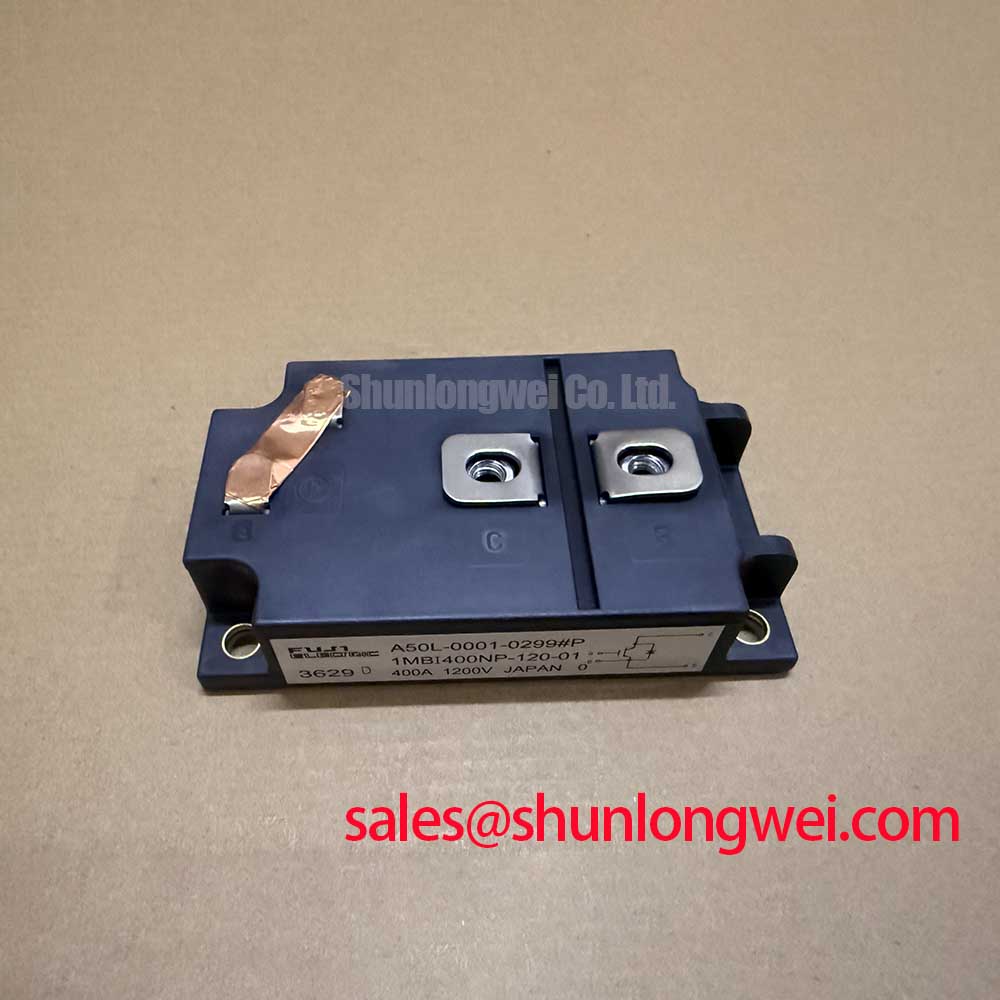
1MBI400NP-120 Fuji Electric High-Power IGBT Module
The 1MBI400NP-120, a flagship component within the Fuji Electric N-series, is a single-channel IGBT Module engineered for high-performance power conversion. By integrating a low-loss IGBT chip with a high-speed diode in a specialized M122 package, this module addresses the stringent requirements of industrial motion control and renewable energy systems. For 690V industrial line drives prioritizing thermal margin and switching efficiency, this 1200V module stands as a technically superior choice for system stability.
Top Specifications: 1200V Vces | 400A Continuous Ic | 2.3V typical Vce(sat).
Key Benefits: Reduced switching energy losses and enhanced thermal cycling reliability.
Engineering Insight: Does the 1MBI400NP-120 support high-frequency switching? Yes, the N-series architecture is specifically optimized to minimize Eoff losses, making it suitable for carrier frequencies in the 10-15kHz range without excessive derating.
Key Parameter Overview
Decoding the Specs for Enhanced Thermal Reliability
The technical evaluation of the 1MBI400NP-120 begins with its robust electrical ratings and thermal characteristics. The following data is grouped to assist engineers in calculating heat sink requirements and safe operating boundaries.
| Electrical Characteristic | Value / Condition |
|---|---|
| Collector-Emitter Voltage (Vces) | 1200V |
| Continuous Collector Current (Ic) | 400A (at Tc=25°C) |
| Saturation Voltage Vce(sat) | 2.30V (typical) |
| Gate-Emitter Threshold Voltage | 4.5V to 8.5V |
| Thermal Resistance Rth(j-c) | 0.063 °C/W (max) |
| Isolation Voltage | 2500V AC (1 minute) |
Download the 1MBI400NP-120 datasheet for detailed specifications and performance curves.
Application Scenarios & Value
Achieving System-Level Benefits in High-Frequency Power Conversion
Engineers often face the challenge of managing transient thermal spikes during heavy motor startup sequences. The 1MBI400NP-120 addresses this through its high Safe Operating Area (SOA) and low thermal resistance. In a typical Variable Frequency Drive (VFD) application, the module handles the heavy inrush current of a 200kW motor by leveraging its 400A rating to provide sufficient headroom, preventing localized silicon hotspots that lead to premature failure.
Beyond standard motor drives, this module is frequently integrated into Uninterruptible Power Supplies (UPS) and Solar Inverter stages. The 1200V rating is essential for 400V-480V AC grid-tied systems, ensuring protection against voltage transients. For designs requiring even higher current density or parallel configurations, the 1MBI400N-120 offers a similar footprint with varying switching characteristics. Furthermore, for half-bridge topologies, the related 2MBI400N-060 may be considered depending on the bus voltage requirements.
This module aligns with IEC 61800-3 standards for industrial drives, ensuring electromagnetic compatibility and reliability in harsh electrical environments. Integrating this component allows for a reduction in the total cost of ownership by extending the maintenance intervals of the power stack.
Technical Deep Dive
A Closer Look at the N-Series Chip Structure and Thermal Path
The 1MBI400NP-120 utilizes Fuji Electric's proprietary N-series trench-gate technology. Unlike standard planar structures, this trench-gate design significantly reduces the drift region's resistance, leading to a lower Vce(sat). This reduction in conduction loss is a critical factor when the module operates at high duty cycles. To visualize this, consider the IGBT as a high-speed valve; the N-series design narrows the internal "piping" resistance, allowing 400A to flow with minimal pressure drop (voltage drop), thus generating less heat.
Thermal management is further enhanced by the direct copper bonding (DCB) substrate within the M122 package. With a maximum thermal resistance of 0.063 °C/W, the module ensures that the heat generated at the silicon junction is efficiently transferred to the baseplate. This low Rth(j-c) is equivalent to having a wider thermal highway, allowing more energy to be dissipated without reaching the critical 150°C junction temperature. Engineers should refer to the engineer's ultimate guide to IGBT modules for deeper analysis of these packaging technologies.
Frequently Asked Questions
How does the Rth(j-c) of 0.063 °C/W directly impact heatsink selection for the 1MBI400NP-120?
The low Rth(j-c) allows for a higher power density within the system. Practically, it means the 1MBI400NP-120 can dissipate more power for a given heatsink size compared to modules with higher thermal resistance, or conversely, it allows the use of a smaller, more cost-effective cooling solution while maintaining a safe junction temperature.
Is the 1MBI400NP-120 suitable for soft-switching topologies like resonant converters?
Yes. While optimized for hard-switching, its low Vce(sat) and robust Reverse Bias Safe Operating Area (RBSOA) make it an excellent candidate for resonant topologies. In these applications, the switching losses are further minimized, allowing the module to operate near its full 400A rating with significantly reduced thermal stress. For more on selection criteria, see our guide on IGBT selection beyond Vce(sat).
From a strategic perspective, selecting the 1MBI400NP-120 represents a commitment to long-term system reliability in the evolving industrial automation landscape. As global efficiency standards for motor drives become more stringent, the low-loss characteristics of Fuji's N-series provide the necessary technical foundation for Tier 1 engineering projects.