Content last revised on September 10, 2026
Static Incoming Inspection and Parametric Baselines for 6MBP100TEA060-50
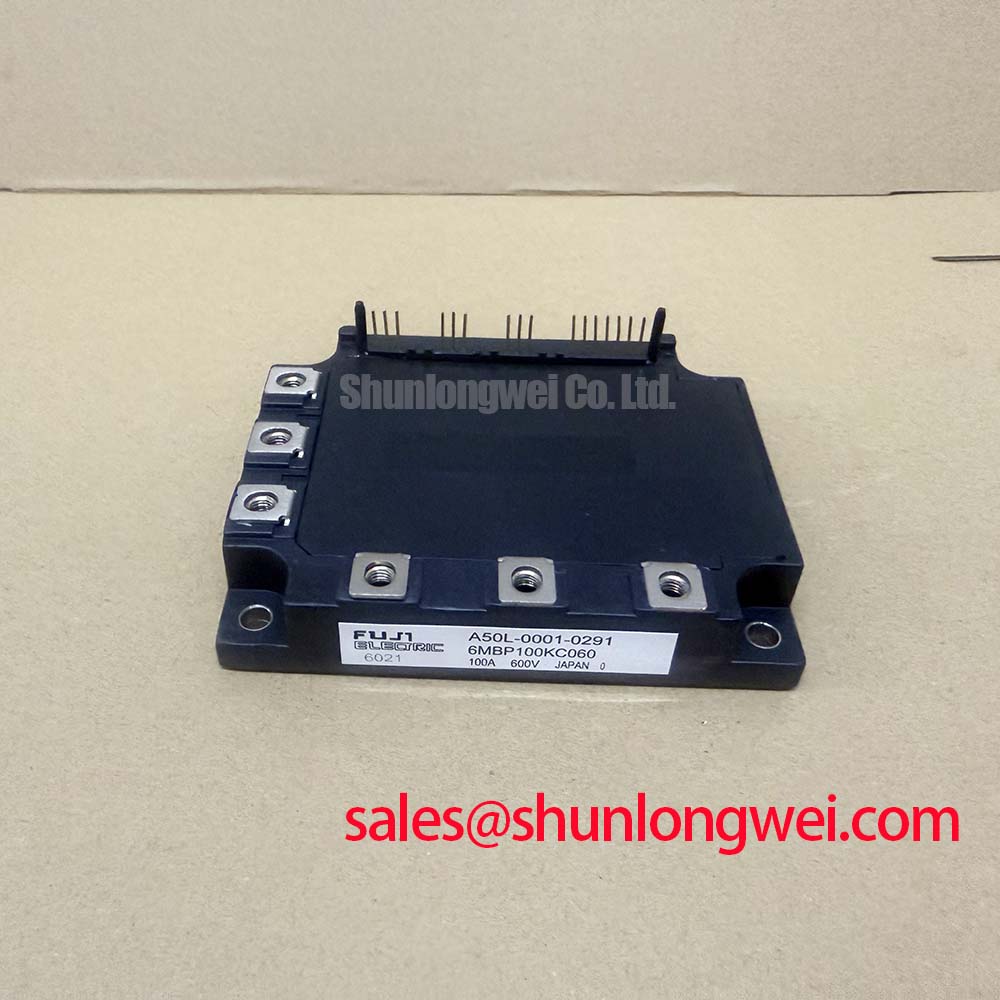
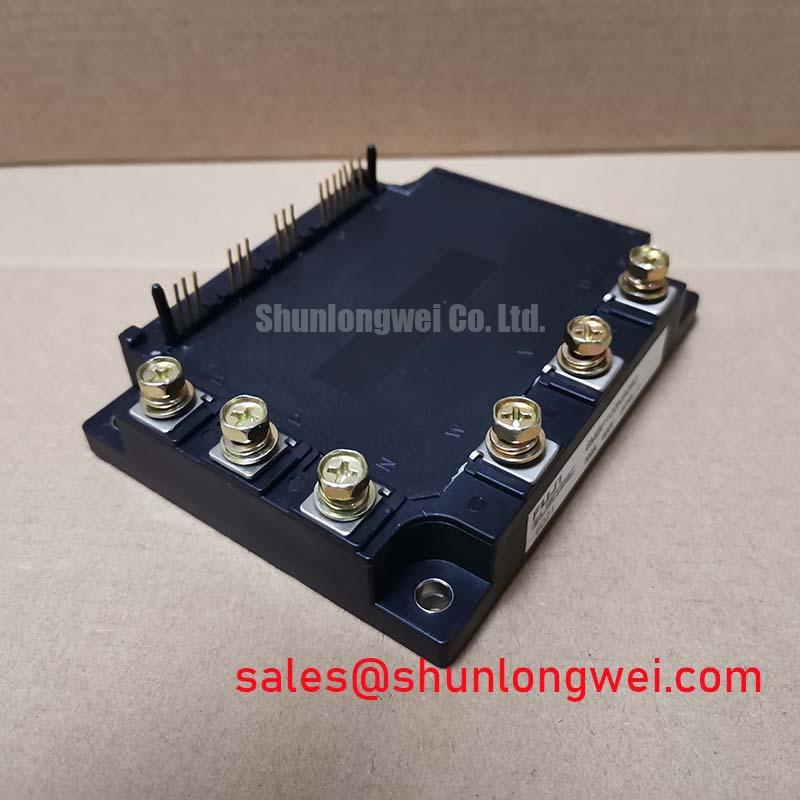
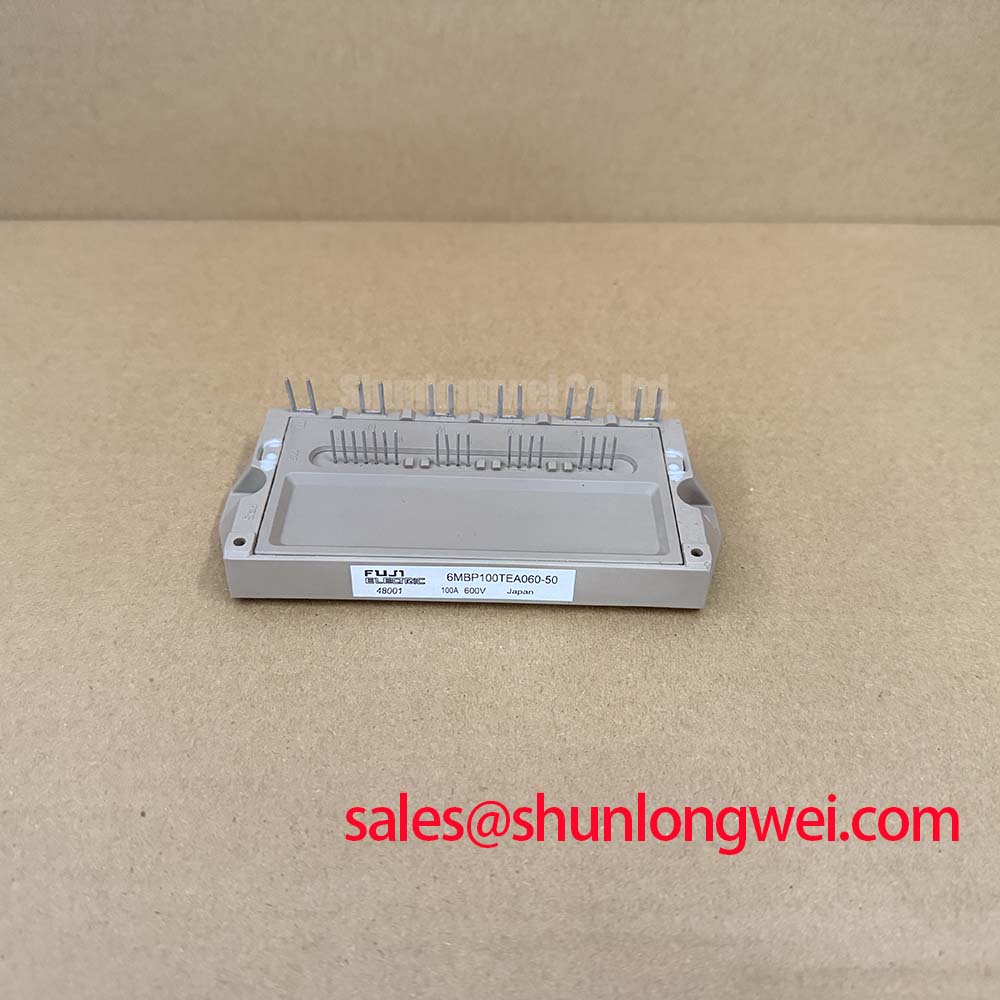
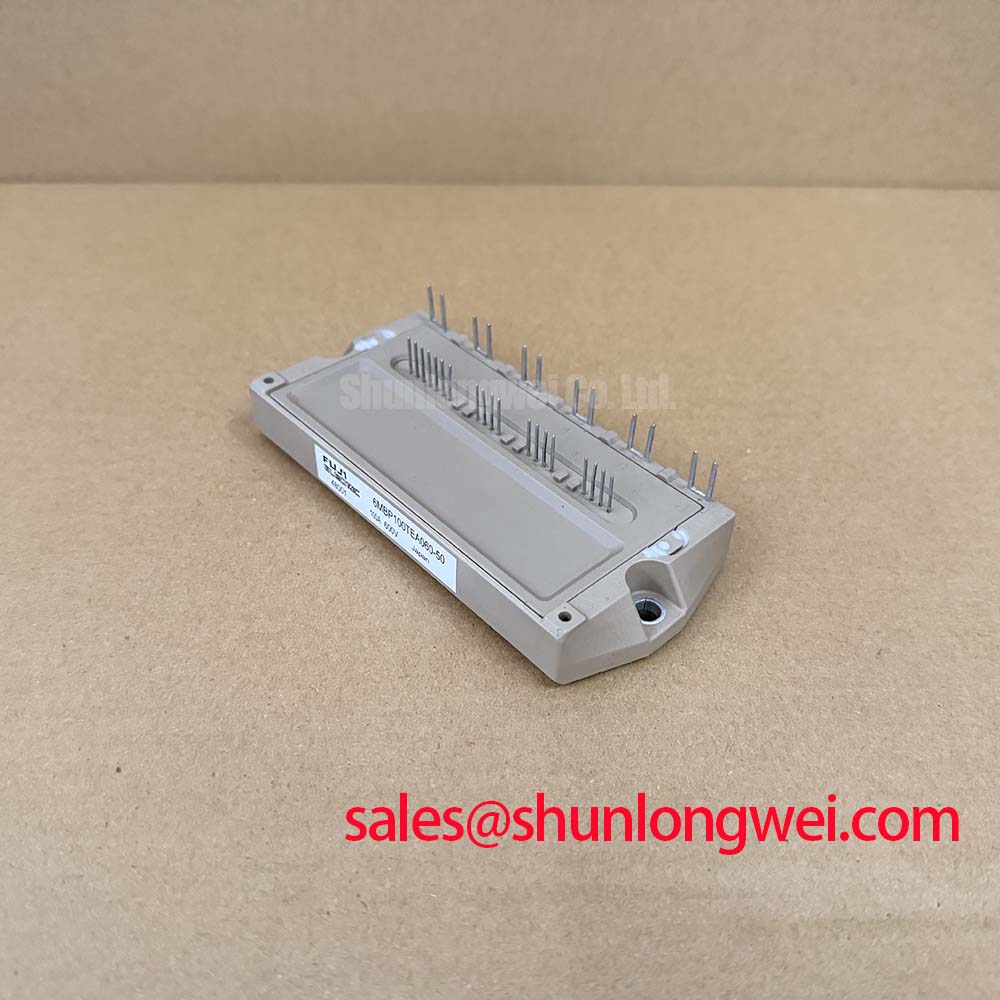
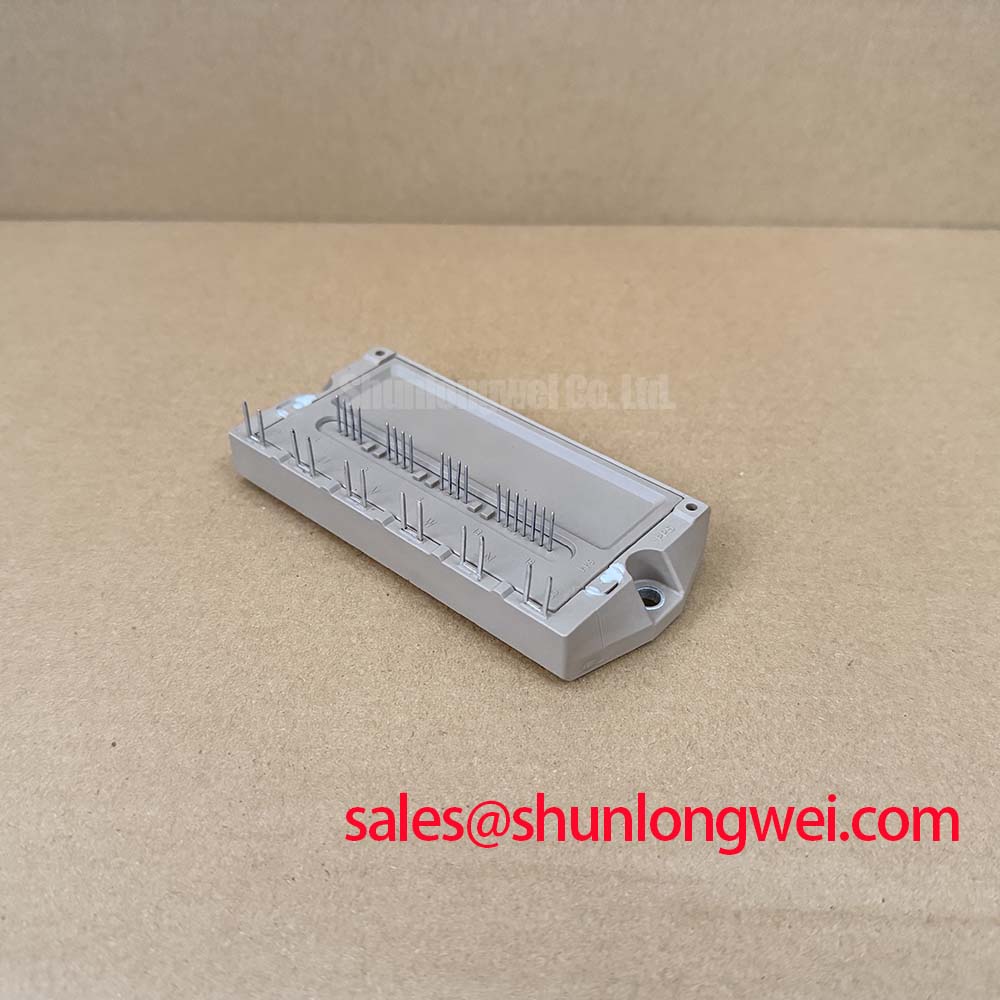
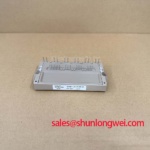
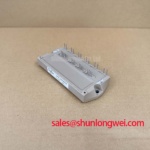
Incoming quality assurance for intelligent power modules (IPMs) deployed in critical environments requires rigorous benchtop verification before mechanical assembly. The 6MBP100TEA060-50 integrates a 6-pack 600V/100A IGBT bridge with dedicated internal gate drivers, high-side level shifting, and comprehensive protection circuits into a compact module package. When testing incoming batches destined for harsh industrial environments, establishing a cold static parametric baseline is essential to verify structural integrity and silicon consistency.
During initial bench evaluations, the digital multimeter (DMM) in diode mode serves as the primary tool to verify freewheeling diode (FWD) forward voltage drop (VF) and internal body diode symmetry. Measuring between the DC negative bus terminal (N) and each AC output phase (U, V, W), as well as between each phase and the DC positive bus terminal (P), should yield consistent forward conduction drops between 1.15V and 1.45V at 1mA test current at 25°C ambient temperature. Any channel deviation exceeding 50mV typically signals internal junction irregularities or bond wire anomalies.
💡 Bench Tip: Before applying any low-voltage logic power to the VCC control pins, verify the static impedance between the control supply inputs (VCCL, VCCH) and their respective signal grounds (GND). A healthy internal CMOS drive stage on this module exhibits input resistance in the high-kiloohm to megaohm range. Use an ESD-safe grounded workstation with dissipative matting during this cold-state measurement, as internal gate structures remain sensitive to electrostatic discharge across external control pins prior to full board-level decoupling.
| Parameter | Official Specification Value | Engineering Function & Evaluation Purpose |
|---|---|---|
| Collector-Emitter Voltage (VCES) | 600V (Official Datasheet Specification) | Defines the absolute maximum blocking voltage for 200V–240V AC line drive systems and low-voltage DC buses. |
| Continuous Collector Current (IC) | 100A at Tc = 25°C (Official Datasheet Specification) | Sets the maximum continuous channel current delivery before thermal limit derating occurs. |
| Isolation Voltage (Viso) | AC 2500V, 1 Minute (Official Datasheet Specification) | Ensures safety boundary isolation between power-stage copper baseplate and control electronics. |
| Under-Voltage Lockout (VUV) | 11.0V to 12.5V (Official Datasheet Specification) | Protects against gate operation in the high-dissipation linear active region when bias drops. |
| Thermal Resistance Rth(j-c) (IGBT) | 0.36 °C/W (Official Datasheet Specification) | Determines junction temperature rise relative to the module baseplate under conduction and switching losses. |
| Thermal Resistance Rth(j-c) (FWD) | 0.665 °C/W (Official Datasheet Specification) | Governs thermal dissipation capability of the anti-parallel freewheeling diode array during inductive freewheeling. |
High-reliability systems requiring higher continuous current handling often evaluate higher-capacity discrete stages such as the 6MBI200FA-060 to achieve equivalent 600V switching over wider thermal safety margins. Incorporating standardized baseline checks ensures early filtering of assembly inconsistencies before field integration.
Optocoupler vs Digital Coreless Transformer Isolation in High-Voltage Switching
Galvanic signal isolation between master controller DSPs and the integrated gate drive inputs of the 6MBP100TEA060-50 is a fundamental design requirement, particularly in high-altitude wind turbine pitch and yaw drive cabinets. At elevations exceeding 3000 meters, reduced air density degrades dielectric breakdown strength according to Paschen's law, requiring strict adherence to IEC 60664-1 clearance and creepage multiplication factors (typically requiring a 1.48× clearance multiplier compared to sea level).
Designing interface isolation requires comparing classic optocouplers against digital coreless transformer isolators. Fast-switching IGBT stages create steep voltage transients with typical slew rates of dv/dt > 15kV/µs. Standard optocouplers utilize a light-emitting diode coupled to a photodiode receiver across a silicone or polyimide insulation layer. Under steep common-mode transients, the parasitic capacitance across the optocoupler barrier (often 0.5pF to 1.5pF) injects common-mode displacement current into the secondary receiver, leading to false logic low-to-high transitions on active-low fault or PWM lines. Designers selecting optocouplers must guarantee a minimum Common-Mode Transient Immunity (CMTI) of 35kV/µs to 50kV/µs (Design Consideration based on pitch motor drive switching noise).
Digital coreless transformer isolators utilize integrated high-voltage planar micro-transformers on semiconductor dies, achieving CMTI ratings exceeding 100kV/µs to 150kV/µs. These digital isolators maintain pulse-width distortion under 2ns to 5ns, compared to 20ns to 100ns in optical alternatives over the -40°C to +105°C operating range. When routing PWM and fault signals to the IPM control pins, layout engineers should maintain a dedicated ground plane break beneath the isolation barrier of at least 8.0mm (Design Consideration for 2500V isolation class at high altitude).
In comprehensive power converter topologies, the auxiliary and front-end stages frequently pair these isolation schemes with multi-functional power assemblies such as the 7MBI100U4E-120-50 to streamline converter architecture. Diagnostic testing and isolation integrity assessments are detailed in the Field Engineer’s Handbook for high-altitude installation validation.
Baseplate Convexity Compensation and Screw Tightening Sequence Guidelines
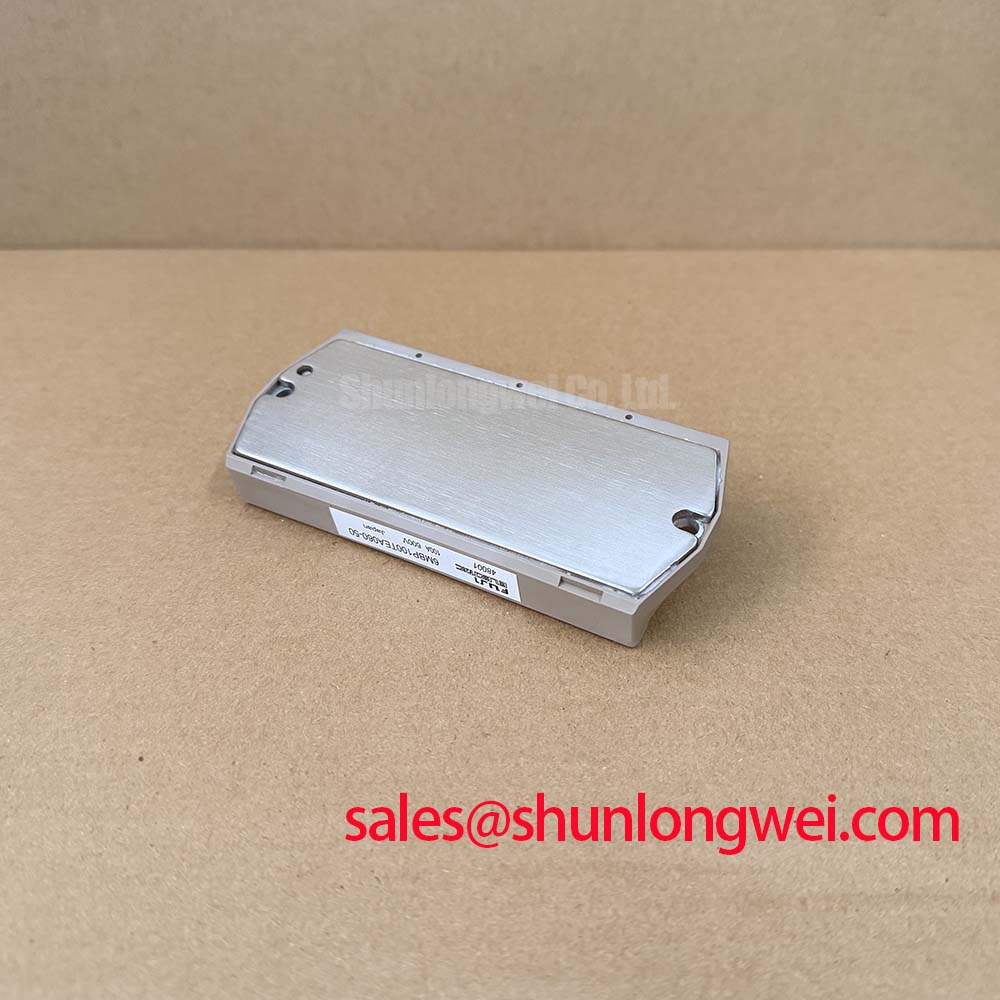
Thermal management of the 6MBP100TEA060-50 depends on planar mechanical contact between the copper baseplate and the heatsink. Power modules are intentionally manufactured with a controlled baseplate convexity (typically +0 to +100µm) to guarantee that when clamped, maximum contact pressure concentrates directly beneath the silicon dies where heat flux is highest.
Applying the Thermal Interface Material (TIM) requires precise control over layer thickness. A wet grease layer applied between 50µm and 100µm using a silk-screen or precision stencil prevents both dry-out voids and excessive thermal resistance. If the layer is too thick, the compound acts as an insulator, whereas insufficient compound leaves microscopic air pockets with high thermal resistance.
⚠️ Field Alert: Uneven screw torque or an incorrect fastening sequence can warp the ceramic DCB (Direct Copper Bonded) substrate inside the module, causing microcracking in the silicon die solder layers. Always execute a cross-pattern two-stage torque sequence.
- Step 1 (Pre-fastening): Mount all chassis screws to a temporary torque of 0.5 N·m to 1.0 N·m in diagonal order (M1 → M2 → M3 → M4) to allow uniform squeeze-out of excess thermal compound.
- Step 2 (Final Torquing): Allow 5 minutes for the TIM to spread evenly under initial pressure, then tighten to the final mounting torque of 2.5 N·m to 3.5 N·m (Design Consideration for standard M5 module mounting hardware).
- Step 3 (Terminal Connection): Tighten main power terminals to 2.5 N·m to 3.5 N·m using a calibrated torque screwdriver, ensuring no dynamic cantilever stress is applied to the casing.
Thermal calculations must account for the junction-to-case resistance Rth(j-c) = 0.36 °C/W (Official Datasheet Specification for IGBT) and Rth(j-c) = 0.665 °C/W (Official Datasheet Specification for FWD). Operating the module at elevated carrier frequencies (e.g., 8kHz to 16kHz) generates higher switching losses, requiring proportional forced-air cooling velocity (minimum 3.0 m/s airflow across heatsink fins) to keep the baseplate temperature below 85°C during continuous 100A operation.
Suppressing C_res Induced Gate Voltage Spikes in High-Voltage Inverter Bridges
In high-speed 3-phase inverter bridges, the rapid rise and fall of phase-leg output voltage introduces severe displacement currents through the reverse transfer capacitance (Miller capacitance, Cres or Cgc) of the complementary inactive IGBT. During turn-on of the low-side switch, the collector-emitter voltage across the high-side switch ramps up rapidly at rate dv/dt. This induces a current flowing through Cres into the gate node, creating a transient voltage drop across the internal gate resistance.
If this induced gate spike exceeds the threshold voltage Vth, an unintended turn-on (cross-conduction shoot-through) occurs, creating a direct short circuit across the DC bus. The 6MBP100TEA060-50 integrates internal drive circuitry designed with low-impedance gate sink paths and Under-Voltage Lockout (VUV operating between 11.0V and 12.5V, Official Datasheet Specification) to suppress these risks. The protection stops gate drive pulses when the control supply dips, preventing destructive linear-mode conduction.
To evaluate transient suppression across power architectures, engineers reference manufacturing technologies from Fuji Electric Global Power Semiconductor Technologies alongside power topologies implemented by manufacturers like SanRex Sansha Electric Power Semiconductor Modules. Implementing external protection elements such as metal oxide varistors (MOVs) and RC snubber networks directly across the P-N input pins suppresses parasitic loop inductance voltage spikes, reinforcing bridge stability under high-speed pitch control cycles.
Atmospheric Neutron Radiation Impact on Silicon Reliability at High Altitudes
Wind turbines installed in high-altitude environments (>3000m) experience significantly increased cosmic-ray atmospheric neutron fluxes compared to sea-level installations. Terrestrial high-energy neutrons (energies > 10 MeV) can collide with the silicon lattice within the power semiconductor depletion region. This collision generates secondary localized recoil ions that deposit dense electron-hole plasma columns. Under high electric fields, this charge generation can initiate catastrophic localized avalanche breakdown, known as Single Event Burnout (SEB).
According to terrestrial radiation modeling methodologies described in JESD89A and industry cosmic ray reliability standards, atmospheric neutron flux intensity increases roughly by a factor of 5 to 10 at 3000 meters altitude relative to sea level. Because SEB occurs instantaneously without warning or parameter drift, the primary mitigation technique is operational DC-bus voltage derating.
For a power module rated at VCES = 600V (Official Datasheet Specification), maintaining a high safety margin on the DC-link operating voltage is critical. Operating the DC bus at 300V to 380V maintains the internal electric field well below the critical threshold for secondary avalanche multiplication, reducing the neutron-induced Failure in Time (FIT) rate to manageable levels. System engineers must balance DC-bus headroom against switching speed and thermal limitations to ensure long operational lifespans under continuous exposure in mountain wind farms.