



Content last revised on September 10, 2026
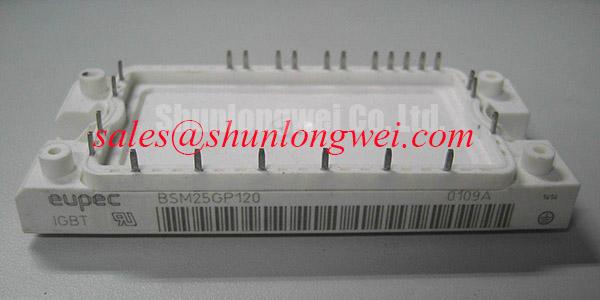
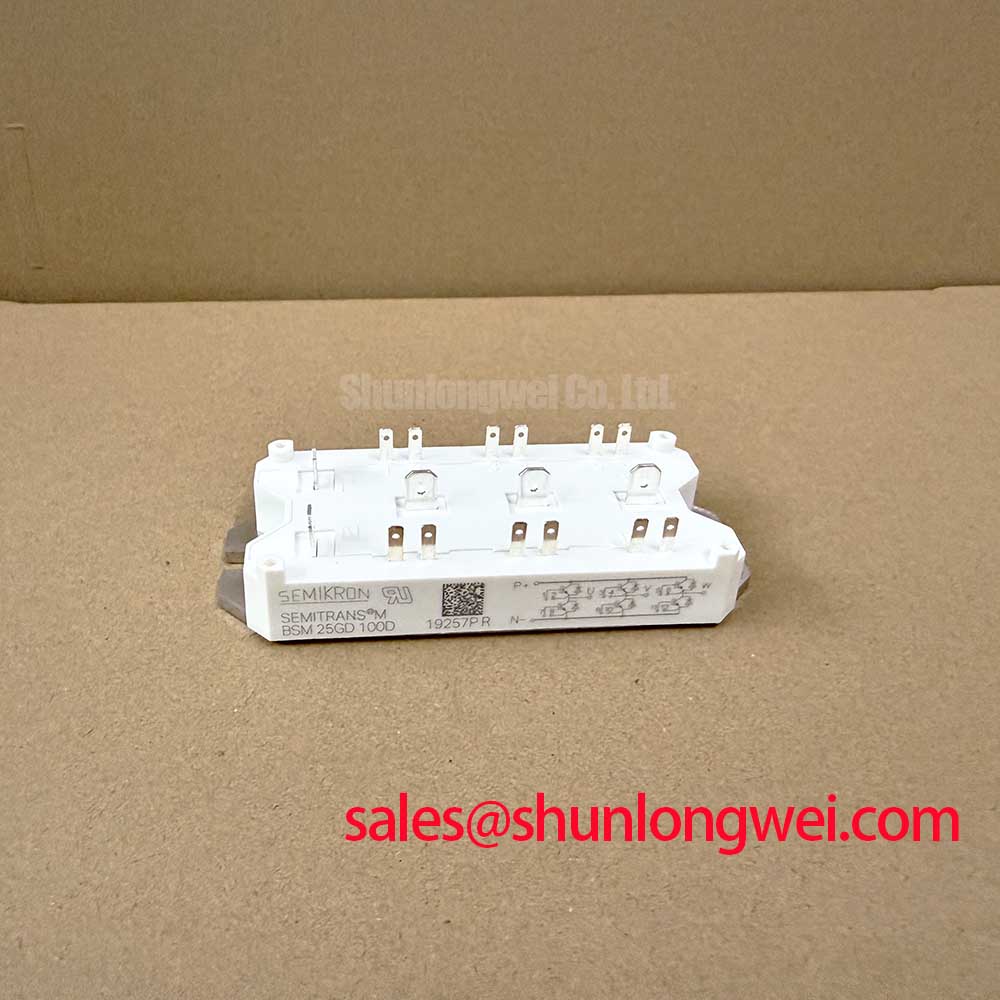
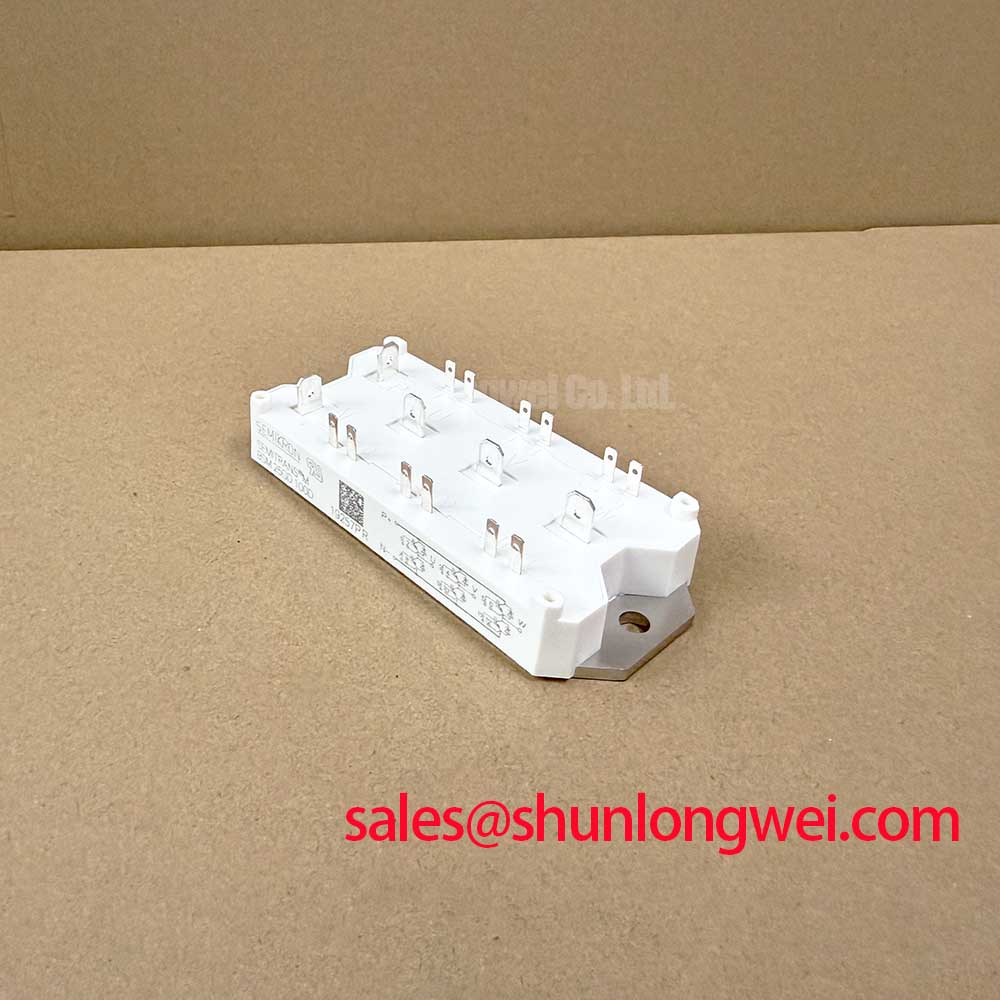
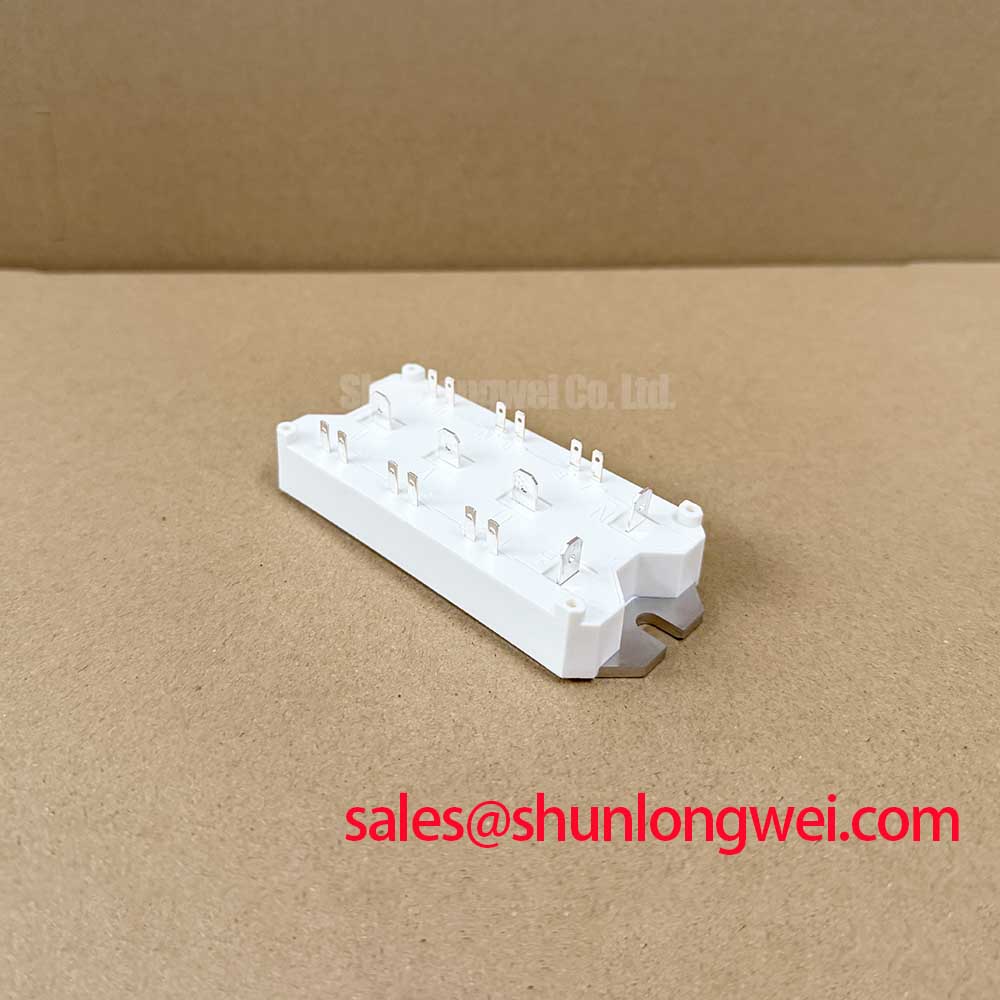
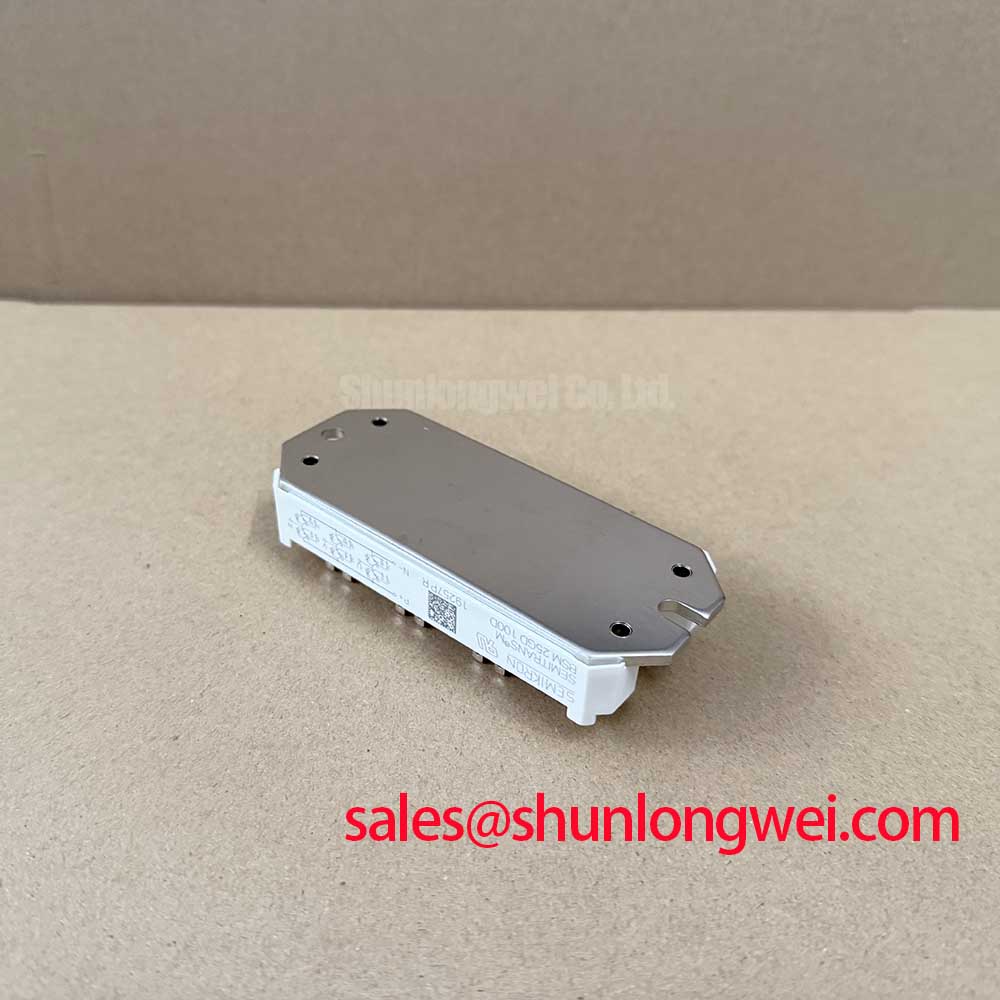
BSM25GD100D Infineon 1000V 25A IGBT Module
The BSM25GD100D, a high-performance IGBT Module manufactured by Infineon (formerly Eupec), is designed to provide high-reliability 3-phase power conversion in a compact Sixpack topology. Rated at 1000V and 25A, this module addresses the critical engineering challenge of real-time thermal monitoring by integrating a specialized NTC thermistor directly onto the substrate, eliminating the sensing lag common with external probes. This integration ensures superior protection against thermal runaway and allows for optimized heatsink sizing in space-constrained industrial environments. For compact 3-phase inverter designs operating on 400V/480V grids where thermal precision is critical, the 1000V-rated BSM25GD100D is the optimal choice.
Application Scenarios & Value
Achieving Precision in 3-Phase Industrial Power Conversion
The BSM25GD100D is primarily deployed in Variable Frequency Drives (VFD) and Servo Drive systems where the Sixpack configuration simplifies the 3-phase bridge design. In a typical industrial conveyor system, the module’s 1000V collector-emitter voltage provides a robust safety margin for 400V AC line operations, protecting the system against voltage spikes during inductive load switching.
The integration of the NTC thermistor allows engineers to implement closed-loop thermal management. By providing direct feedback of the internal substrate temperature, the system can dynamically adjust the carrier frequency or output current to prevent hardware failure under temporary overload conditions. This capability is essential for Solar Inverter applications and UPS (Uninterruptible Power Supply) systems where uptime is non-negotiable. While this model is ideal for balanced 25A loads, systems requiring higher voltage overhead for 690V lines should consider the 1200V-rated BSM25GD120DN2.
Key Parameter Overview
Specifications and Their Direct Engineering Impact
The following table highlights the critical technical specifications of the BSM25GD100D and interprets their significance for system-level design.
| Parameter | Value | Engineering Significance |
|---|---|---|
| Collector-Emitter Voltage (Vces) | 1000V | Provides necessary headroom for standard 380V-480V industrial grid applications. |
| Continuous Collector Current (Ic) | 25A (@ Tc=80°C) | Supports mid-range power requirements with consistent output at elevated temperatures. |
| Saturation Voltage (Vce,sat) | ~2.5V - 3.0V | Low conduction losses translate to higher system efficiency and reduced cooling demands. |
| Isolation Voltage (Visol) | 2500V AC | Ensures safety compliance and prevents electrical noise from affecting control circuitry. |
| Total Power Dissipation (Ptot) | 210W (per IGBT) | Defines the thermal limits for heatsink selection and maximum duty cycle calculations. |
Download the BSM25GD100D datasheet for detailed specifications and performance curves.
FAQ
Addressing Common Design and Integration Inquiries
How does the Rth(j-c) of the BSM25GD100D influence heatsink selection?
The thermal resistance from junction to case (Rth(j-c)) dictates the efficiency of heat transfer. A lower value allows the BSM25GD100D to operate at higher power densities without exceeding the 150°C maximum junction temperature, potentially allowing for a more compact and less expensive heatsink.
What are the benefits of the Sixpack topology in this module?
The Sixpack configuration integrates all six IGBTs and diodes for a 3-phase bridge into a single housing. This reduces the parasitic inductance compared to discrete components and simplifies the physical layout of the power stage, which is critical for reducing EMI in Gate Drive circuits.
How does the integrated NTC improve system-level reliability?
By measuring the temperature on the substrate rather than the heatsink, the BSM25GD100D provides a more accurate representation of the IGBT chip's thermal state. This allows for faster fault detection and more aggressive power management, extending the Power Cycling Capability of the module.
What is the primary benefit of its integrated NTC?
It provides precise real-time temperature feedback to prevent thermal runaway and optimize cooling system performance.
Is the BSM25GD100D suitable for high-frequency switching applications?
Yes, the Infineon technology used in this module is optimized for low Switching Loss. However, engineers must carefully balance switching speed with Snubber Circuit design to manage voltage overshoots, especially at the 1000V limit. Understanding the trade-offs between IGBT vs MOSFET technologies is vital for selecting the right device for high-frequency designs.
Technical & Design Deep Dive
Thermal Management and the Integrated NTC Strategy
Thermal management is the cornerstone of IGBT Module reliability. Think of the BSM25GD100D as an engine with a factory-calibrated thermometer installed directly on the cylinder head. While external sensors on the heatsink only see the "ambient" temperature of the cooling system, the integrated NTC monitors the "core" heat. This proximity allows for a much tighter Safe Operating Area (SOA) control.
In high-performance Variable Frequency Drive (VFD) designs, this data allows the controller to initiate derating strategies the moment a thermal spike is detected, preventing catastrophic failure from localized hot spots. This level of precision is discussed extensively in our guide to Mastering IGBT Thermal Management, highlighting why substrate-level sensing is the preferred standard for industrial-grade reliability.
Industry Insights & Strategic Advantage
Alignment with the Shift Toward Integrated Power Electronics
The BSM25GD100D reflects the broader industry trend toward higher integration and power density, often referred to as the PIM (Power Integrated Module) evolution. As global regulations push for higher efficiency in motor-driven systems (aligned with IE3 and IE4 standards), the ability to reduce losses at the component level becomes a strategic advantage.
By utilizing a Sixpack module instead of discrete components, manufacturers reduce the number of assembly steps and the potential for mechanical failure at solder points. This design philosophy aligns with Industrial 4.0 requirements for smarter, more self-aware power stages that can provide diagnostic data back to a central PLC. The 1000V rating also positions this module well for regions with unstable grids, providing a ruggedized alternative to standard 600V modules that may lack the surge tolerance required for harsh industrial environments.
From a field engineering perspective, the BSM25GD100D offers a mature, well-documented platform that balances performance with predictable thermal behavior. When designing the Gate Drive, ensure the dead-time and gate resistance are tuned according to the Switching Loss curves in the official Infineon documentation to maximize the module's RBSOA (Reverse Bias Safe Operating Area). Proper implementation of the NTC feedback remains the most effective way to ensure a 10-year service life in standard industrial duty cycles.