
Content last revised on August 28, 2026
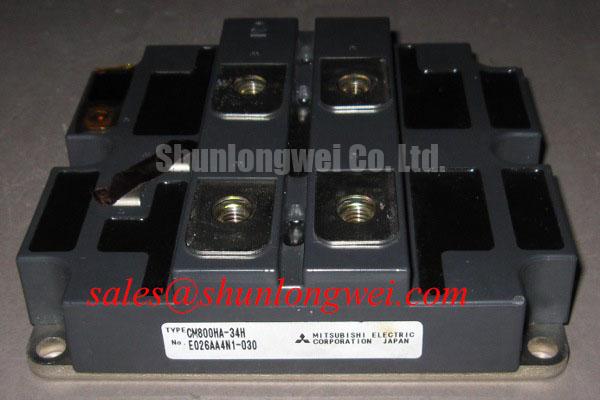
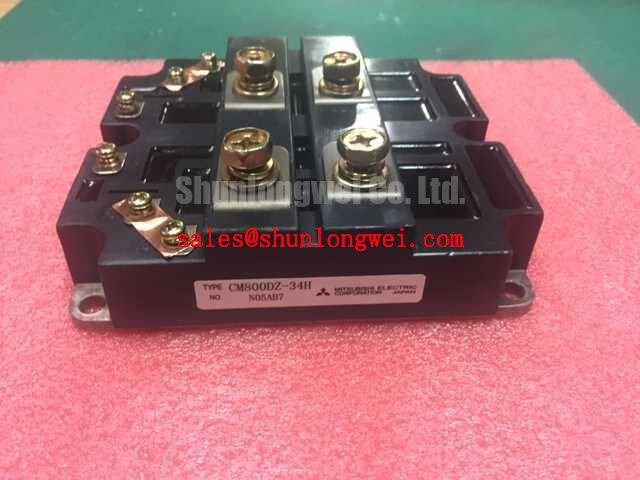
CM800DZ-34H Mitsubishi 1700V 800A Dual IGBT Module
The CM800DZ-34H represents a critical solution for high-power switching requirements, offering a robust 1700V collector-emitter voltage margin and a continuous 800A current rating. For engineers designing 690V AC line-connected systems, this module provides the necessary insulation and voltage headroom to ensure long-term reliability against transient surges. For systems requiring high current handling in a compact footprint, the CM800DZ-34H delivers optimized power density with established NF-series packaging reliability.
What is the primary benefit of the 1700V rating in 690V applications? It provides a significant safety margin against DC-link voltage fluctuations and cosmic ray induced failures, enhancing the module's lifespan in harsh industrial environments. For heavy industrial drives prioritizing thermal margin and voltage robustness, this 1700V module is the optimal choice.
Key Parameter Overview
Decoding the Specs for Enhanced Thermal Reliability
The following technical data is derived from the official manufacturer documentation to support engineering assessment and system-level integration.
| Functional Category | Parameter Description | Value / Rating |
|---|---|---|
| Absolute Maximums | Collector-Emitter Voltage (Vces) | 1700V |
| Absolute Maximums | Collector Current (Ic) | 800A |
| Absolute Maximums | Total Power Dissipation (Ptot) | 5900W |
| Electrical Characteristics | Collector-Emitter Saturation Voltage (Vcesat) | 2.2V (Typical) |
| Electrical Characteristics | Gate-Emitter Threshold Voltage (Vgeth) | 6.0V - 7.5V |
| Thermal Properties | Thermal Resistance (Junction-to-Case) | 0.021 K/W |
| Mechanical Data | Configuration | Dual (Half-Bridge) |
Download the CM800DZ-34H datasheet for detailed specifications and performance curves.
Application Scenarios & Value
Optimizing Performance in High-Power Conversion Systems
Industrial engineers often face the challenge of managing significant inductive load transients in Variable Frequency Drive (VFD) architectures. The CM800DZ-34H addresses this by maintaining a low Vcesat of 2.2V, which directly translates to reduced conduction losses during high-duty cycle operations. This efficiency is critical in MW-class wind turbine converters or heavy-duty traction drives where every watt of lost energy complicates the thermal management strategy.
In a high-fidelity engineering scenario, consider a 500kW motor drive operating in a remote mining facility. The grid stability is poor, and voltage spikes are frequent. Using a standard 1200V module would risk dielectric breakdown. By deploying the CM800DZ-34H, the 1700V rating acts like a structural safety factor on a bridge; even if the "traffic" (voltage) peaks unexpectedly, the "structure" (IGBT) remains well within its Safe Operating Area. This prevents catastrophic failure and reduces the Total Cost of Ownership (TCO) by extending the maintenance intervals of the power stack.
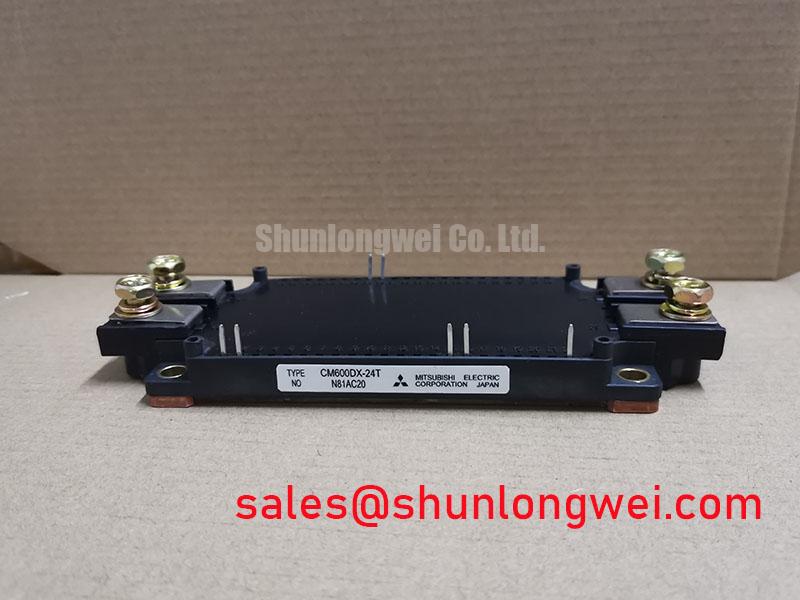
For systems that might benefit from different current scales or integrated protection, procurement teams may also evaluate the CM600DX-24T for 1200V requirements or the PM800HSA120 for intelligent power module (IPM) functionality.
Industry Insights & Strategic Advantage
Thermal Management as a Strategic Pillar in Green Energy
As the global push for carbon neutrality accelerates, the demand for efficient power conversion in renewable energy has shifted the focus from raw switching speed to thermal management. The CM800DZ-34H features an exceptionally low thermal resistance (Rth) of 0.021 K/W. This parameter is the "thermal drainpipe" of the module; the lower the resistance, the faster heat can be evacuated from the silicon junction to the heatsink.
Strategically, this allows system designers to either reduce the size of the liquid-cooling system or increase the power density of the existing inverter frame. Within the context of wind-to-grid conversion, high thermal cycling capability is non-negotiable. The NF-series packaging utilized here is designed to withstand the repetitive stress of fluctuating loads, a common trait in solar and wind applications. This reliability aligns with the engineering shift toward 10-15 year service life targets for industrial power electronics.
Understanding these nuances is essential for modern system architecture. For a broader perspective on selecting the right technology, engineers can consult our guide on IGBT modules for high-efficiency systems or the technical breakdown on decoding IGBT datasheets.
FAQ
Addressing Technical Concerns in Power Stage Design
How does the 1700V rating of the CM800DZ-34H influence the design of the gate driver?
The higher Vces necessitates a gate driver with increased isolation voltage (Visol) and robust dv/dt immunity. Engineers must ensure the gate drive circuit can handle the potential for higher Miller current during fast switching transitions common in 1700V modules.
With an 800A continuous rating, what are the primary considerations for paralleling these modules?
When paralleling the CM800DZ-34H, the focus must be on symmetrical DC-link layout and matched gate signal timing to prevent current imbalance. Small differences in Vcesat can lead to one module carrying a disproportionate load, potentially exceeding its thermal limits.
How does the 0.021 K/W junction-to-case thermal resistance affect heatsink sizing?
This low value allows for a higher power dissipation for a given temperature rise. It enables the use of smaller, more cost-effective heatsinks or provides a larger safety margin (thermal headroom) when operating at the full 800A current limit in ambient temperatures above 40°C.
To further explore high-power switching solutions or to discuss specific technical requirements for your upcoming power stage design, please contact our technical sales team for data verification and integration support.