

Content last revised on October 25, 2026
Transient Dynamics & Electrical Design: Transient Thermal Impedance on MG15Q6ES1
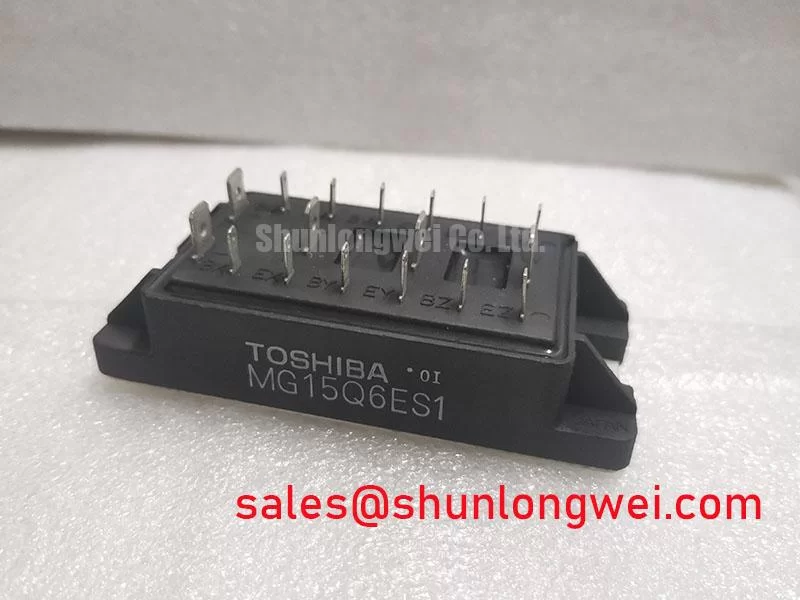
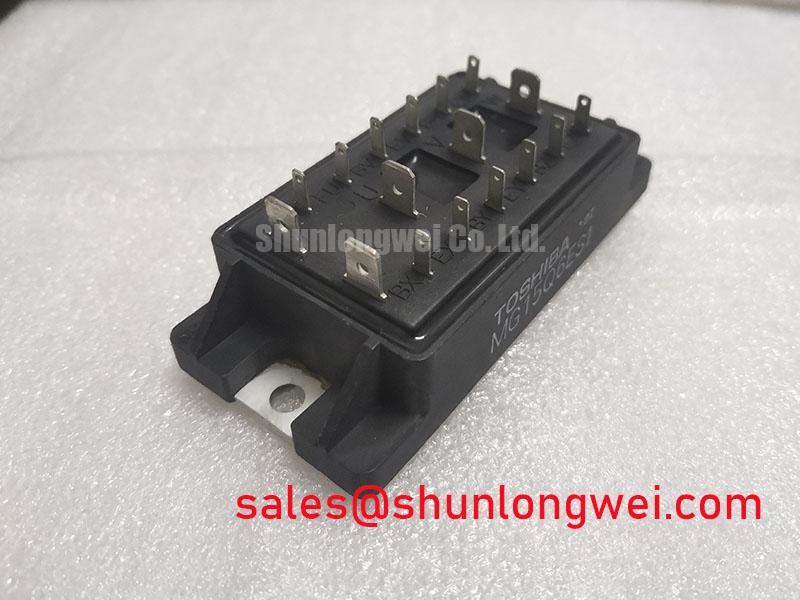
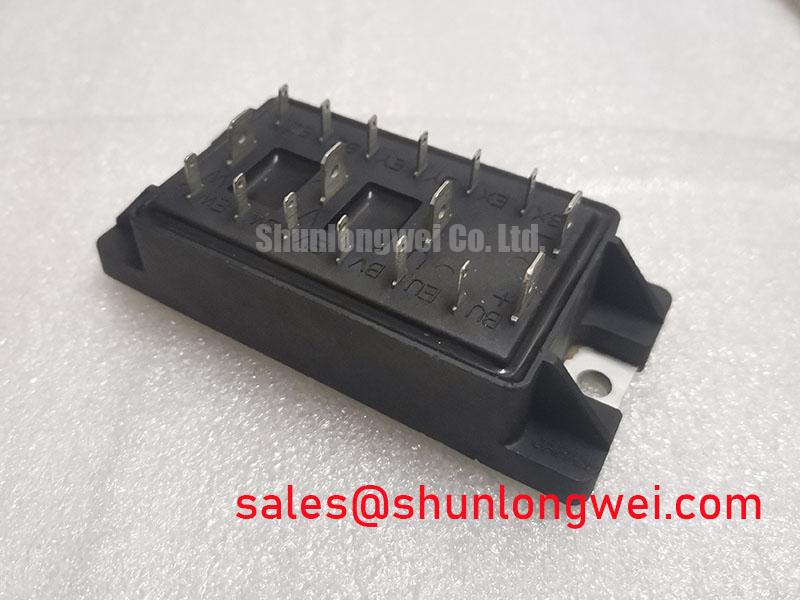
Isolate the power stage, verify that the DC link is discharged, and compare the module marking with the equipment parts record before disturbing the heatsink assembly. For the Toshiba MG15Q6ES1, the supplied official specifications identify a 600.0 V voltage rating, a 15.0 A current rating, and a Toshiba Module package. Record these identification details alongside the existing terminal arrangement and mounting condition so the replacement assessment starts with the actual assembly rather than a similar-looking housing.
The MG15Q6ES1 IGBT module requires an electrical and mechanical compatibility check before installation. Consult the manufacturer datasheet for the terminal map, rating conditions, gate characteristics, thermal curves, dimensions, and mounting instructions. As a Design Consideration, high-dynamics multi-axis CNC and robotics servo drives are potential compatibility-assessment examples, not confirmed applications: their repeated acceleration and braking cycles make transient heating, thermal contact, and connection integrity particularly relevant.
Capture the overload duration and repetition pattern before estimating junction temperature. A brief current excursion and a sustained overload can produce different internal temperature responses even when the recorded current peaks are similar. As a Design Consideration, the useful diagnostic record combines current, switching activity, case temperature, and the operating sequence that produced the event. A cabinet temperature reading alone cannot describe the thermal excursion inside the module.
Separate conduction losses from switching losses when constructing the thermal input. Conduction loss depends on the device’s on-state behavior at the relevant current and temperature; switching loss depends on the operating voltage, current, gate circuit, and switching conditions. Use device-specific characteristics for this assessment rather than converting the 15.0 A rating directly into a heat estimate. That rating is an identification boundary, not a measured dissipation value for the installed drive.
For a rectangular loss pulse, the Engineering Calculation takes the form Tj,peak = Tc + Ppulse × Zth(j-c)(tp), where Tc is the case temperature, Ppulse is the pulse dissipation, and Zth(j-c)(tp) is the junction-to-case transient thermal impedance at the pulse duration. This expression assumes the case temperature remains sufficiently stable over the evaluated pulse. Repetitive pulses require their accumulated thermal response to be included; treating each pulse as an isolated cold-start event can understate the peak junction temperature.
A multi-RC thermal model supports that repetitive-pulse assessment by representing several thermal time constants. As an Engineering Recommendation, fit the model to the manufacturer’s transient thermal response and preserve the distinction between junction-to-case behavior and the external heatsink path. A mathematical fit does not establish actual layer temperatures inside the package. Feed the measured operating sequence into the validated model, then compare the predicted peak with the applicable junction-temperature limit under the same boundary conditions.
On the equipment, correlate the thermal estimate with case-temperature trends during repeatable load sequences. Keep the measurement position and sensor attachment consistent between tests. If the case temperature rises progressively during repeated cycles, investigate cooling capacity, airflow restriction, and the thermal interface before attributing the behavior to an internal device fault. If the thermal estimate changes sharply with switching activity while mechanical load remains similar, review switching-loss assumptions and the gate-drive waveform.
Gate-drive disturbances deserve separate attention because they can change dissipation without an obvious change in commanded motion. As a Design Consideration, check the isolation component’s common-mode transient immunity against the measured switching environment, and examine the gate waveform relative to its local reference. Where the existing driver uses a bootstrap supply, assess its voltage during the actual duty sequence, including recharge opportunities and recovery-related disturbances. These checks concern the surrounding driver, not additional MG15Q6ES1 specifications.
For broader topology context, Peak Efficiency in Solar and Energy Storage discusses inverter operating principles that can help frame loss-distribution questions. It is not a device qualification report or a source of MG15Q6ES1 lifetime limits. For this module’s maintenance record, retain the load sequence, thermal-model assumptions, temperature measurement location, and resulting trend so later inspections can compare like operating conditions.
Transient Dynamics & Electrical Design: Baseplate Thermal Grease Layer Control on MG15Q6ES1
Inspect the removed thermal-interface imprint before cleaning either mating surface. Uneven transfer, displaced compound, contamination, and areas with little apparent contact provide useful evidence about assembly condition. As a Design Consideration, interpret that evidence together with heatsink flatness, mounting alignment, and the previous tightening procedure. An uneven imprint does not, by itself, identify a defective module or prove that the compound caused an overheating event.
Control the thermal-interface layer through the approved material and assembly process rather than an assumed universal grease thickness. The objective is to fill surface irregularities while avoiding unnecessary thermal resistance. Excess compound can create an unnecessarily thick heat-transfer path; insufficient coverage can leave poorly coupled regions. For the MG15Q6ES1 installation, the accepted application method should come from the module mounting instructions and the selected interface-material guidance, with coverage checked during process validation.
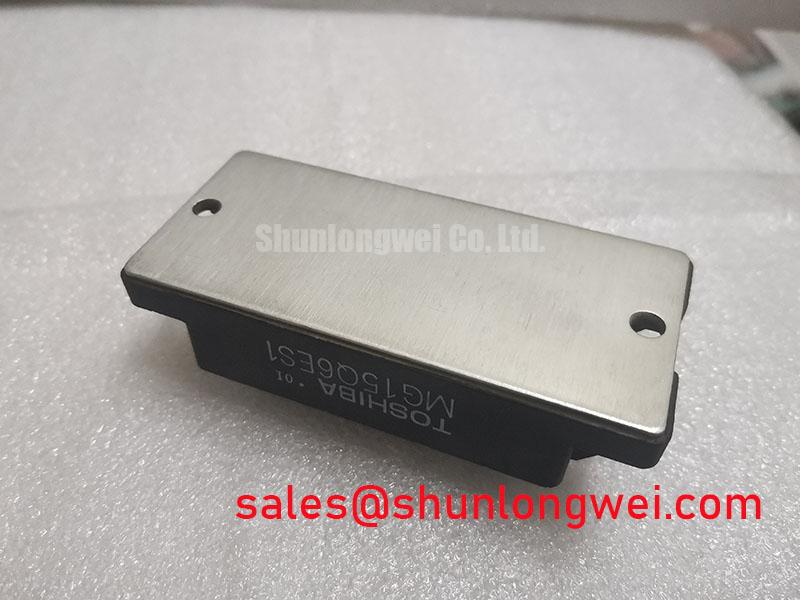
Assess baseplate and heatsink geometry without forcing the assembly flat through excessive fastener loading. As an Engineering Recommendation, inspect for burrs, embedded debris, raised damage around mounting points, and distortion in the mounting surface. Do not use a thicker grease layer as an automatic correction for an out-of-tolerance heatsink. The appropriate remedy depends on the specified mating geometry and the condition of the supporting assembly.
Seat the module evenly and follow the applicable tightening sequence and torque specification. Where the mounting arrangement permits staged tightening, the purpose is to distribute clamping load without rocking the package or trapping an uneven interface layer. Confirm that cable or busbar forces are not pulling the module out of alignment as the mounting screws are secured. Fastener size alone is not a sufficient basis for selecting the tightening torque.
Thermal maintenance should follow observed condition and operating history rather than an invented replacement interval. Record heatsink contamination, fan condition where fitted, interface changes, and case-temperature behavior at a repeatable load. During shutdown inspections, compare the condition with previous records to determine whether cleaning or interface renewal is warranted. Maintenance Note: Monitor connection-temperature trends and inspect the cooling airflow path during scheduled maintenance before increasing the permitted operating load.
Keep electrical fault protection separate from the thermal-interface acceptance decision. As a Design Consideration, semiconductor-fuse coordination requires the prospective fault current, circuit voltage, clearing characteristics, and the protected device’s applicable withstand information. Compare total clearing energy with the relevant device limits under compatible conditions. A fuse’s current rating or an isolated I²t value does not establish that it will protect an IGBT during a rapid internal fault; the gate-driver protection path also needs assessment.
Trace the actual power path before assigning responsibilities to nearby modules. The MG400V2YS60A is another power-module reference that may be considered when documenting a wider converter assembly, but its circuit role must follow its own specifications and the equipment schematic. It should not be treated as an interchangeable device or assumed to be a front-end rectifier. Likewise, any existing MOV network should be assessed against the measured transient source and its component limits, not used to justify operation beyond the MG15Q6ES1 voltage rating.
Assembly Integrity & Layout Architecture: Implementing Thermal Stress Monitoring across High-Current Connections for MG15Q6ES1
Map temperature rise across the module connections and adjacent conductors under a stable, repeatable load. As a Design Consideration, thermography is most useful when current, ambient conditions, viewing geometry, and surface emissivity are controlled sufficiently for comparison. A warmer connection can warrant investigation, but it does not establish a loose joint by itself. Unequal current distribution, conductor geometry, reflected radiation, and different surface finishes can also affect the image.
Inspect each connection according to its actual construction. Where the equipment uses bolted power joints, a four-wire micro-ohmmeter can help separate joint resistance from test-lead resistance after isolation and discharge. Establish repeatable probe positions and compare equivalent connections or an approved baseline. Do not impose a universal micro-ohm pass limit on the MG15Q6ES1 assembly: joint geometry, materials, temperature, and measurement placement all influence the result.
Review fastening records alongside resistance and temperature trends. A calibrated torque tool supports a controlled assembly process, but a torque reading is not a direct measurement of contact pressure or electrical resistance. Inspect terminal alignment, contact-surface condition, and conductor support before deciding whether retightening is appropriate. Follow the connection manufacturer’s requirements rather than repeatedly tightening an installed joint until a temperature difference disappears.
Preserve the equipment’s specified spacing and insulation arrangement when routing replacement conductors. As an Engineering Recommendation, support cables and busbars so their weight and vibration do not load the module terminals. Keep switching loops compact where the established design permits, while maintaining the required clearances and creepage distances. The final layout must account for the system voltage, contamination conditions, insulation materials, and applicable equipment requirements rather than a generic clearance number.
Separate blocking-voltage assessment from insulation assessment. The 600.0 V rating does not establish a test voltage between terminals and an external mounting surface. The reference Dielectric Strength and High-Voltage Breakdown Testing explains the underlying distinction between electric-field stress and material breakdown. For maintenance testing, use the equipment’s approved procedure and isolate sensitive connected electronics as specified; an improvised high-voltage test can invalidate the diagnostic result or damage other components.
In environments with changing temperature and humidity, inspect for moisture tracks, contamination, and conditions that permit condensation before energization. As a Design Consideration, enclosure ventilation and moisture control belong to the equipment-level maintenance plan. Avoid interpreting a dry workshop inspection as evidence that the installed assembly remains dry throughout its operating cycle. Record environmental observations alongside electrical measurements when investigating intermittent behavior.
At the replacement-comparison stage, the MG15Q6ES50A provides a related model reference, not an automatic substitute for the MG15Q6ES1. Compare terminal functions, mechanical fit, gate-drive requirements, switching behavior, thermal characteristics, and rating conditions before approving any change. After installation, verify connection stability and temperature behavior through the equipment’s controlled commissioning procedure, retaining the measurements as the baseline for subsequent maintenance.