Content last revised on September 10, 2026
Toshiba MG400J2YS60A: High-Current Switching Efficiency for Industrial Power Conversion
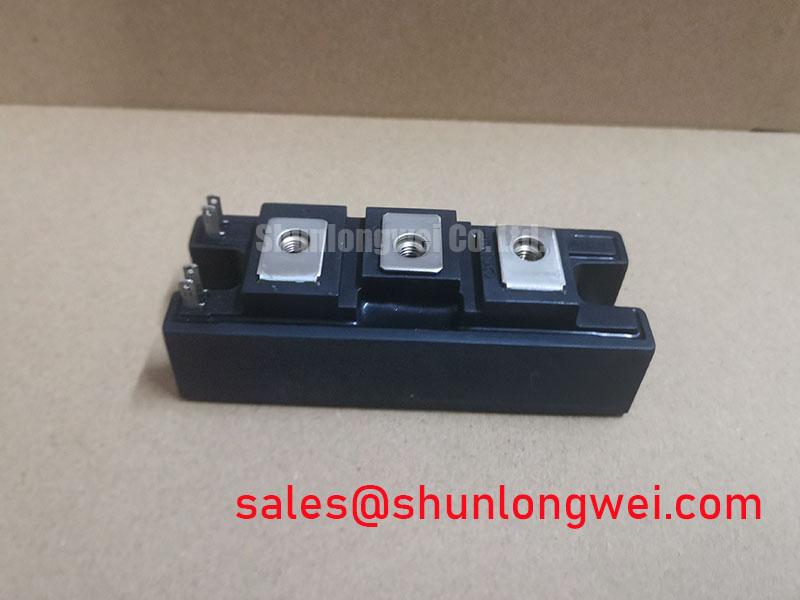
The Toshiba MG400J2YS60A, a cornerstone of the GTR (Gigabit Transistor) Module series, is a high-power dual IGBT module designed for engineers who prioritize high-speed switching and low saturation voltage in demanding industrial environments. By integrating two IGBTs into a single half-bridge configuration, this module empowers designers to achieve superior power density while minimizing conduction losses in systems operating under 600V and 400A parameters. For systems requiring lower current handling in a similar voltage class, the MG150Q2YS50 offers a 150V alternative that follows the same robust design philosophy.
Top Specs: 600V | 400A | Vce(sat) 2.1V (Typ.). Key benefits include reduced heatsink requirements due to low thermal resistance and simplified gate drive requirements for rapid system integration. How does the MG400J2YS60A handle high-frequency PWM switching? It utilizes a high-speed design that significantly lowers turn-off losses, effectively reducing the thermal stress on the silicon during repetitive switching cycles. For 400V industrial bus systems requiring 400A peak current handling, the MG400J2YS60A provides the necessary thermal headroom and switching efficiency.
Key Parameter Overview
Decoding the Specs for Enhanced Thermal Reliability
The technical excellence of the MG400J2YS60A is best understood through its electrical and thermal limits. Engineers must evaluate these figures to ensure the module operates within its Safe Operating Area (SOA) during peak loads.
| Technical Characteristic | Value / Specification | Unit |
|---|---|---|
| Collector-Emitter Voltage (Vces) | 600 | V |
| Collector Current (Ic) at 25°C | 400 | A |
| Collector Power Dissipation (Pc) | 1500 | W |
| Saturation Voltage (Vce sat) | 2.1 (Typ.) / 2.7 (Max.) | V |
| Junction Temperature (Tj) | -40 to +150 | °C |
| Isolation Voltage (Visol) | 2500 (AC, 1 min) | V |
Download the MG400J2YS60A datasheet for detailed specifications and performance curves.
Application Scenarios & Value
Achieving System-Level Benefits in High-Frequency Power Conversion
The MG400J2YS60A is frequently utilized in the Variable Frequency Drive (VFD) sector and high-capacity UPS (Uninterruptible Power Supply) systems. In a high-fidelity engineering scenario, consider an industrial conveyor system driven by a large AC motor. During the startup phase, the inverter must manage significant inrush currents that can exceed the continuous rating of standard modules. The 400A continuous current rating of this Toshiba module, combined with its high peak current capability, ensures that the system transitions through high-torque periods without triggering over-temperature faults.
Furthermore, in applications like Welding Power Supplies, where rapid current fluctuations are the norm, the low switching losses of the MG400J2YS60A minimize the total energy dissipated as heat. This allows for a more compact chassis design, reducing the Total Cost of Ownership (TCO) by decreasing the size and weight of the cooling infrastructure. For extremely high-power scenarios that might necessitate different topologies, engineers often compare these specs against modules like the MG400Q2YS60A to determine the best fit for specific switching frequency requirements.
Integrating this module also aligns with the latest trends in IGBT module analysis, where efficiency at partial loads is becoming a critical metric for Solar Inverters and energy storage systems.
Technical & Design Depth剖析
A Closer Look at the Internal Half-Bridge Architecture
The internal structure of the MG400J2YS60A utilizes a sophisticated carrier injection mechanism that optimizes the balance between switching speed and conduction loss. To understand the significance of the Vce(sat) value, consider a hydraulic analogy: if the IGBT is a precision valve, the saturation voltage represents the pressure drop across that valve when it is fully open. A lower Vce(sat) of 2.1V means less "friction" for the electron flow, resulting in less heat generation during the "On" state. This is particularly vital in high-duty cycle industrial processes where the module remains in conduction for extended periods.
The Half-Bridge configuration simplifies the busbar layout in a typical three-phase inverter. By having two IGBTs and their anti-parallel diodes in one package, the parasitic inductance of the wiring is reduced. This reduction in inductance is a critical factor in mitigating voltage spikes during high-speed turn-off events, which protects the silicon from avalanche breakdown without requiring excessively large snubber circuits. This design reflects the high standards set by industry leaders like Mitsubishi CSTBT™ technology, focusing on the refined control of the gate-charge characteristics.
FAQ
How does the Rth(j-c) of the MG400J2YS60A affect the selection of a liquid-cooled vs. air-cooled heatsink?
With a power dissipation (Pc) limit of 1500W, the thermal resistance from junction to case (Rth j-c) is the bottleneck for heat removal. In high-density applications where the ambient temperature exceeds 40°C, a liquid-cooled plate is often necessary to maintain the junction temperature (Tj) below 125°C, ensuring the longevity of the module under continuous 400A operation.
What is the primary benefit of the MG400J2YS60A's high isolation voltage of 2500V?
The 2500V isolation provides a robust safety margin between the high-voltage DC bus and the low-voltage control circuitry. This is essential for compliance with international safety standards like UL and IEC, preventing catastrophic system failure or operator injury in the event of an internal fault or transient overvoltage on the 600V line.
As a specialized distributor, we provide the technical data and logistical support required to integrate the Toshiba MG400J2YS60A into your next-generation power systems. Whether you are optimizing a Variable Frequency Drive or designing a robust UPS, this module offers the high-current reliability necessary for industrial success. To explore further design considerations, refer to our guide on robust gate drive design to ensure your power stage is protected against transient failures.