Content last revised on September 10, 2026
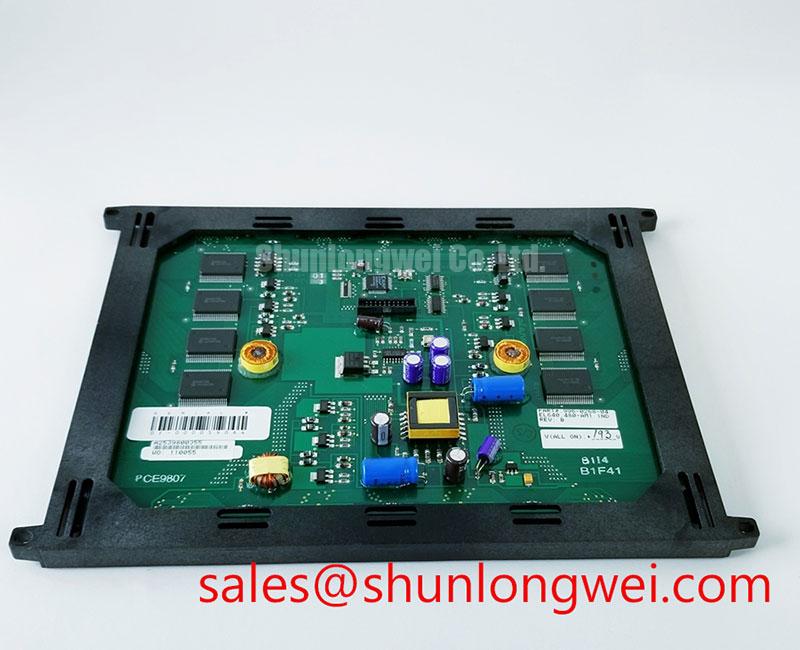
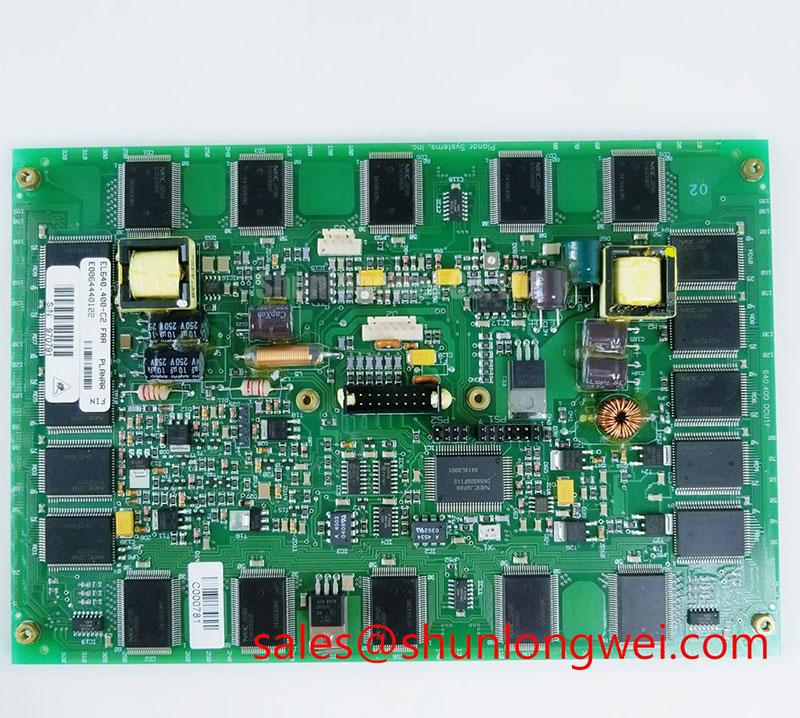
Planar EL640.400-CB1 FRA Electroluminescent Display Technology
The Planar EL640.400-CB1 FRA is a high-performance Thin-Film Electroluminescent (TFEL) display module designed for the most demanding operational environments. Utilizing solid-state technology that lacks fluid components or fragile backlights, this 640x400 resolution panel offers unparalleled reliability where traditional LCDs typically fail. With its signature amber output and high contrast, the EL640.400-CB1 FRA provides critical data visualization for aerospace, military, and extreme industrial applications, maintaining optical clarity across a temperature spectrum that would compromise standard liquid crystal structures.
For systems requiring mission-critical visibility in sub-zero or high-vibration settings, the EL640.400-CB1 FRA stands as a definitive solution. 640 x 400 Resolution | TFEL Technology | Digital Interface. This display ensures instantaneous response times and zero motion blur, facilitating rapid decision-making in high-stakes engineering environments. For engineers prioritizing wide-angle readability and cold-start performance, this Electroluminescent module is the optimal choice.
Application Scenarios & Value
Achieving Optical Integrity in Extreme Thermal and Mechanical Conditions
Engineers often face the challenge of display "ghosting" or total fluid crystallization when designing for outdoor or unconditioned environments. The Planar EL640.400-CB1 FRA addresses this directly through its solid-state construction. Unlike an LCD Display, which relies on the physical orientation of liquid crystals, the EL640.400-CB1 FRA emits light through a phosphorescent layer. This allows the module to operate effectively in temperatures as low as -40°C or even -50°C without the need for integrated heaters, significantly reducing system power budget and complexity.
In high-vibration scenarios, such as heavy machinery or flight deck instrumentation, the EL640.400-CB1 FRA offers superior mechanical robustness. The lack of a separate backlight assembly eliminates common failure points associated with CCFL or LED strips. Furthermore, the 160-degree viewing angle ensures that the 640x400 resolution remains legible from any perspective, a critical requirement for multi-operator control rooms or emergency response vehicles. By integrating the EL640.400-CB1 FRA, designers can meet the stringent requirements of MIL-STD environmental compliance more efficiently than with consumer-grade alternatives.
For projects requiring high-resolution color in less demanding environments, related offerings such as the G070ACE-L01 provide an IPS-based alternative, though they lack the extreme environmental resilience inherent to the Planar TFEL series. Similarly, the LQ064V3DG06 offers a standard industrial LCD footprint for more temperate operating zones.
Industry Insights & Strategic Advantage
Navigating the Transition from Legacy CRT to Solid-State Reliability
The industrial display market is seeing a strategic shift toward technologies that prioritize Total Cost of Ownership (TCO) over initial unit price. The Planar EL640.400-CB1 FRA exemplifies this trend by offering a mean time between failures (MTBF) that often exceeds 50,000 to 100,000 hours. In sectors like oil and gas or maritime navigation, the cost of a display failure includes not just the part, but the significant logistics of maintenance in remote locations. The EL640.400-CB1 FRA, with its rugged TFEL architecture, minimizes these field service interventions.
Furthermore, the EL640.400-CB1 FRA is compatible with various legacy interfaces, making it a primary candidate for "drop-in" replacements in aging CRT systems or early-generation flat panels. This longevity is supported by the digital TTL interface, which remains a standard in robust industrial controllers. As global industries move toward Industrial 4.0 and increased automation, the demand for "all-weather" human-machine interfaces (HMIs) continues to grow. Engineering for these extremes requires a deep understanding of sunlight-readable-hmis and the physical limitations of different display substrates. By choosing the EL640.400-CB1 FRA, procurement teams secure a component that adheres to the highest levels of industrial-display durability, ensuring long-term availability for platforms with extended lifecycles.
Key Parameter Overview
Decoding the Specs for Enhanced Environmental Resilience
The following technical data represents the core performance metrics for the EL640.400-CB1 FRA. These specifications should be used to validate compatibility with existing mounting hardware and signal processing units.
| Category | Technical Specification | Operational Value |
|---|---|---|
| Display Type | Technology Substrate | TFEL (Thin-Film Electroluminescent) |
| Resolution | Pixel Matrix | 640 x 400 (Dual Scan) |
| Active Area | Visual Dimensions | 195.1 x 121.9 mm |
| Luminance | Brightness (Typical) | 50 cd/m² (Typical) |
| Interface | Signal Architecture | Digital / TTL (8-bit) |
| Input Voltage | Power Requirement | +5V DC, +12V DC |
| Operating Temp | Thermal Range | -40°C to +70°C (Base Case) |
Frequently Asked Questions
How does the TFEL technology in the EL640.400-CB1 FRA handle extreme cold differently than an LCD?
Unlike an LCD Display, which uses liquid crystals that become viscous and eventually freeze in cold temperatures (causing slow response times), the EL640.400-CB1 FRA relies on a solid-state luminescent layer. This layer is unaffected by temperature regarding its switching speed, allowing the 640x400 panel to maintain a sub-1ms response time at -40°C without internal heaters.
What are the power requirements for integrating the EL640.400-CB1 FRA into a portable industrial unit?
The EL640.400-CB1 FRA typically requires a dual-voltage input of +5V DC for logic and +12V DC or +24V DC for the high-voltage EL drive, depending on the specific revision. While EL technology is generally more power-intensive than unlit passive LCDs, its efficiency in extreme temperatures often offsets the power consumed by the heaters required for ruggedized LCDs, resulting in a more efficient system-level thermal design.
Maintenance of these specialized displays is also simplified due to their non-liquid nature. For guidance on long-term care, engineers should refer to industrial-display-maintenance protocols to ensure the outer surface remains clear of chemical damage.
From a strategic perspective, the EL640.400-CB1 FRA represents a hedge against environmental failure. Its implementation ensures that whether a system is deployed in a sub-arctic mining site or a high-heat desert monitoring station, the critical human-machine interface remains functional. This consistency is not merely a technical specification but a fundamental requirement for safety and operational uptime in high-value infrastructure projects.