Content last revised on September 10, 2026
AUO G101EAN02.0 WXGA Industrial Display Panel: An Engineering Integration Guide
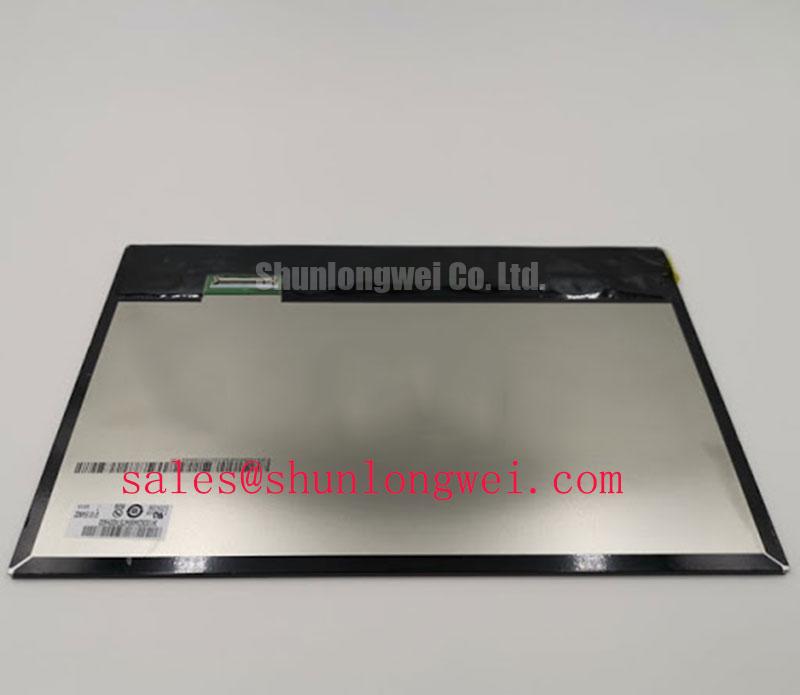
The AUO G101EAN02.0 is a high-performance 10.1-inch industrial display designed to maintain exceptional readability and color accuracy across off-axis angles. Top Specs: 10.1-inch | 1280x800 WXGA | 400 cd/m² | LVDS Interface. Key Benefits: 89-degree all-way viewing angles; stable low-voltage differential signaling. This panel solves the problem of grayscale inversion at wide angles by leveraging Advanced Hyper-Viewing Angle (AHVA) technology to maintain color uniformity. For industrial HMI units requiring symmetrical off-axis view angles under 3.3V system rails, this panel is the optimal choice.
Application Scenarios & Value
Deploying Wide-Angle HMI Screens in Challenging Operational Environments
Engineers often face the challenge of visual degradation when integrating displays into multi-user medical consoles or rugged transport dashboards. In a medical diagnostic terminal, for example, nurses and doctors view critical monitor readouts from different heights and angles. Traditional screens suffer from color shift that can distort color-coded graphical telemetry. By utilizing the 89°/89°/89°/89° symmetric viewing angle of the G101EAN02.0, designers ensure that color indicators remain accurate from any perspective.
Furthermore, selecting displays with long-term component availability is vital for reducing total ownership costs. Understanding the distinction between industrial vs consumer displays is crucial when planning systems for multi-year lifecycles. While this panel is ideal for standard 10.1-inch configurations, projects requiring capacitive touch integration can utilize the G101EVN01.0, whereas applications demanding ultra-high pixel density should consider the G101UAN02.0.
Technical Deep Dive
Analyzing the Optical Architecture and AHVA Wide-Viewing Technology
The optical performance of this liquid crystal module hinges on its Advanced Hyper-Viewing Angle (AHVA) architecture developed by AUO. Think of the 800:1 contrast ratio as a Venetian blind: it determines how effectively the display blocks out its backlight to render true black against bright white. When the blind is fully closed, no light leaks through, ensuring a sharp contrast that makes text easily readable. In the G101EAN02.0, this ratio prevents muddy gray levels in dim ambient settings.
Under the hood, the liquid crystal molecules in the panel move like a synchronized field of kinetic sculptures. They rotate parallel to the glass substrates rather than tilting perpendicular to them. This in-plane rotation ensures that light traveling through the pixels behaves uniformly, regardless of the observer's viewing vector. This technology prevents the color degradation discussed in our engineering guide on grayscale inversion and display accuracy. Integration is further streamlined by the single-channel LVDS interface, which is covered in detail in our primer on TFT-LCD industrial applications.
What is the primary benefit of AHVA technology? Symmetrical 89-degree wide viewing angles with minimal color shift.
What interface does this display panel use? It uses a standard single-channel 8-bit LVDS interface.
Key Parameter Overview
Critical Specifications for System Integration and Environmental Matching
| Parameter | Specification | Design Integration Highlight |
|---|---|---|
| Screen Size | 10.1-inch diagonal | Optimal footprint for compact handheld and panel-mount systems. |
| Active Resolution | 1280 x 800 (WXGA) | 16:10 aspect ratio provides 149 PPI pixel density for sharp graphics. |
| Display Mode | AHVA, Normally Black | Eliminates viewing angle limits and delivers high color fidelity. |
| Luminance (Brightness) | 400 cd/m² (Typical) | Suits indoor and semi-shaded outdoor industrial workstations. |
| Contrast Ratio | 800:1 (Typical) | Delineates fine detail and dark text against varying backgrounds. |
| Viewing Angles (L/R/U/D) | 89° / 89° / 89° / 89° | Ensures visual clarity across broad off-axis mountings. |
| Signal Interface | LVDS (1 ch, 8-bit) | Reduces electromagnetic interference over standard display cabling. |
| Operating Temperature | -20°C to +60°C | Maintains liquid crystal response speed in standard industrial environments. |
| Input Supply Voltage | 3.3V (Typical) | Interfaces directly with standard low-power logic boards. |
Frequently Asked Questions
Addressing Common Integration Queries for OEM Designers
Does the AHVA technology in the G101EAN02.0 eliminate the color-shift issues commonly seen in older TN-based panels?
Yes. Traditional TN panels exhibit significant color inversion and contrast degradation when viewed from off-axis positions. The AHVA mode maintains a wide viewing angle of 89° in all directions (up, down, left, and right), ensuring color fidelity remains stable.
What are the electrical requirements for the backlight driver, and does it require an external controller?
The G101EAN02.0 features an integrated LED backlight with its own driver circuit, allowing direct power input and control. This simplifies system design compared to panels requiring separate high-voltage LED driver boards.
How does the 1280x800 WXGA resolution on a 10.1-inch diagonal screen benefit HMI user interfaces?
The WXGA resolution provides a pixel density of approximately 149 PPI, offering crisp rendering of text and modern UI elements. It avoids the pixelation typical of low-resolution displays while maintaining a standard 16:10 widescreen format.
Is the G101EAN02.0 drop-in compatible with standard 3.3V VDD controllers?
Yes. The panel operates on a nominal 3.3V supply voltage (VDD) and interfaces via a single-channel 8-bit LVDS connection. This standardized electrical and signal layout allows straightforward integration with most industrial single-board computers (SBCs).
For system architects plotting out multi-year hardware lifecycles, incorporating robust displays like the G101EAN02.0 provides a long-term foundation that aligns with the evolving demands of industrial automation and medical diagnostics. Decoupled from consumer-grade lifecycle volatility, these specifications secure a stable path for future design cycles and hardware iterations.