Content last revised on September 10, 2026
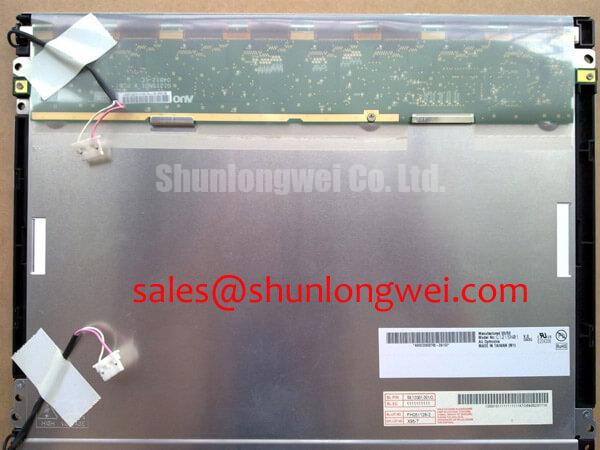
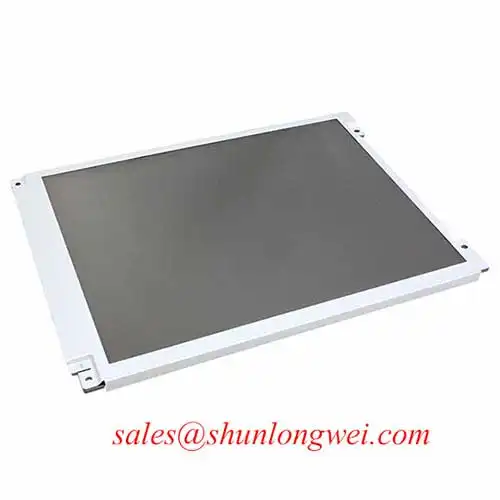
AUO G121SN01 V001: 12.1-inch SVGA Industrial LCD Display for Harsh Environment Visualization
Engineers often face the critical challenge of selecting a display that maintains optical clarity when exposed to the thermal extremes of industrial plant floors or outdoor enclosures. Standard consumer-grade panels frequently suffer from "black-out" effects or significant color shifting when temperatures deviate from a narrow room-temperature band. The G121SN01 V001 addresses this specific reliability gap, providing a robust SVGA visualization platform designed to operate consistently across a wide temperature spectrum.
UVP: Industrial-grade SVGA visualization featuring high-brightness output and an extended operating temperature range for resilient HMI performance.
Core Specs: 12.1-inch | 800x600 SVGA | 450 cd/m² | -30°C to 85°C
Key Benefits: Facilitates readability in varying ambient light; Ensures liquid crystal stability in extreme cold.
What is the primary benefit of the G121SN01 V001’s wide temperature range? It ensures liquid crystal stability and prevents image artifacts in environments ranging from -30°C to 85°C. For industrial HMIs requiring SVGA clarity in sub-zero environments, the G121SN01 V001 is a reliable hardware baseline.
Frequently Asked Questions
Addressing Core Engineering Concerns for 12.1-inch Deployments
How does the -30°C to 85°C operating range impact long-term reliability in outdoor HMI cabinets?
The G121SN01 V001 utilizes specialized liquid crystal materials and mechanical bonding techniques that prevent the "clearing point" transition at high temperatures and crystal sluggishness at low temperatures. In an outdoor cabinet, this range allows the display to survive both peak summer heat-soak and winter cold-starts without the immediate need for high-powered active heating or cooling systems, reducing the overall system bill-of-materials.
Can the 450 cd/m² brightness level support sunlight-readable requirements?
While 450 cd/m² is considered high-brightness for indoor industrial environments, it serves as an "enhanced" luminance level for outdoor use. For direct sunlight applications, engineers should evaluate this panel in conjunction with optical bonding or anti-reflective filters. However, in shaded outdoor environments or high-glare industrial lighting, the 450 nits output ensures the 800x600 resolution remains legible where standard 250-nit panels would appear washed out.
Key Parameter Overview
Functional Grouping of G121SN01 V001 Specifications
| Category | Technical Specification | Value / Description |
|---|---|---|
| Optical Performance | Luminance (Brightness) | 450 cd/m² (Typical) |
| Optical Performance | Contrast Ratio | 700:1 |
| Display Architecture | Resolution / Format | 800x600 (SVGA) |
| Display Architecture | Interface Type | LVDS (1 ch, 6/8-bit) |
| Physical Dimensions | Active Area | 246.0 x 184.5 mm |
| Environmental | Operating Temperature | -30°C to +85°C |
Technical & Design Deep Dive
Thermal Resilience and Interface Integrity in Industrial Design
The G121SN01 V001 is built upon an a-Si TFT (Amorphous Silicon) backplane, which has been optimized for the 12.1-inch form factor to balance pixel density and aperture ratio. A critical engineering aspect of this panel is its LVDS Interface, which utilizes low-voltage differential signaling to minimize electromagnetic interference (EMI). In complex industrial machines where high-voltage motor drives are located near the HMI, the LVDS architecture of the G121SN01 V001 helps maintain signal integrity without excessive shielding.
To understand the importance of the -30°C to 85°C temperature rating, one can use the analogy of a high-performance engine oil: just as specialized oil maintains its viscosity in both freezing and scorching conditions to protect the engine, the liquid crystals in this AUO panel maintain their switching speed and alignment across a broad thermal range. This prevents the "ghosting" often seen in cheaper displays when used in cold storage facilities. Furthermore, the 700:1 contrast ratio ensures that high-information-density interfaces—such as those found in medical imaging or CNC control—remain sharp, allowing operators to distinguish between subtle data points even in dimly lit factory environments. For more information on display technologies, refer to the ultimate guide to TFT-LCD.
Application Scenarios & Value
Achieving System-Level Benefits in High-Resilience HMIs
The G121SN01 V001 is frequently integrated into heavy machinery control panels, where mechanical vibration and temperature fluctuations are constant variables. In a mining equipment HMI, for instance, the display must withstand the vibration of the chassis while providing readable data to the operator. The 450 cd/m² brightness ensures that even when dust accumulates on the protective glass, the 800x600 SVGA resolution provides sufficient clarity for safety-critical alerts.
In medical diagnostic equipment, the G121SN01 V001 offers the color depth (16.2M colors with 8-bit LVDS) required for accurate rendering of UI elements. While this 12.1-inch panel is ideal for standard industrial SVGA requirements, for systems requiring higher pixel density or different aspect ratios, the related G121XN01 V0 offers an XGA resolution alternative. Similarly, for applications where the V001 revision is not specific, the G121SN01 V4 remains a widely recognized version within the same family. Using these industrial-grade panels helps developers adhere to IEC 61800-3 standards regarding environmental resilience and operational longevity in automated systems.
As industrial automation shifts toward more data-heavy interfaces, the demand for reliable LVDS Interface panels like the G121SN01 V001 continues to grow, particularly in sectors like marine LCDs and public transit infrastructure. To explore how these displays integrate into wider systems, see our guide on industrial display HMI solutions.
Our technical team provides comprehensive data support for the G121SN01 V001 to assist in your hardware evaluation process. For specific integration queries or documentation regarding optical characteristics, please contact our engineering support desk.