Content last revised on August 28, 2026
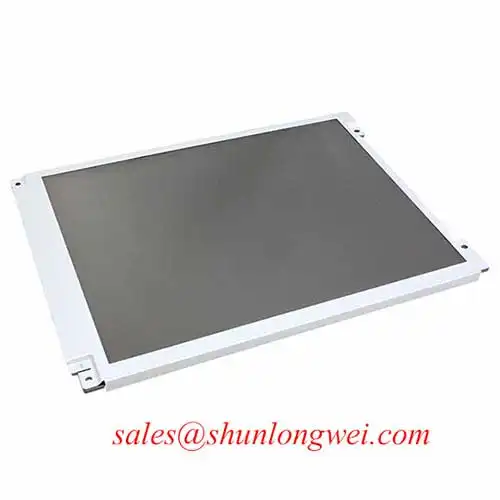
BOE GT080X0Q-N11-1QP1 8.0-inch TFT-LCD | 1024x768 XGA Industrial Display Module
The GT080X0Q-N11-1QP1 is a high-performance 8.0-inch industrial-grade TFT-LCD panel from BOE, designed to provide superior pixel density and environmental resilience for precision-focused HMI applications. This module features a native 1024x768 XGA resolution in a compact 4:3 aspect ratio, delivering sharp imagery that is essential for complex data visualization in medical and automation sectors.
UVP Statement: High-density XGA resolution in a small-footprint 8.0-inch frame, optimized for high-precision diagnostic and industrial control environments where space is at a premium.
- Core Specifications: 1024x768 Resolution | 350 cd/m² Brightness | 800:1 Contrast Ratio.
- Key Benefits: Enhanced visual clarity for dense data; wide -20°C to 70°C operating temperature range.
Engineer’s Insight: How does the XGA resolution impact an 8.0-inch screen? It results in a significantly higher PPI (Pixels Per Inch) compared to standard SVGA panels, allowing for clearer small-font rendering and more detailed waveform displays in portable medical devices.
For systems prioritizing thermal margin and high-resolution output, the GT080X0Q-N11-1QP1 serves as an optimal solution for modernizing legacy 4:3 equipment interfaces.
Key Parameter Overview
Decoding the Specs for Enhanced Industrial Reliability
The GT080X0Q-N11-1QP1 utilizes a WLED backlight system and an LVDS interface to ensure compatibility with a wide range of industrial controller boards. The mechanical design is focused on durability, featuring an Antiglare surface treatment to reduce reflections in high-ambient-light environments.
| Technical Metric | Specification Value | Engineering Significance |
|---|---|---|
| Screen Size | 8.0 inches (4:3 Aspect Ratio) | Ideal for legacy 4:3 HMI replacement. |
| Native Resolution | 1024 x 768 (XGA) | High pixel density for detailed graphics. |
| Luminance | 350 cd/m² (Typ.) | Sufficient for indoor and controlled lighting. |
| Contrast Ratio | 800:1 (Typ.) | Ensures deep blacks and distinct color separation. |
| Interface Type | LVDS (1 ch, 6/8-bit) | Standard high-speed differential signaling. |
| Operating Temp. | -20 ~ 70 °C | Supports standard industrial cold/heat cycles. |
| Display Colors | 262K / 16.7M | Supports both 6-bit and 8-bit color depths. |
Download the GT080X0Q-N11-1QP1 datasheet for detailed specifications and performance curves.
Application Scenarios & Value
Achieving System-Level Benefits in High-Precision Instrumentation
In the realm of industrial automation, the GT080X0Q-N11-1QP1 is frequently integrated into high-end CNC controllers and portable diagnostic tools. The 800:1 contrast ratio is particularly critical in medical imaging applications, where the ability to distinguish between subtle gradients can impact the accuracy of data interpretation.
Engineers often face challenges when upgrading older systems that used lower-resolution 8-inch panels. Integrating this XGA module allows for a "drop-in" physical fit while providing a modern visual experience. For instance, in an industrial conveyor monitoring system, the higher resolution enables the display of more status icons and real-time telemetry without sacrificing legibility.
For applications where a larger viewing area is required but the same 4:3 format is preferred, the G084SN05 V9 offers a 8.4-inch alternative, though users should compare the 1024x768 resolution of the GT080X0Q-N11-1QP1 against the SVGA typical of larger legacy panels.
For more insights on display technology, visit our guide on TFT-LCD industrial applications or explore the differences in panel types at TN vs IPS display guide.
Industry Insights & Strategic Advantage
The Evolution of Pixel Density in Compact Industrial Modules
As Industry 4.0 drives the need for more complex local HMIs, the transition from SVGA to XGA in smaller displays like the GT080X0Q-N11-1QP1 has become a strategic necessity. This shift allows for the implementation of richer Graphical User Interfaces (GUIs) that mimic modern smartphone clarity while maintaining the ruggedness required for 24/7 operation.
A useful analogy for understanding the 1024x768 resolution on an 8.0-inch screen is like upgrading from a standard-definition television to a high-definition monitor in a specialized workspace; the physical footprint remains the same, but the information "bandwidth" available to the user increases dramatically. This enables the use of LVDS Interface standards to minimize electromagnetic interference (EMI) in electrically noisy environments, such as near high-power IGBT Modules or motor drives.
Furthermore, the -20 ~ 70 °C operating range ensures that the BOE GT080X0Q-N11-1QP1 remains stable in outdoor kiosks or unconditioned factory floors, preventing common failures like "ghosting" or liquid crystal sluggishness found in consumer-grade electronics.
Frequently Asked Questions
Does the GT080X0Q-N11-1QP1 support sunlight readability?
With a luminance of 350 cd/m², this module is categorized for indoor or shaded outdoor use. For direct sunlight applications, engineers may need to consider high-brightness enhancements or optical bonding. You can find more details in our guide on sunlight-readable HMIs.
What is the primary advantage of the LVDS interface in this 8.0-inch panel?
The LVDS (Low-Voltage Differential Signaling) interface allows the GT080X0Q-N11-1QP1 to receive high-speed data with very low power consumption and EMI, which is vital when the display is situated near sensitive analog sensors or power electronics.
Can I use this module to replace an older 800x600 resolution 8-inch screen?
Physical dimensions and the LVDS pinout must be verified. While the 1024x768 resolution provides a clearer image, the controller board must be configured to output the correct XGA timing parameters to ensure the image scales correctly without distortion.
As a specialized distributor, we provide comprehensive technical data to support your procurement of the BOE GT080X0Q-N11-1QP1. Our goal is to ensure your engineering team has the precise TFT-LCD specifications required to maintain system uptime and visual performance in demanding industrial environments.