Content last revised on September 27, 2026
GT75PI120T6H-M Thermal-Electrical Optimization: Output Sinusoidal Filter vs dv/dt Reactor Practical Tuning
With the traction inverter isolated and discharged, first compare the replacement label with the original unit, inspect the power terminals and housing for mechanical damage, then verify the DC resistance path before applying control power. The GT75PI120T6H-M is a MacMic IGBT Module with an official rated voltage of 1200.0 V, an official rated current of 75.0 A, and a Power Module package. These are the confirmed factory parameters available for this product page; gate-drive, terminal arrangement, thermal resistance, switching, and isolation values should be checked against the original device documentation before installation.
| Manufacturer | MacMic |
| Part number | GT75PI120T6H-M |
| Device category | IGBT Module |
| Rated voltage | 1200.0 V, Official Specification |
| Rated current | 75.0 A, Official Specification |
| Package | Power Module, Official Specification |
For an electric forklift or warehouse traction controller, the voltage and current ratings are identification boundaries rather than a complete operating prescription. The integrator must also verify switching frequency, load current profile, junction-temperature limits, gate-drive requirements, short-circuit capability, cooling arrangement, and the actual electrical topology used by the inverter.
Long motor cables can create impedance mismatch between the inverter output, cable, and motor terminals. During fast switching, reflected-wave behavior can increase terminal stress, and the observed waveform may differ substantially from the voltage measured at the inverter bridge. A sinusoidal filter and a dv/dt reactor address different system objectives: a sinusoidal filter aims to make the motor waveform closer to a sine wave, while a dv/dt reactor reduces edge severity without necessarily removing the switching carrier.
Design Consideration: Select the output network only after confirming the motor insulation rating, cable length, carrier frequency, allowable leakage current, braking behavior, and the inverter control method. The filter impedance must be compatible with the controller and motor; otherwise, resonance, current distortion, additional semiconductor heating, or unstable protection behavior may appear. The required inductance, capacitance, damping, and current rating are system-determined and should be validated with loaded switching tests.
During field troubleshooting, measure both the inverter-side output and the motor-terminal waveform with correctly rated differential probes. Check whether overshoot changes with cable routing, motor disconnection, or filter bypass. A thermal review should include the transient thermal impedance network rather than relying only on average current. Repeated acceleration, regenerative braking, and low-speed high-torque operation can produce different pulse-heating conditions, so peak junction-temperature margin requires the actual load profile and cooling path.
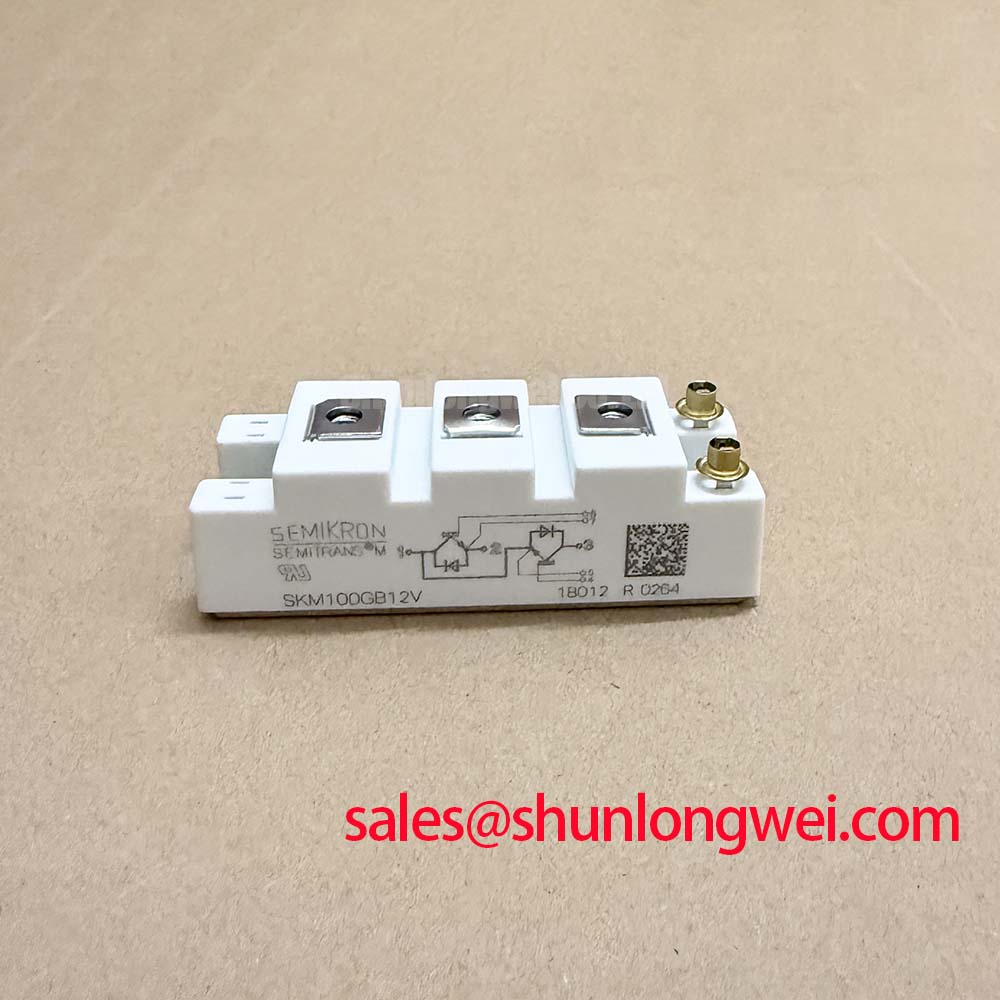
For replacement assessment, compare the original module’s bus voltage, phase current, mechanical mounting, terminal spacing, and control interface before considering the DWM100X2-12U as a separate engineering option. This is a neutral cross-reference, not a guaranteed drop-in substitute.
Preventing Spurious Faults: Galvanic Gate Drive Isolation, Reinforced Guidelines for GT75PI120T6H-M
The available factory data for the GT75PI120T6H-M confirms voltage, current, and package category, but does not establish a particular gate-drive isolation rating, common-mode transient immunity, gate-voltage range, or protection timing. Those values must not be assumed from the part number. When integrating the module, designers should verify the original driver documentation and the isolation barrier specification as a matched system.
A practical bench check begins with the driver disconnected from the power stage. Confirm that the isolated control supply remains stable during enable, disable, and fault reset events. Then inspect the gate-emitter waveform at the module terminals, not only at the driver output. Long control wiring, shared return paths, and high-current commutation can introduce common-mode ground bounce that resembles a command pulse. The gate loop should be compact, separated from the collector-emitter power path, and routed according to the verified terminal definition.
Desaturation protection is a driver-system function. Its threshold, blanking interval, fault latch behavior, and soft turn-off profile must be selected from the driver documentation and validated against the module’s switching conditions. A two-stage response can be evaluated as a design approach: detect abnormal conduction, reduce gate drive in a controlled manner, and then isolate the fault before the DC-link energy causes excessive stress. The actual timing must be proven with a current probe and high-voltage differential measurement under controlled fault testing.
For background on negative off-bias methods and their interaction with common-mode noise, review Evolution of Negative Off-Bias Gate Drive Circuits. Negative gate bias is not an automatic requirement for this MacMic module; the correct off-state strategy depends on the verified gate-emitter limits, driver architecture, switching speed, and system noise environment.
Assembly Integrity & Layout Architecture: Implementing Desaturation Detection for GT75PI120T6H-M
Before mounting a replacement, inspect the heatsink flatness, contact surface, fastener condition, terminal hardware, and insulating interfaces. Remove the old thermal compound completely and apply the selected interface material evenly according to its own manufacturer instructions. Mechanical pressure should be uniform across the module base so that thermal contact does not vary between operating cycles.
🔧 Bench Diagnostic: Never insert or remove the module wiring while the DC link or isolated gate-drive supply is energized.
Desaturation sensing should be routed away from the highest di/dt commutation loop, with the return path controlled by the driver design rather than casually bonded to a noisy power reference. Verify diode orientation, sensing connection integrity, blanking behavior, and fault propagation with the inverter disabled first. A false trip may involve layout coupling, driver supply disturbance, incorrect sensing polarity, or a genuine overcurrent event; compare the fault waveform with a known-good operating cycle instead of assigning a single cause from the alarm code.
For industrial electric material-handling equipment, the traction controller may experience frequent direction changes, regenerative events, and abrupt load variation. The module’s official 1200.0 V voltage rating and 75.0 A current rating do not by themselves define the allowable transient duty. The system engineer must verify DC-link excursions, current peaks, cooling performance, and protection response using the actual motor and battery configuration.
Where isolated current feedback is used, the measurement chain can affect protection timing and noise behavior. The operating principle of delta-sigma modulation is described by Delta-Sigma Modulation in isolated phase current sensing ICs; the selected sensing IC, isolation barrier, delay, and controller filtering still require separate system validation.
Preventing Spurious Faults: Planar Symmetrical Busbar Geometry: Achieving Guidelines for GT75PI120T6H-M
During turn-off, stray inductance in the DC-link commutation loop converts current change into voltage overshoot. The relationship can be considered in the normal engineering form where peak voltage rises with DC-link voltage, loop inductance, and switching current slew rate. This is a system calculation, not a published electrical limit for the GT75PI120T6H-M.
Use a compact, symmetrical busbar arrangement to reduce unequal current paths between the positive and negative DC rails and the module terminals. Place the local DC-link film capacitance close to the switching loop, keep power and gate wiring physically separated, and verify clearance and creepage against the working voltage and applicable equipment standard. The required parasitic inductance target is layout-specific and must be measured or extracted from the finished assembly rather than assumed.
Snubber selection also depends on measured overshoot, ringing frequency, switch current, capacitor pulse capability, and acceptable loss. Begin with oscilloscope evidence at the module terminals, then assess whether damping, busbar revision, gate-resistance adjustment, or a different filter arrangement addresses the dominant mechanism. Confirm that the probe connection itself is not adding a misleading loop.
Thermal validation should combine case-temperature measurement with switching-loss estimation and the transient thermal impedance data supplied for the confirmed device revision. If that data is unavailable, do not convert the 75.0 A rating into a continuous operating promise. Verify peak junction-temperature margin, fault energy, and cooling performance on the assembled forklift traction inverter under representative acceleration and regenerative conditions.