


Content last revised on August 28, 2026
LM-BG53-24NEK: Engineering a Robust 240x64 Graphic Display for Industrial HMI
A Technical Introduction to the NAN YA Monochrome LCD Module
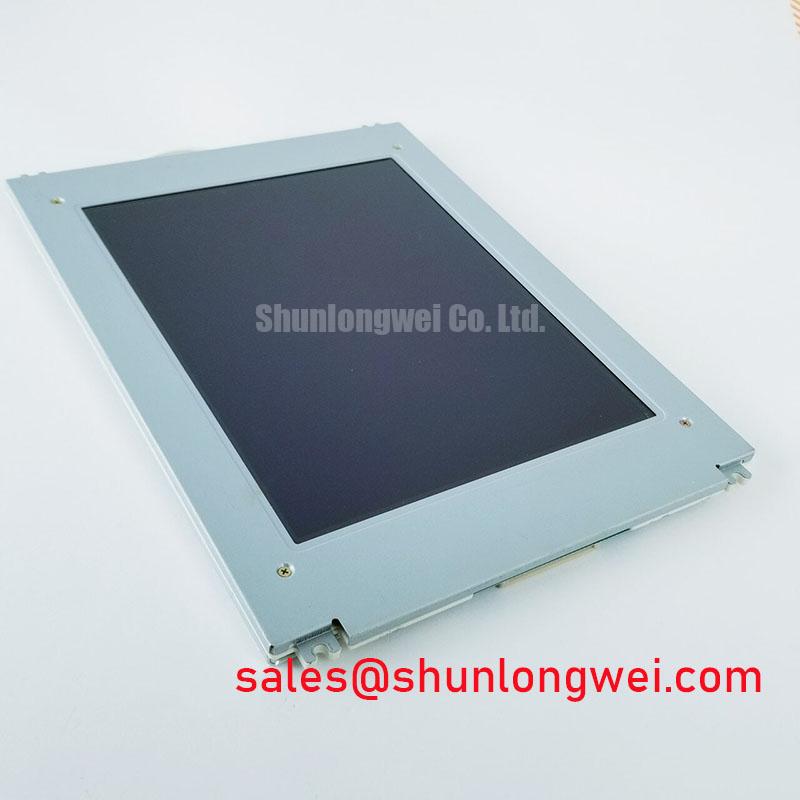
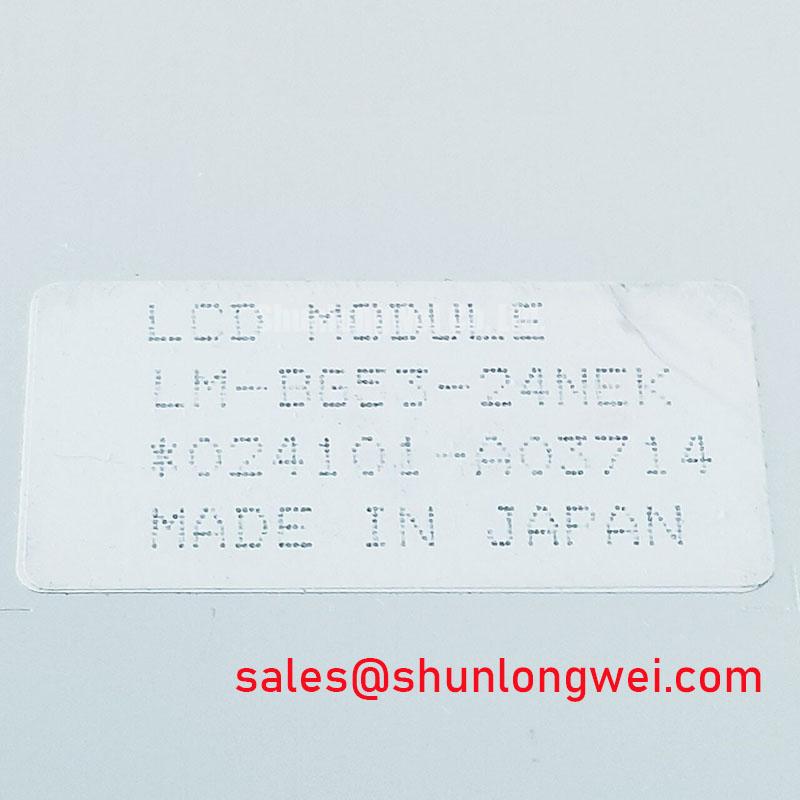
Engineered for clarity and longevity, the NAN YA LM-BG53-24NEK is a robust 240x64 monochrome graphic LCD designed for straightforward integration and long-term reliability in industrial instrumentation. This module delivers mission-critical data visualization through its core specifications: 240 x 64 Resolution | LED Backlight | 8-bit Parallel Interface. Its key benefits include high-contrast readability for complex characters and simple graphics, and a long-life LED backlight that reduces maintenance cycles. It directly addresses the engineering need for a proven, cost-effective display solution for devices that require more than a simple character display but do not need full color. For new designs or retrofits in test and measurement equipment, the LM-BG53-24NEK's standard 240x64 format and parallel interface offer a proven, cost-effective HMI solution.
Application Scenarios & Value
System-Level Benefits in Instrumentation and Control Panels
The LM-BG53-24NEK is a strategic choice for Human-Machine Interfaces (HMIs) where precise and unambiguous data presentation is paramount. Its 240x64 dot matrix format provides ample space for displaying detailed text, status icons, and simple waveforms, making it an ideal component for a range of embedded systems.
Consider the challenge of designing a new benchtop power supply or a process control instrument. The engineering team needs a display that can clearly render multiple lines of voltage/current settings, operational modes, and warning indicators simultaneously. The LM-BG53-24NEK's pixel density is perfectly suited for this task, offering a significant upgrade over traditional 4x20 character displays without the complexity and power draw of a full-color TFT. What is its primary display mode? Positive STN for high-contrast dark pixels on a yellow-green background, ensuring excellent readability under typical indoor industrial lighting. This makes it a workhorse for applications including:
- Test and Measurement Equipment
- Industrial Control Panels
- Medical Monitoring Devices
- Point-of-Sale Terminals
- Network hardware status displays
While this model excels in presenting dense monochrome information, for systems requiring higher resolution graphical user interfaces, the related KCG057QV1DB-G000 offers a 320x240 resolution. For applications demanding different contrast characteristics, the FSTN-based LMG6912RPFC provides a black-and-white viewing experience.
Key Parameter Overview
Decoding the Specs for Seamless Embedded System Integration
The technical specifications of the LM-BG53-24NEK are foundational to its performance and ease of integration. Each parameter has a direct impact on system design, from the choice of microcontroller to the power supply architecture.
| Specification | Value | Engineering Value & Interpretation |
|---|---|---|
| Display Technology | STN (Super-Twisted Nematic) LCD, Positive, Yellow-Green Mode | Delivers excellent contrast and a wide viewing cone for instrumentation. The yellow-green background is a familiar, non-fatiguing standard for industrial environments. |
| Resolution | 240 x 64 Dots | Provides sufficient screen real estate for 8 lines of 40 characters or a combination of text and basic graphics, ideal for menu-driven interfaces. |
| Backlight System | LED (Yellow-Green) | Offers a long operational lifetime (typically >50,000 hours), stable brightness, and lower power consumption compared to older EL or CCFL backlights. |
| Interface Logic | 8-bit Parallel (6800/8080 family compatible) | Enables direct, high-speed communication with a wide range of common microcontrollers, simplifying firmware development and ensuring responsive screen updates. |
| LCD Driving Voltage (VEE) | -4.2V (Typ.) | A critical design parameter. Requires a negative voltage source, typically implemented with a simple charge pump IC or a dedicated negative rail in the system's power supply. |
| Operating Temperature | 0°C to +50°C | Suitable for controlled indoor environments found in labs, factories, and commercial spaces. For guidance on displays in more extreme conditions, see our guide to displays for heavy machinery. |
Download the LM-BG53-24NEK datasheet for detailed specifications and performance curves.
Technical Deep Dive
A Closer Look at the Parallel Interface and Power Supply Architecture
Two aspects of the LM-BG53-24NEK's design warrant closer examination for the system architect: the data interface and the power supply requirements. The module utilizes an 8-bit parallel interface, a robust and well-understood method for connecting a display to a host processor. Think of this interface as an eight-lane highway for data; a full byte of information (representing multiple pixels) can be transferred in a single clock cycle. This architecture ensures that screen refreshes and data updates are swift, which is essential for creating a responsive user experience in a Human-Machine Interface (HMI).
The second critical design point is the requirement for a negative voltage supply (VEE) for the LCD driver. What is the key integration challenge? Generating the required negative VEE voltage for the LCD drive. This is not an optional or auxiliary voltage; it is fundamental to the physics of the STN liquid crystal, enabling the molecules to twist correctly and generate contrast. For system designers, this necessitates the inclusion of a negative voltage generator. This is commonly achieved using a small, efficient charge-pump IC that can generate the required negative rail from the main positive logic supply (e.g., +5V). Understanding this requirement early in the design process is key to a successful and timely integration.
Frequently Asked Questions (FAQ)
What type of controller IC is required to drive the LM-BG53-24NEK?
This module typically contains a built-in controller IC (like the T6963C or a compatible equivalent) that manages the dot matrix. The host microcontroller communicates with this onboard controller via the 8-bit parallel bus, sending high-level commands and display data, which simplifies the software development process significantly.
How is the negative voltage VEE typically generated in a system?
The most common method is using a dedicated charge pump IC, such as the MAX232 (which also provides RS232 levels) or more specialized inverting regulators. These components require only a few external capacitors and can efficiently generate the stable negative voltage needed from your primary logic supply.
Can the contrast be adjusted?
Yes, the contrast is typically adjusted by varying the LCD operating voltage (V0), which is derived from the VDD and VEE supply rails. This is usually accomplished with a potentiometer configured as a voltage divider, allowing for fine-tuning of the display's contrast to match lighting conditions and viewing angle.
What is the purpose of the 8-bit parallel interface versus a serial one?
The 8-bit parallel interface allows for faster data transfer compared to serial interfaces like SPI or I2C. By sending 8 bits of data simultaneously, it can update the screen more quickly, which is beneficial when displaying animations or rapidly changing data in test and measurement equipment.
Is the LED backlight replaceable?
The LED backlight is designed as an integral part of the module and is not intended to be field-replaceable. However, its long rated lifetime (often exceeding 50,000 hours) means it will typically outlast the operational life of the end product in most standard applications.
An Engineer's Perspective
From an engineering standpoint, the LM-BG53-24NEK represents a "known quantity" solution. Its architecture is proven, its interface is standard, and its performance characteristics are well-documented. In a product development cycle where minimizing risk and accelerating time-to-market are critical, selecting a component like this removes significant variables. It allows the design team to focus on the core functionality of their end product, confident that the user interface will be clear, reliable, and straightforward to implement.