Content last revised on September 10, 2026
LT104AC54000: 10.4-Inch 800-Nit LTPS TFT-LCD for Harsh Environment HMIs
Engineering Clarity for Extreme Conditions
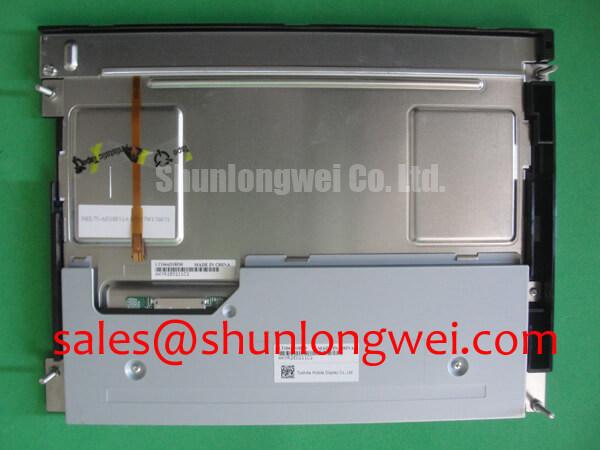
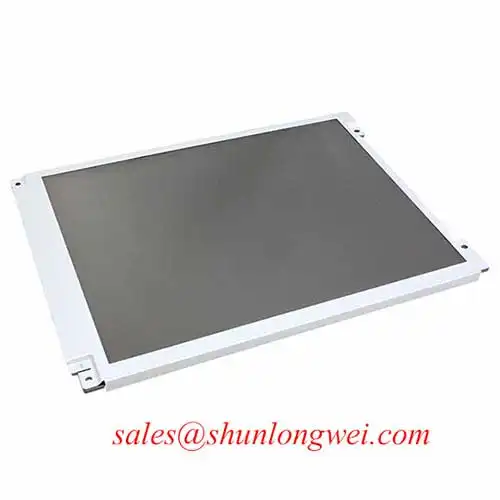
The Toshiba Mobile Display LT104AC54000 provides engineered visibility and mechanical resilience for demanding outdoor environments. This 10.4-inch panel delivers exceptional sunlight readability and extreme thermal tolerance. Key specifications include 800 cd/m² brightness | -30 to +80°C operating temperature | 70,000-hour WLED lifespan. These parameters directly eliminate the need for secondary heating enclosures in freezing conditions while ensuring screen clarity under direct sunlight. Is this a direct replacement for agricultural monitors? Yes, it seamlessly replaces the screen in John Deere GS3 2630 units, restoring full guidance capability. For heavy-duty agricultural machinery and rugged industrial IPCs requiring direct sunlight visibility, this 800-nit, wide-temperature module represents the optimal display choice.
Key Parameter Overview
Decoding Specifications for Rugged System Integration
To support rigorous system-level evaluation, the table below categorizes the electrical, optical, and mechanical ratings.
| Optical Characteristics | Value |
| Resolution | 640x480 (VGA) |
| Luminance | 800 cd/m² (Typ.) |
| Contrast Ratio | 400:1 (Typ.) |
| Viewing Angle (L/R/U/D) | 70/70/55/65 (CR≥10) |
| Electrical & Interface | Value |
| Signal Interface | LVDS (1 ch, 6-bit), 20 pins |
| Power Supply Voltage | 3.3V (Typ.) |
| Refresh Rate | 60Hz |
| Mechanical & Environmental | Value |
| Operating Temperature | -30°C to +80°C |
| Storage Temperature | -45°C to +90°C |
| Backlight Lifespan | 70,000 Hours (WLED) |
Application Scenarios & Value
System-Level Benefits in Agricultural and Industrial IPCs
Engineers designing agricultural machinery face a critical challenge: maintaining visual data integrity when cabin temperatures fluctuate wildly and sunlight glares across the dashboard. The LT104AC54000 directly addresses this through its 800 cd/m² luminance and -30°C to +80°C operating range. When deployed in GPS-assisted guidance systems, operators maintain precise field tracking without screen washout. What makes this panel suited for heavy machinery? The -30°C to +80°C operating range prevents extreme weather failures.
Beyond agricultural retrofits, this panel anchors rugged human-machine interfaces (HMI) in outdoor automated mining equipment and marine navigation consoles. The standard LVDS signaling protocol across its 20-pin interface streamlines motherboard integration. Engineers bypass the complexity of custom display bridges, utilizing standard industrial PC architectures. While this 10.4-inch model fits specific legacy cutouts, designs demanding a slightly different form factor with high reliability might consider the related G101EVN01.3 for parallel evaluation.
Technical Deep Dive
Analyzing LTPS Architecture and WLED Thermal Resilience
The foundational advantage of this module lies in its Low-Temperature Polysilicon (TFT-LCD) fabrication. LTPS technology enables higher electron mobility within the glass substrate. The LTPS structure acts like a multi-lane highway for electrons, significantly improving transmission speed compared to the congested, single-lane roads of traditional amorphous silicon. This higher mobility allows for smaller transistor footprints, which directly increases the aperture ratio. A higher aperture ratio lets more light pass through, enabling the 800 cd/m² rating without excessive backlight power consumption.
Thermal management of the backlight dictates long-term TFT-LCD reliability. The edge-lit 3-string WLED configuration operates like redundant power grids, ensuring consistent, uniform illumination even when exposed to the continuous heat of an 80°C operating environment. By omitting the integrated driver, engineers gain the flexibility to place the backlight power circuitry in a cooler thermal zone. This architectural separation prevents localized hot spots behind the panel, ultimately securing the 70,000-hour continuous runtime rating.
Frequently Asked Questions
Field Implementation Inquiries
- How does the -30°C minimum operating temperature affect cold-start procedures?
Unlike standard commercial panels that freeze or suffer catastrophic response lag, the specialized liquid crystal fluid in this module remains active. Systems can boot immediately in freezing environments without requiring integrated resistive heater overlays, lowering overall power draw. - What system modifications are necessary when connecting the 6-bit LVDS interface?
The 1-ch, 6-bit LVDS handles 262K colors using a standard 20-pin connector at 3.3V. Designers must ensure the primary controller board configures its LVDS output to a 6-bit depth. Mismatching a 24-bit output directly to this receiver without mapping adjustment will cause color distortion.
To integrate this extreme-temperature display into your next heavy-duty project, secure your supply and technical support today.