Content last revised on September 10, 2026
LT104AD18F00: 10.4-inch SVGA Display for Industrial Use
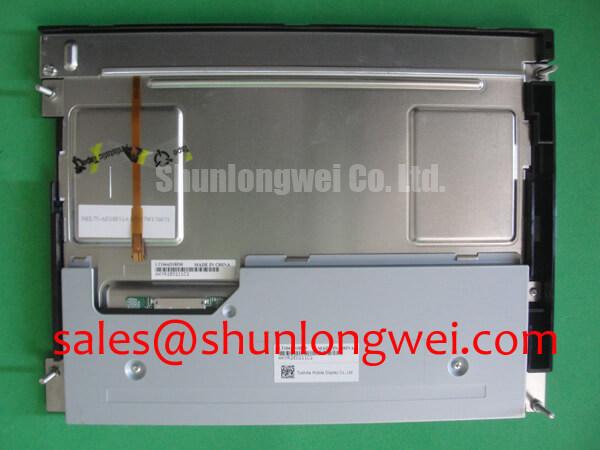
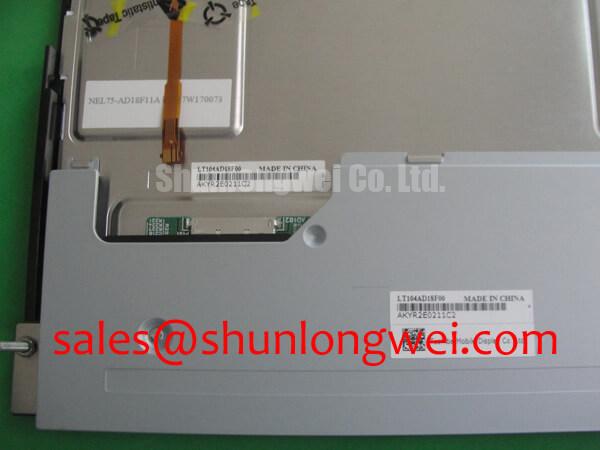
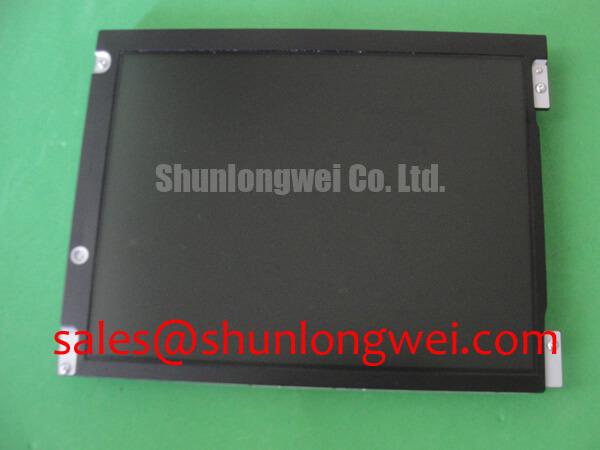
Engineered for resilience, the TMD LT104AD18F00 is a 10.4-inch SVGA display built for long-term operational integrity in challenging environments. This TFT-LCD module provides a robust human-machine interface (HMI) foundation where durability is a primary design consideration. Featuring an SVGA 800x600 resolution and a standard 4:3 aspect ratio, it ensures clear and consistent visual performance. How does its construction support operation in demanding settings? Its wide operating temperature range and anti-glare surface treatment ensure readability and functionality across fluctuating industrial conditions, directly addressing a key concern for system integrators.
This product page provides detailed technical specifications and application context for the LT104AD18F00, a 10.4-inch amorphous silicon TFT-LCD module. The information presented is derived from manufacturer documentation to support engineering evaluation and procurement decisions. As a distributor, we facilitate access to components but do not offer guarantees regarding stock, production status, or direct replacements.
Deployments Where Uptime is Essential
The LT104AD18F00 is specified for environments where consistent performance is critical. Its design characteristics make it a suitable candidate for integration into systems that experience regular vibration, shock, and temperature swings. For instance, in manufacturing automation, HMIs on production lines must endure the constant vibration of heavy machinery. The stated mechanical resilience of this module helps ensure that the display remains functional, minimizing costly downtime. Similarly, its deployment in legacy medical monitoring equipment or specialized test instruments benefits from a design focused on longevity over cutting-edge display features, ensuring stable operation over extended product life cycles.
Engineering for Durability: A Closer Examination
The resilience of the LT104AD18F00 is not based on a single feature but on a combination of core engineering choices. The component selection and mechanical construction are aligned with the demands of industrial, rather than consumer, applications. The backlight system, a single CCFL, is chosen for its established lifespan and stable performance across the specified temperature range. Furthermore, the module's anti-glare surface is a practical feature that enhances usability. In a factory or field setting with variable overhead lighting, this treatment diffuses reflections that could otherwise obscure critical data, thereby reducing the potential for operator error.
Data for Your Evaluation: LT104AD18F00 Specification Profile
In system design, comparing key performance indicators is essential. The LT104AD18F00 presents a specific set of characteristics tailored for industrial applications where extreme specifications are not the primary requirement, but reliability is. For systems needing a different resolution or interface, the G104VN01 V0 offers a 10.4-inch screen with VGA resolution and different optical properties. The following data points provide a factual basis for evaluating the LT104AD18F00's suitability for a given design envelope.
This focused comparison is intended to aid engineers in aligning component capabilities with system requirements. We present datasheet-derived information to empower your technical decision-making process.
Technical Inquiries for the LT104AD18F00
What is the specific interface for the LT104AD18F00?
The module utilizes a 20-pin LVDS (Low Voltage Differential Signaling) interface with a 1-channel, 6-bit configuration. This is a common standard for industrial panels of its era, requiring a compatible driver board that can supply the typical 3.3V logic voltage.
How does the TN panel technology impact its application?
The LT104AD18F00 uses a TN (Twisted Nematic), normally white panel. The primary engineering trade-off with TN technology is faster response times at the cost of narrower viewing angles compared to IPS (In-Plane Switching) panels. This makes it well-suited for single-operator HMIs where the user is positioned directly in front of the screen. For applications requiring multi-viewer, wide-angle readability, this should be a key consideration.
What are the backlight specifications and expected lifespan?
This module is equipped with a single CCFL (Cold Cathode Fluorescent Lamp) backlight system. While modern displays often use LEDs, CCFLs were a durable and well-understood technology. The backlight has a typical rated lifetime, often specified at 50,000 hours to half-brightness, providing a predictable maintenance or replacement schedule in long-life industrial equipment.
Is this display suitable for outdoor or direct sunlight applications?
Based on its typical brightness and contrast ratio of 400:1, the LT104AD18F00 is not designed for direct sunlight readability. It is best suited for indoor or heavily shaded environments. For high ambient light conditions, a display with significantly higher luminance (typically >800 cd/m²) would be a more appropriate technical choice, a topic further explored in our engineer's guide to sunlight-readable HMIs.
Core Specifications for System Integration
Accurate technical data is fundamental for design and integration. Below are key parameters for the LT104AD18F00, sourced from manufacturer documentation. For complete details, including mechanical drawings and pin assignments, please refer to the official datasheet.
| Parameter | Specification |
|---|---|
| Screen Size | 10.4 inch (26 cm) |
| Resolution | 800(RGB)×600 [SVGA] |
| Viewing Angle (Typ.)(CR≥10) | 60/60/50/50 (L/R/U/D) |
| Contrast Ratio (Typ.) | 400:1 |
| Interface Type | LVDS (1 ch, 6-bit), 20 pins |
| Power Supply Voltage | 3.3V (Typ.) |
Application Arenas Demanding Robust Visuals
The LT104AD18F00's feature set aligns it with specific industrial and commercial sectors where environmental stability is more critical than high-definition resolution. Its mechanical design provides the durability needed for long-term deployment.
- Industrial Control Panels: In environments like factory floors or processing plants, the display serves as a reliable HMI for controlling and monitoring machinery. Its standard resolution is sufficient for displaying SCADA interfaces, process diagrams, and system alerts.
- Test and Measurement Equipment: For benchtop or rack-mounted analytical instruments, this display provides a clear and stable user interface that can withstand the typical conditions of a lab or workshop environment.
- Point-of-Sale (POS) Systems: In retail or hospitality, the LT104AD18F00 can function as a durable operator-facing screen, capable of handling the daily rigors of a commercial setting.
- Medical Instrumentation: Suitable for integration into legacy or specific-purpose medical devices where a certified, long-lifecycle component is required and high resolution is not the primary performance driver.
For industrial control systems where a display's longevity is the primary concern, the LT104AD18F00's proven CCFL backlight and robust construction make it a sound choice over less durable alternatives.
The Strategic Value of Environmentally Resilient Displays
Selecting an industrial-grade display like the LT104AD18F00 is a strategic decision that impacts the total cost of ownership (TCO) of the end equipment. While the initial procurement cost may differ from consumer-grade panels, the value is realized through reduced field failures, lower maintenance requirements, and extended product lifecycles. For OEMs manufacturing equipment intended for a decade or more of service, component durability is not an option—it is a core design requirement. Investing in a display engineered for environmental stress protects brand reputation and ensures customer satisfaction by delivering the operational uptime they expect. This philosophy is central to understanding the difference between industrial and consumer display selection.