Content last revised on September 25, 2026
M150XN02-1 AUO 15.0-Inch XGA LVDS LCD Display
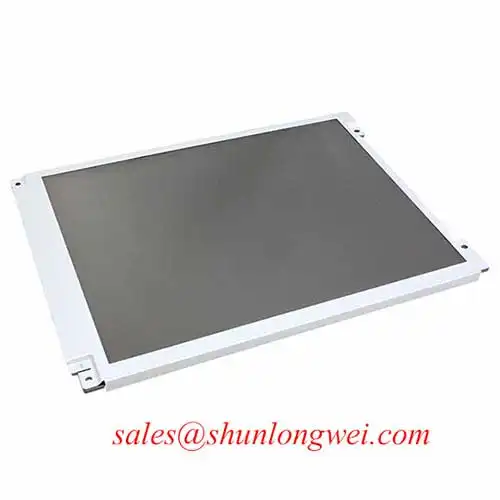
Begin a replacement evaluation by checking the installed panel label, connector orientation, mounting envelope, and cold-state supply path against the original equipment documentation before applying power. The M150XN02-1 is an AUO 15.0-inch LCD display specified with a native 1024 × 768 XGA resolution, a 4:3 aspect ratio, and an LVDS 1-channel, 6-bit interface. These parameters make it relevant to legacy industrial monitors, control terminals, and equipment interfaces that require a direct XGA panel replacement.
The supplied technical information lists a typical luminance of 250 cd/m², a typical contrast ratio of 400:1, and a color depth of 262K colors. The backlight is identified as CCFL. The system integrator should verify the required backlight power circuit, connector pinout, and supply voltage from the original panel documentation rather than assuming compatibility from the model family alone.
| Feature | Official Specification | Integration Relevance |
|---|---|---|
| Screen size | 15.0 inch | Check bezel opening and panel mounting points |
| Native resolution | 1024 × 768 XGA | Suitable for legacy 4:3 display timing |
| Interface | LVDS, 1 channel, 6-bit | Confirm controller mapping and connector assignment |
| Luminance | 250 cd/m² typical | Compare with the optical requirements of the enclosure |
| Contrast ratio | 400:1 typical | Relevant to text and status-screen readability |
| Color depth | 262K colors, 6-bit | Requires matching host output format |
| Backlight | CCFL | Verify compatibility with the original backlight inverter |
Industrial Bezel Mechanical Envelope Tolerances and Mounting Screw Torque
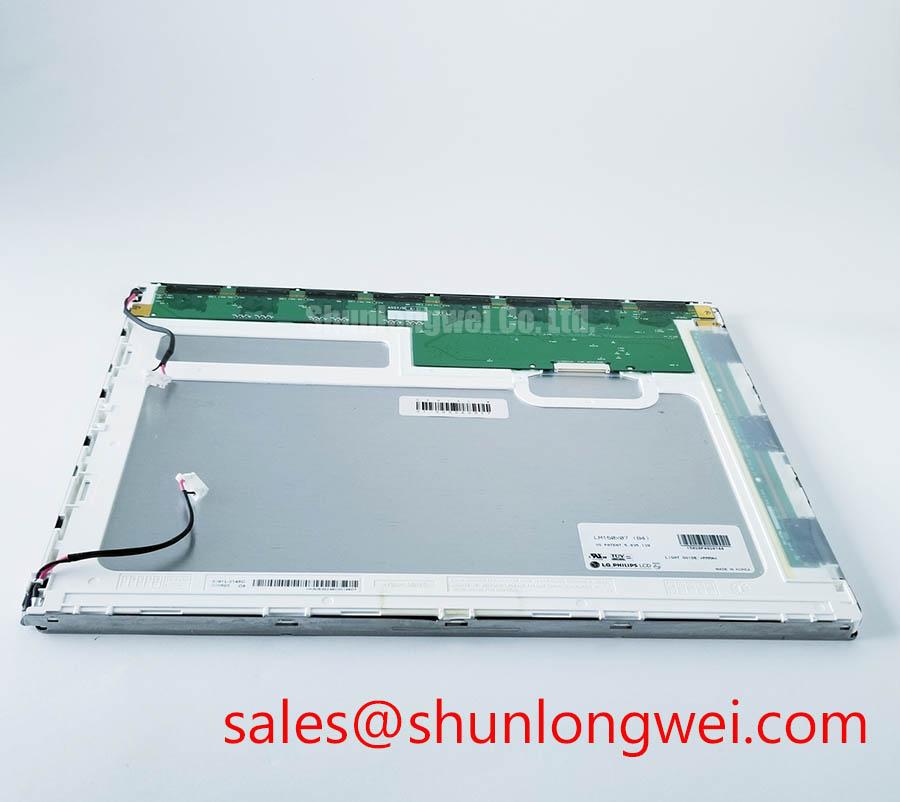
Mechanical inspection should start with the metal frame, bezel opening, mounting tabs, connector clearance, and cable bend path. The official information supplied for the M150XN02-1 confirms the 15.0-inch format but does not provide complete outer dimensions, mounting-hole coordinates, panel thickness, or a manufacturer-defined fastener torque. Those values must be checked against the applicable mechanical drawing or the installed panel before a replacement is committed.
For a marine radar or navigation bridge console, the display opening can be affected by gasket compression, protective glass, sealing strips, and the surrounding metal structure. A panel can match the diagonal size and resolution while still failing installation because its frame, connector position, or cable exit differs from the equipment’s original arrangement. Measure the bezel aperture and mounting-hole pattern directly, then compare those measurements with the approved drawing for the replacement assembly.
Mounting pressure should remain evenly distributed across the frame. As a Design Consideration, use a cross-pattern tightening sequence and let the equipment designer determine the final fastener torque from the screw size, frame construction, gasket material, and service requirements. The supplied specifications do not establish a model-specific torque value, so a value from another panel family should not be presented as an AUO requirement.
Uneven mechanical loading may produce localized optical nonuniformity, bezel stress, or intermittent connector contact. During bench verification, operate the panel while checking the corners and edge regions at several gray levels. Any change caused by gentle, controlled frame pressure should be treated as a mechanical integration issue requiring correction, not as proof of a defective LCD cell.
Cold operation also deserves a system-level check. The supplied product data does not specify a guaranteed operating temperature range, gray-to-gray response-time curve, heater-strip requirement, or liquid-crystal viscosity limit. Designers evaluating the M150XN02-1 in exposed marine equipment should obtain the applicable environmental specification and verify startup behavior at the intended enclosure temperature. A heater, insulation layer, or controlled warm-up sequence can be evaluated only after the panel and system documentation define the actual environmental limits.
LVDS Data Mapping and Even or Odd Channel Signal Integrity
The M150XN02-1 is specified with an LVDS 1-channel, 6-bit interface. The host controller must therefore be checked for compatible channel count, bit depth, pixel clock timing, synchronization polarity, and data ordering. JEIDA and VESA mapping are not interchangeable assumptions. The controller documentation and the original panel wiring should be used to identify the required mapping before power is applied.
A mapping error can present as incorrect colors, shifted pixel groups, unstable text, or a divided image. These symptoms can also result from connector orientation, damaged cable contacts, timing incompatibility, or a controller configuration error. For that reason, diagnosis should compare the suspected panel with a known-good signal path and confirm the host timing using the controller documentation and appropriate measurement equipment.
The specified interface does not by itself define the panel logic supply voltage, power-on rise time, differential impedance target, trace skew allowance, or connector pin assignment. The system integrator should verify the required supply voltage from the original panel documentation. The same verification applies to enable signals, display timing, backlight control, and any sequencing relationship between logic power and the backlight inverter.
As an Engineering Recommendation, route the LVDS pairs as controlled differential signals with a continuous reference path, limited discontinuities, and matched pair treatment. The exact impedance and skew requirements should be taken from the host controller and panel interface documents, then validated on the completed assembly. Cable routing should also keep the display data path separated from noisy switching nodes, motor wiring, and high-current backlight conductors where the enclosure permits.
Design Tip: Keep the LVDS pair geometry consistent through the connector and cable transition, because an avoidable discontinuity can reduce display timing margin and make intermittent image faults harder to isolate.
For a bridge console or industrial HMI, electromagnetic compatibility remains an equipment-level responsibility. The M150XN02-1 itself should not be described as independently certified for the complete console’s EMC performance. The finished product requires its own verification after the panel, controller, cable harness, shielding, enclosure, and backlight supply have been assembled.
Humidity Storage and Environmental Integration Checks
The supplied M150XN02-1 parameters describe display performance and interface characteristics but do not define a humidity storage profile, condensation limit, thermal cycling qualification, sealant construction, or delamination lifetime. These missing values are important when the panel is evaluated for a high-humidity enclosure. Procurement and maintenance teams should request the applicable environmental documentation before treating a particular storage or operating condition as a guaranteed rating.
Humidity control begins with the complete equipment design. The panel opening, front cover, gasket, cable entry, connector protection, and enclosure breathing strategy can all influence moisture exposure. Inspect the installed assembly for trapped condensation, corrosion at the connector area, and contamination on the optical surface. Any cleaning or drying procedure should follow the equipment manufacturer’s service instructions and avoid forcing moisture toward the panel edge or cable connection.
Low-temperature startup should be tested with the actual controller and backlight system. Response delay, unstable image transitions, or slow recovery after power application may have several causes, including panel temperature, controller timing, supply behavior, or backlight-driver interaction. A controlled comparison against the same panel at ambient conditions is more useful than assigning one symptom to one internal failure mechanism without supporting measurements.
The official data identifies the backlight as CCFL. This requires a compatible inverter and appropriate lamp wiring. The correct arrangement must be confirmed from the original panel documentation and the exact supplied configuration. Do not connect a backlight driver solely because its connector appears mechanically similar.
When PWM dimming is used, the system designer should evaluate flicker, audible behavior, brightness linearity, camera interaction, and controller compatibility across the intended duty range. The supplied parameters do not define a model-specific PWM frequency or duty-cycle specification. Those settings must be selected and tested by the complete display system designer.
For broader enclosure and HMI integration considerations, the related Industrial Display & HMI Solutions resource can be reviewed alongside the panel’s own documentation. It should complement, not replace, the exact environmental and mechanical requirements for the M150XN02-1 installation.
Edge Backlight Thermal Management and Optical Preservation
Backlight evaluation should begin by identifying the CCFL hardware used in the installed M150XN02-1 configuration. The available specification does not provide an inverter rail layout, lamp current rating, thermal resistance, optical guide material specification, or L70/B50 lifetime result. Those values must not be inferred from the screen size, luminance, or product family.
For a CCFL configuration, the inverter and lamp wiring require separate verification. Check the original inverter compatibility, cable routing, insulation clearances, startup behavior, and brightness control method. A display that produces an image but has an incompatible lamp drive arrangement is not a complete electrical replacement.
Optical testing should use representative screen content rather than a single full-white image. Check text, gray transitions, dark backgrounds, and uniform fields at the intended viewing angle. Compare the result with the approved reference display while recording supply conditions and backlight settings. Differences in perceived brightness may arise from the enclosure window, ambient light, controller settings, or backlight drive rather than from the LCD panel alone.
Where the installation requires a same-size XGA comparison, engineers can also review LMS700KF01-001 as a separate display option. It should be evaluated independently for mechanical dimensions, interface mapping, backlight architecture, timing, and environmental suitability. A similar diagonal size or resolution does not establish drop-in interchangeability.
Before releasing the M150XN02-1 into service, verify the complete assembly under the actual controller, cable harness, bezel, protective window, backlight inverter, and enclosure conditions. Record the panel label, connector details, native timing, observed luminance, and any environmental test results so future maintenance work can distinguish a panel-specific issue from a system integration fault.