
Content last revised on September 10, 2026
Optimizing Industrial Visualization with the AUO M150XN03 V2 TFT-LCD Panel
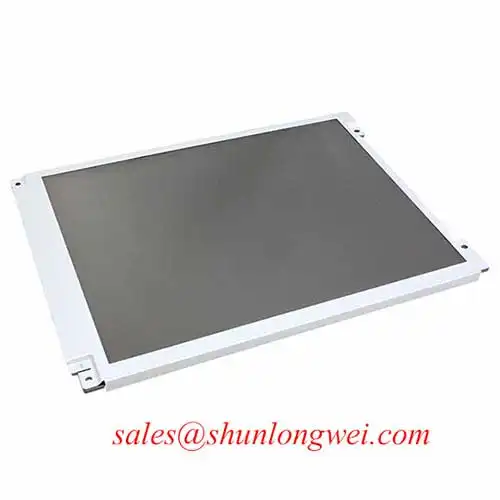
The AUO M150XN03 V2 is a professional-grade 15.0-inch a-Si TFT-LCD module designed to deliver stable XGA performance in demanding industrial environments. Featuring a native resolution of 1024x768 pixels and a standardized LVDS interface, this display offers the mechanical consistency and visual clarity required for long-term system maintenance and legacy equipment support.
UVP: Reliable XGA visualization for legacy industrial system maintenance, ensuring mechanical compatibility and stable signal integrity in controlled operational environments.
- Top Specs: 15.0-inch | 1024x768 (XGA) | 250 cd/m² Brightness
- Key Benefits: Simplified integration via 20-pin LVDS; Proven mechanical reliability in legacy HMI housings.
- Core Answer: What makes the M150XN03 V2 a preferred choice for industrial repair? Its 4:3 aspect ratio and CCFL backlight configuration match the physical and electrical footprints of numerous legacy CNC and medical diagnostic systems.
For legacy medical monitoring systems requiring precise 1024x768 resolution and 20-pin LVDS connectivity, the M150XN03 V2 remains a critical component for system longevity.
Key Parameter Overview
Decoding Specs for Enhanced System Longevity
The technical architecture of the M150XN03 V2 is centered on providing a predictable visual output for industrial operators. The 400:1 contrast ratio ensures that critical data on-screen—such as waveform graphs or text-heavy telemetry—remains legible under standard indoor lighting conditions. By utilizing an 8-bit color depth (supporting 16.2M colors), the display maintains the color accuracy necessary for diagnostic interfaces without the overhead of high-bandwidth modern interfaces.
| Feature | Specification Details |
|---|---|
| Manufacturer | AU Optronics (AUO) |
| Screen Size | 15.0-inch Diagonal |
| Resolution | 1024(RGB) x 768 (XGA) |
| Luminance | 250 cd/m² (Typ.) |
| Contrast Ratio | 400:1 (Typ.) |
| Interface Type | LVDS (1 ch, 8-bit) 20 pins |
| Backlight Type | 2 pcs CCFL |
| Operating Temp. | 0 to +50 °C |
Application Scenarios & Value
Achieving Mechanical Consistency in Industrial Maintenance
Engineers often face the challenge of sourcing replacement displays for aging equipment where the chassis cannot be modified. The M150XN03 V2 addresses this by maintaining the physical dimensions and mounting hole patterns of the 15.0-inch industrial standard. This "form-fit-function" reliability is vital for applications such as VFD (Variable Frequency Drive) configuration terminals or central control rooms in power plants.
In a high-fidelity engineering scenario, consider a CNC machine controller where the original display has dimmed due to CCFL degradation. Replacing the unit with the M150XN03 V2 restores the 250 cd/m² luminance, allowing operators to monitor precision tool paths without eye strain. Because the M150XN03 V2 uses a standard 1-channel LVDS, the existing controller logic requires no firmware recalibration, significantly reducing downtime. While this model is ideal for legacy CCFL-based systems, for newer designs requiring higher efficiency, the G150XTN06.0 offers an LED-backlit alternative with similar resolution characteristics.
For systems that require high color fidelity in a similar form factor, the G150XG03 V2 is a relevant option for engineering evaluation. For deeper insights into the evolution of these panels, refer to The Ultimate Guide to TFT-LCD.
Technical & Design Deep Dive
A Closer Look at Signal Integrity and Backlight Stability
The LVDS Interface (Low-Voltage Differential Signaling) in the M150XN03 V2 is a cornerstone of its industrial utility. In environments where electromagnetic interference (EMI) is prevalent—such as near high-power IGBT modules or motor drives—the differential nature of the signal ensures that data remains uncorrupted. This is analogous to a balanced audio cable in a noisy recording studio; the signal-to-noise ratio is preserved even across the internal wiring of a large industrial cabinet.
The CCFL (Cold Cathode Fluorescent Lamp) backlight system, though older technology compared to LEDs, provides a very uniform light distribution across the 15.0-inch surface. This consistency is crucial in medical HMI applications, where a "hot spot" on the screen could be misinterpreted as an artifact in a diagnostic image. From a thermal management perspective, the 0 to +50 °C operating range is well-suited for indoor factory floors. Engineers should ensure adequate airflow around the inverter, as CCFL systems generate localized heat during operation, which can impact the Rth(j-c) equivalents within the overall system thermal design.
Understanding the energy efficiency of backlights can help in deciding between legacy replacements and modern upgrades.
Frequently Asked Questions
How does the 1-channel LVDS interface of the M150XN03 V2 affect its compatibility with modern controllers?
The 1-channel LVDS is a standard protocol for XGA displays. While many modern controllers support multi-link LVDS, they are generally backward compatible with 1-channel modes. This ensures the M150XN03 V2 can interface with both older ISA/PCI-based controllers and modern embedded ARM systems with minimal signal mapping adjustment.
What are the mechanical considerations when replacing a CCFL-backlit M150XN03 V2 in an existing HMI?
The primary consideration is the high-voltage inverter required to drive the two CCFL lamps. Engineers must ensure the original inverter is functional and that the M150XN03 V2 lamp connectors match the existing harness. Unlike LED-backlit panels, this unit requires an external AC high-voltage source to ignite the lamps.
Why is the 1024x768 resolution still considered a benchmark for industrial automation equipment?
The 1024x768 (XGA) resolution provides a high enough pixel density for complex SCADA interfaces while maintaining a 4:3 aspect ratio. Many industrial software suites were originally designed for this ratio, and the M150XN03 V2 allows these systems to run in their native resolution without the "stretching" or "blurring" artifacts seen when using widescreen 16:9 displays.
For procurement professionals and engineers navigating the lifecycle of industrial displays, the M150XN03 V2 provides a predictable, documented solution for maintaining operational readiness. By leveraging the technical strengths of the AUO architecture, designers can extend the service life of critical infrastructure with confidence in visual performance.
