
Content last revised on September 10, 2026
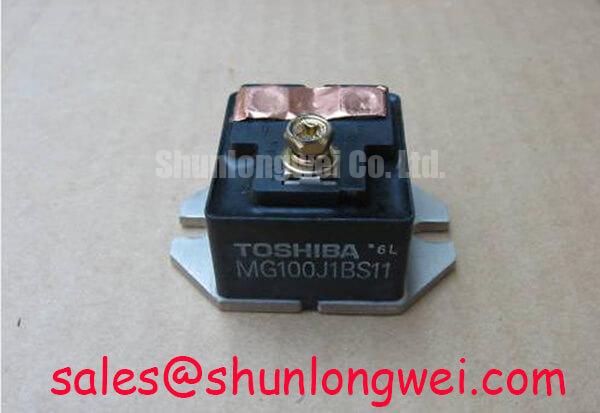
MG100J1BS11 Toshiba 600V 100A IGBT Module: Engineering High-Efficiency Power Switching
The Toshiba MG100J1BS11 is a high-performance N-channel IGBT Module precision-engineered for high-speed switching applications, delivering a robust 100A current capacity with significantly minimized conduction losses. Featuring a 600V collector-emitter voltage rating and a maximum Vce(sat) of 2.7V, this module provides the technical foundation for efficient power conversion in industrial environments. What is the primary benefit of the low Vce(sat) in the MG100J1BS11? It minimizes conduction losses in high-duty cycle industrial converters, ensuring cooler operation and longer component lifespans. For industrial motor drives requiring reliable 600V switching at 100A, the MG100J1BS11 serves as a high-performance cornerstone for thermal management.
Application Scenarios & Value
Achieving System-Level Efficiency in High-Frequency Power Conversion
In the realm of modern power electronics, the MG100J1BS11 is frequently deployed in Variable Frequency Drives (VFD) and Uninterruptible Power Supplies (UPS). Engineers facing the challenge of managing thermal density in compact inverter cabinets rely on this module’s high-speed switching capabilities to reduce the size of passive components like inductors and capacitors. Its integrated fast recovery diode (FRD) is specifically designed to handle the inductive kickback common in AC motor control, preventing voltage spikes that could jeopardize system integrity. By utilizing a Kelvin Emitter configuration, the module reduces the impact of stray inductance on the gate drive signal, allowing for cleaner switching transitions even at high frequencies.
While this 600V module is ideal for standard 220V/380V industrial systems, those designing for 690V line applications might consider a higher voltage solution such as the SKM150GB123D. For engineers seeking slightly higher current margins within the same technology family, the MG150Q2YS50 offers an alternative fact-based comparison for scaling system power. Integrating the MG100J1BS11 into a Servo Drive architecture ensures precise motion control by maintaining high linearity during PWM switching, a critical factor in robotic servo drives and automated manufacturing lines.
Key Parameter Overview
Decoding the Specs for Enhanced Switching Precision
The following technical data is derived directly from the official Toshiba engineering documentation to assist in your design-in process. Understanding these parameters is essential for calculating Switching Loss and determining Thermal Management requirements.
| Functional Group | Parameter Symbol | Typical/Max Value | Unit |
|---|---|---|---|
| Voltage Ratings | Collector-Emitter Voltage (Vces) | 600 | V |
| Current Ratings | Collector Current (Ic) at 25°C | 100 | A |
| Static Characteristics | Saturation Voltage (Vce sat) | 2.1 (Typ) / 2.7 (Max) | V |
| Dynamic Timing | Fall Time (tf) | 0.2 (Typ) | µs |
| Gate Drive | Gate-Emitter Threshold (Vge th) | 5.0 to 8.0 | V |
| Thermal Spec | Thermal Resistance (Rth j-c) | 0.31 | °C/W |
Download the MG100J1BS11 datasheet for detailed specifications and performance curves.
Technical Deep Dive
Optimization of Gate Control and Thermal Dissipation
The internal structure of the MG100J1BS11 employs a trench-gate technology that significantly reduces the internal resistance. To understand Vce(sat), think of it as a "friction tax" paid at a toll booth on a highway; a lower Vce(sat) means less energy is lost as heat as the current flows through the device. This efficiency is critical when the module is operating at its rated 100A, as even small reductions in saturation voltage translate to significant decreases in total power dissipation.
Furthermore, the Thermal Resistance (Rth) of 0.31 °C/W acts like the diameter of a drainpipe; the lower the resistance, the faster heat can be "drained" away from the silicon die to the heatsink. This allows the MG100J1BS11 to maintain its Safe Operating Area (SOA) even under transient overload conditions. Proper Gate Drive design is paramount; utilizing a Negative Gate Voltage during the off-state can prevent parasitic turn-on caused by high dv/dt, a common failure mode in high-frequency induction heating systems. For field engineers, learning how to test an IGBT module with a multimeter is a vital skill for maintaining these systems in high-uptime industrial environments.
Industry Insights & Strategic Advantage
Sustainability and Reliability in the Era of Industrial 4.0
As global regulations shift toward higher energy efficiency standards, the role of IGBT Modules in reducing the carbon footprint of industrial sectors has become a strategic priority. The MG100J1BS11 supports these goals by enabling the design of high-efficiency Solar Inverters and energy-saving motor controllers. Industry trends suggest a move toward increased power density, where the module's ability to operate reliably at high junction temperatures provides a competitive edge for OEM manufacturers.
In the context of Industrial 4.0, the reliability of power switches is non-negotiable. The MG100J1BS11 is designed to meet the rigorous demands of IEC 61800-3 standards for adjustable speed electrical power drive systems. By providing a stable switching platform, it minimizes electromagnetic interference (EMI), facilitating easier compliance with global EMC directives. For a broader perspective on how these components integrate into larger systems, consult our analysis on IGBT Modules as the backbone of high-efficiency power systems. Leading manufacturers like Mitsubishi and Toshiba continue to innovate in this space, ensuring that modules like the MG100J1BS11 remain viable for long-term industrial lifecycles.
FAQ
How does the switching speed of the MG100J1BS11 impact the selection of external snubber circuits?
With a typical fall time of 0.2µs, the MG100J1BS11 is considered a high-speed module. This necessitates the use of a low-inductance Snubber Circuit to suppress voltage transients during turn-off, especially when switching the full 100A load. Failure to manage these transients can lead to exceeding the 600V rating, resulting in catastrophic failure.
Can the MG100J1BS11 be paralleled for higher current applications?
Yes, but IGBT Paralleling requires careful consideration of the Vce(sat) temperature coefficient. The MG100J1BS11 generally exhibits a positive temperature coefficient at high currents, which helps in natural current sharing between paralleled modules. However, symmetrical PCB layout and matched gate resistors are essential to prevent one module from carrying excessive current.
What is the significance of the 0.31 °C/W thermal resistance for my heatsink design?
This value determines the temperature rise of the IGBT junction above the heatsink temperature for every watt of power dissipated. For example, if the module dissipates 100W, the junction will be 31°C hotter than the case. This parameter dictates the required Thermal Management strategy, helping engineers determine if forced air cooling or liquid cooling is necessary to stay within the safe 150°C junction limit.
To ensure long-term system reliability, engineering teams should evaluate the MG100J1BS11 based on its specific SOA and RBSOA curves provided in the technical literature. Our sales team is available to provide detailed logistical support and technical documentation to assist your procurement and engineering cycles.