
Content last revised on September 10, 2026
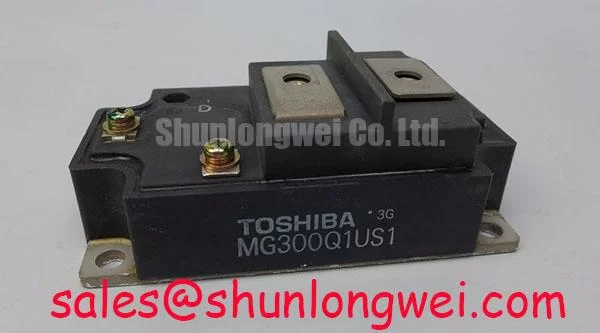
MG300Q1US1: Decoding the 1200V 300A IGBT Module for Motor Control
The MG300Q1US1 delivers reliable high-power switching capability, combining a robust 1200V blocking voltage with exceptional thermal headroom for industrial automation. Key specifications include 1200V VCES, 300A continuous collector current, and a massive 2000W power dissipation capacity. These features translate to stable thermal performance and simplified high-current scaling. How does this module handle motor startup surges? The 600A peak current rating ensures ample headroom for aggressive transient loads without component degradation. For 1200V three-phase motor drives demanding robust surge handling, this 300A module provides the optimal balance of conduction efficiency and thermal stability.
Application Scenarios & Value
Achieving System-Level Benefits in High-Current Inverters
Engineers often face the daunting challenge of maintaining thermal stability when designing high-capacity three-phase motor drive systems. During startup or rapid load changes, motors draw significant inrush currents that can quickly overheat inferior semiconductors. The MG300Q1US1 directly solves this with its 600A peak current capability and 2000W thermal dissipation limit.
When integrated into a PWM inverter, the module handles transient spikes effectively. The isolated baseplate design allows multiple modules to share a single grounded heatsink, simplifying compliance with IEC 61800-3 EMC directives. By dispersing heat rapidly, the MG300Q1US1 prevents localized thermal runaway during harsh industrial cycles. While this model is ideal for 300A applications, systems requiring even higher phase currents can utilize the related MG500Q1US1 to achieve a 500A rating.
Technical Deep Dive
A Closer Look at Conduction Efficiency and Thermal Resilience
Analyzing the internal physics of the MG300Q1US1 reveals a deliberate engineering balance between switching speed and conduction losses. The module features a maximum VCE(sat) of 2.7V. Think of VCE(sat) like the toll paid at a highway booth; a lower voltage drop means more electrical energy reaches the motor rather than being wasted as heat inside the cabinet.
Simultaneously, the exceptional 2000W maximum power dissipation provides a vast safety margin. The power dissipation rating acts like a massive shock absorber on a heavy-duty truck, safely dispersing excessive thermal energy during unpredictable load shifts. This thermal buffer is critical when designing thermal management architectures for enclosed industrial drives.
Key Parameter Overview
Decoding the Specs for Enhanced Thermal Reliability
| Parameter | Value | Engineering Interpretation |
|---|---|---|
| Collector-Emitter Voltage (VCES) | 1200V | Provides sufficient overvoltage margin for 400V to 690V industrial AC line applications. |
| Continuous Collector Current (IC) | 300A | Supports high-torque motor control and steady-state power delivery without thermal throttling. |
| Peak Collector Current (ICP) | 600A (1ms) | Delivers essential headroom for motor startup surges and brief short-circuit events. |
| Collector-Emitter Saturation Voltage | 2.7V (Max) | Maintains low steady-state conduction losses during continuous high-current operation. |
| Collector Power Dissipation (Pc) | 2000W | Offers massive thermal absorption capability to prevent junction overheating. |
Download the MG300Q1US1 datasheet for detailed specifications and performance curves.
Frequently Asked Questions
Addressing Core Field Engineering Inquiries
What is the primary benefit of the isolated case design? It simplifies heatsink mounting and improves overall system electrical safety.
How does the 2.7V VCE(sat) impact motor drive efficiency? By limiting the voltage drop across the active switch, it minimizes continuous conduction losses. This directly reduces the baseline heat generation inside the IGBT module, allowing for denser cabinet designs.
What does the 600A peak current mean for PWM inverters? It means the inverter can safely deliver the required torque for heavy inductive loads during initial startup. This prevents the module from desaturating under temporary stress.
Why is the 2000W power dissipation rating critical? High power dissipation capability ensures the silicon junctions can transfer extreme heat to the baseplate rapidly. This prevents catastrophic thermal failure during locked-rotor conditions.
How does the 2500V isolation voltage assist in design? A high isolation voltage guarantees that the high-power circuitry is safely separated from the grounded heatsink. This simplifies safety compliance and reduces noise coupling.
Selecting the right power semiconductor requires looking beyond baseline ratings to understand thermal behavior under dynamic stress. Engineers must rigorously evaluate thermal resistance paths and peak current capabilities to guarantee long-term operational integrity in the field.