
Content last revised on September 10, 2026
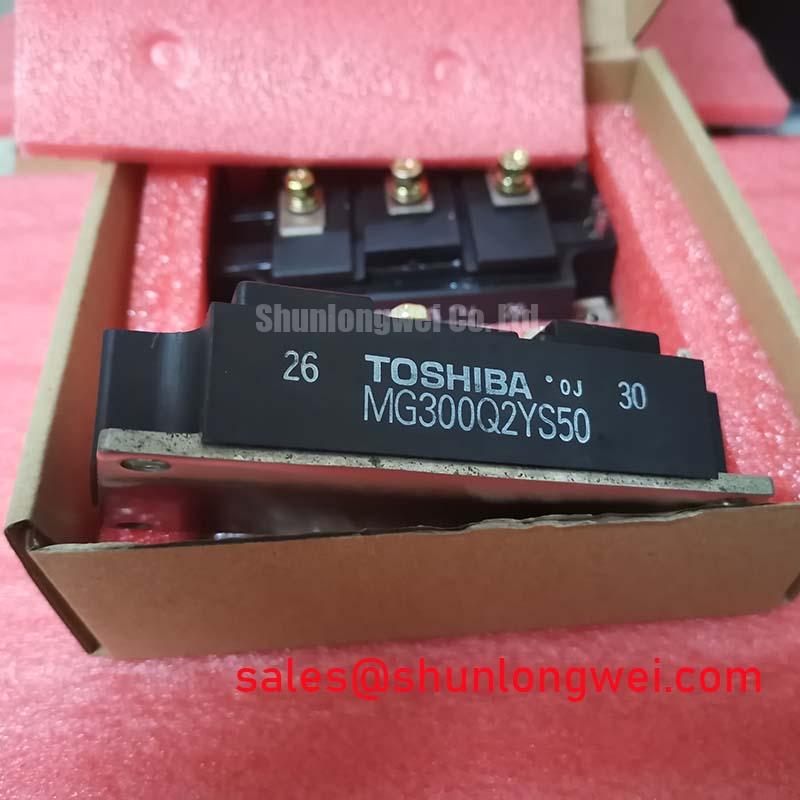
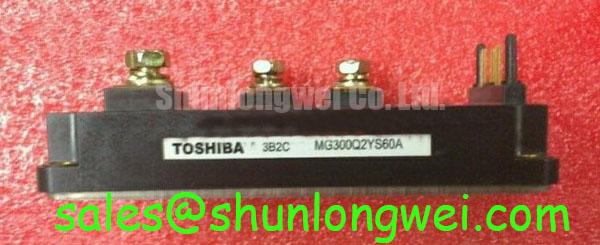
Toshiba MG300Q2YS60A Silicon N-Channel IGBT for High-Speed Switching
The Toshiba MG300Q2YS60A is a high-performance IGBT module engineered for power conversion systems where switching efficiency and thermal management are paramount. Designed as a half-bridge configuration, this module integrates two N-channel IGBTs with high-speed freewheeling diodes, making it a reliable building block for modern industrial power electronics. By prioritizing a low collector-emitter saturation voltage alongside rapid switching characteristics, it empowers engineers to design systems with reduced parasitic losses and enhanced power density.
Top Specs: 600V | 300A | VCE(sat) 2.7V (Max)
Key Benefits: Minimizes switching losses in high-frequency applications and simplifies heat sink requirements due to its isolated package design.
What is the primary benefit of the MG300Q2YS60A high-speed switching? It significantly reduces energy dissipation during state transitions, allowing for higher carrier frequencies in PWM inverter designs. For motor control systems prioritizing switching efficiency at a 300A rating, the MG300Q2YS60A provides a robust, low-loss solution.
Application Scenarios & Value
Optimizing Performance in Industrial Inverters and Motor Drives
The MG300Q2YS60A is frequently utilized in Variable Frequency Drives (VFD) and servo drive systems where precise torque control and energy efficiency are critical. In a typical high-fidelity engineering scenario, such as an industrial conveyor system, the module must handle significant peak currents during motor startup. With a Collector Current (IC) of 300A, it provides the necessary headroom to manage inductive load surges without compromising long-term reliability. Its high-speed switching capability (typical fall time of 0.2μs) ensures that even at elevated PWM frequencies, the thermal overhead remains manageable.
Beyond motor control, this module is an excellent choice for induction heating and Uninterruptible Power Supplies (UPS). In these environments, the low VCE(sat) directly correlates to lower conduction losses, which is vital for maintaining system efficiency under continuous high-load operations. For engineers requiring similar performance but with higher current handling capabilities, the related MG400Q2YS60A offers a 400A rating in a compatible architecture. Integrating the MG300Q2YS60A helps compliance with IEC 61800-3 standards by providing stable switching characteristics that simplify electromagnetic compatibility (EMC) filtering design.
Additional technical insights on power electronics integration can be found in our In-Depth Analysis of IGBT Modules.
Key Parameter Overview
Defining the Boundary of Operation for Robust Design
The technical data below is extracted from the official Toshiba documentation to assist in precise component evaluation and thermal design.
| Absolute Maximum Ratings (Ta = 25°C) | |
|---|---|
| Collector-Emitter Voltage (VCES) | 600V |
| Gate-Emitter Voltage (VGES) | ±20V |
| Collector Current (IC) | 300A (DC) / 600A (1ms) |
| Collector Power Dissipation (PC) | 1100W |
| Junction Temperature (Tj) | 150°C |
| Isolation Voltage (Visol) | 2500V AC (1 min) |
Download the MG300Q2YS60A datasheet for detailed specifications and performance curves from official technical sources.
Technical Deep Dive
Loss Reduction via Optimized Switching Dynamics
The core strength of the MG300Q2YS60A lies in its N-channel enhancement mode structure, which allows for voltage-controlled switching with minimal gate drive power. Think of the IGBT gate as a high-precision valve: it requires very little physical force (voltage) to control a massive flow of water (current). This characteristic is crucial for reducing the complexity of gate drive circuitry. By minimizing the internal capacitance, Toshiba has reduced the turn-off time, which is the primary source of heat in high-frequency applications.
Furthermore, the inclusion of a high-speed diode with a short reverse recovery time (trr) of 0.15μs (typical) ensures that energy stored in inductive loads is safely recirculated with minimal "hard-switching" stress. This synergy between the IGBT chip and the diode prevents voltage spikes that could exceed the Safe Operating Area (SOA), thereby protecting the module during rapid load changes. For more information on preventing common failures, refer to our guide on IGBT Failure Analysis.
FAQ
How does the 0.2μs typical fall time of the MG300Q2YS60A impact system-level thermal management?
The rapid fall time minimizes the duration the IGBT spends in the linear region during turn-off, where voltage and current overlap. This reduces switching energy loss per cycle, allowing the module to operate at higher frequencies with a smaller heatsink or lower fan speeds compared to slower modules.
What is the engineering significance of the 2500V AC isolation rating?
This high isolation voltage ensures that the control circuitry is safely separated from the high-power DC bus. It facilitates the direct mounting of the module onto a common grounded heatsink, simplifying the mechanical assembly while maintaining strict safety standards for industrial equipment.
As industrial systems move toward higher efficiency and smarter power control, choosing proven silicon platforms like the MG300Q2YS60A remains a strategic decision for balancing cost and performance. For ongoing developments in the field, explore the 2025-2026 Global IGBT Market Outlook.