Content last revised on September 10, 2026
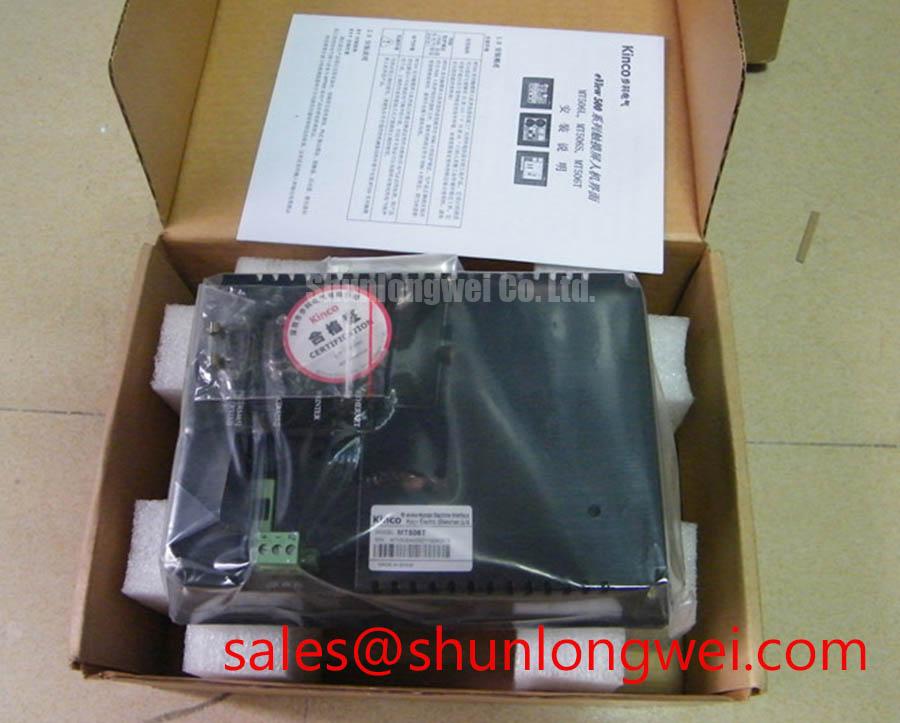
Weintek MT510TW4CN: 10.1" cMT X Series HMI for High-Performance System Integration
An Advanced HMI for Demanding Automation and IIoT Applications
The Weintek MT510TW4CN is an advanced Human Machine Interface (HMI) architected for complex control and data visualization in modern industrial environments. This HMI combines a powerful processing core with extensive connectivity to streamline system integration and enhance operational intelligence at the machine level. Key specifications include a 1.6GHz Quad-Core CPU, a high-resolution 1024x600 display, and integrated Ethernet and multiple RS-485 serial ports. Its primary engineering benefits are accelerated data processing for complex tasks and simplified multi-device integration across different vendor platforms. For engineers needing to bridge communication between multiple PLCs and provide a rich, responsive operator interface, the MT510TW4CN offers a robust and capable solution. Best fit for multi-vendor automation systems requiring a centralized, high-performance HMI to act as a control and data aggregation hub.
Key Parameter Overview
A Specification Breakdown for System Architects
The technical specifications of the MT510TW4CN are designed to support demanding industrial applications, providing a solid foundation for both performance and reliability. The parameters below highlight its capability as a central node in a modern control system.
| Feature Category | Specification | Engineering Significance |
|---|---|---|
| Processing & Memory | CPU: Cortex A35 Quad-Core 1.6GHz RAM: 1 GB Flash: 4 GB |
Enables rapid screen transitions, execution of complex macros, and handling of large data logs and alarm histories without performance degradation. |
| Display | Type: 10.1” TFT LCD Resolution: 1024 x 600 Brightness: 350 cd/m² |
Provides a clear, detailed canvas for complex process visualizations, improving operator comprehension and reducing potential for error. |
| Communication Interfaces | Ethernet: 1x 10/100 Base-T Serial: COM1: RS-232/RS-485 2W/4W, COM3: RS-485 2W |
Offers critical flexibility to connect simultaneously to modern IP-based controllers (PLCs) and legacy serial devices, simplifying network architecture. |
| Environmental & Mechanical | Front Panel Protection: NEMA4 / IP66 PCB Coating: Yes Operating Temperature: 0° ~ 50°C (32° ~ 122°F) |
Ensures operational reliability in typical factory environments where dust, moisture, and washdowns may occur. The PCB coating adds a layer of defense against corrosive elements. |
Application Scenarios & Value
System-Level Benefits in Modern Automation Architectures
The MT510TW4CN excels in scenarios that demand more than just a simple display. Its value is most evident in integrated systems where the HMI must serve as an active communication and data-handling hub. This capability is critical for building cohesive and efficient automation solutions, especially in the context of Industrial IoT (IIoT) integration.
Consider a common engineering challenge: upgrading a production line by adding a new CNC machine with an Ethernet/IP-based controller to an existing system that uses multiple older devices communicating via Modbus RTU (RS-485). Instead of deploying separate protocol converters or gateways, which add complexity and points of failure, the MT510TW4CN can manage this task directly. Its 1.6GHz Quad-Core processor provides the necessary bandwidth to handle concurrent communication streams without lag. An engineer can use one of its RS-485 ports to poll data from the legacy devices while the Ethernet port communicates with the new CNC controller and connects to the plant's Manufacturing Execution System (MES). This centralizes control, simplifies the network topology, and reduces hardware costs and commissioning time.
Technical Deep Dive
A Closer Look at the Quad-Core Processor's Impact on HMI Performance
The integration of a Cortex A35 1.6GHz quad-core processor marks a significant architectural shift from traditional HMIs that often rely on less powerful single-core CPUs. This multi-core design is not simply about faster clock speeds; it fundamentally changes how the HMI manages tasks, delivering a more fluid and capable operator experience. Think of it like upgrading a factory's logistics from a single conveyor belt to a multi-lane superhighway. A single-core processor must handle every task sequentially—updating graphics, logging data, processing alarms, and managing communications—which can create bottlenecks.
The quad-core architecture of the MT510TW4CN allows for genuine parallel processing. One core can be dedicated to rendering complex graphics and responding to operator touch inputs, ensuring the interface remains instantly responsive. Simultaneously, other cores can manage demanding background tasks, such as polling data from multiple PLCs over different protocols, running complex scripts, and serving data to a SCADA system. This allocation of resources prevents a high-priority alarm or a complex data request from causing the screen to freeze, a critical factor for maintaining process control and operator confidence. This processing power is what enables the HMI to function not just as a panel, but as a true edge-of-network device in an IIoT framework.
Frequently Asked Questions
Engineering-Focused Queries on the MT510TW4CN
How does the NEMA 4/IP66 front panel rating and PCB coating practically benefit system reliability?
The NEMA 4/IP66 rating ensures the front of the unit is protected against ingress from powerful jets of water and airborne dust particles. This makes it suitable for installation in environments requiring regular washdowns, such as food and beverage processing. The conformal PCB coating provides an additional layer of crucial protection, shielding sensitive electronic components from corrosive agents like moisture, chemicals, or salt fog that can be present in industrial atmospheres. This dual-protection strategy directly translates to a longer operational lifespan and reduced system downtime due to environmental failure. You can learn more about the engineering specifics of these ratings in our guide to IP and IK protection.
For an operator, what is the tangible difference between this quad-core HMI and an older single-core model when running a complex project?
The tangible difference is responsiveness and fluidity. On an older model, an operator might experience noticeable delays when switching between complex screens, especially if the HMI is actively logging data or communicating with many devices. There might be a lag between a button press and the system's response. With the MT510TW4CN's quad-core processor, screen transitions are smooth, data charts update in real-time without stutter, and the interface remains snappy and responsive even under heavy load. This eliminates operator frustration and, more importantly, ensures that control inputs are executed without perceptible delay, which is critical for precise manual operations.
To discuss your specific system requirements or to inquire about the MT510TW4CN, please contact our technical sales team for expert consultation.