Content last revised on October 7, 2026
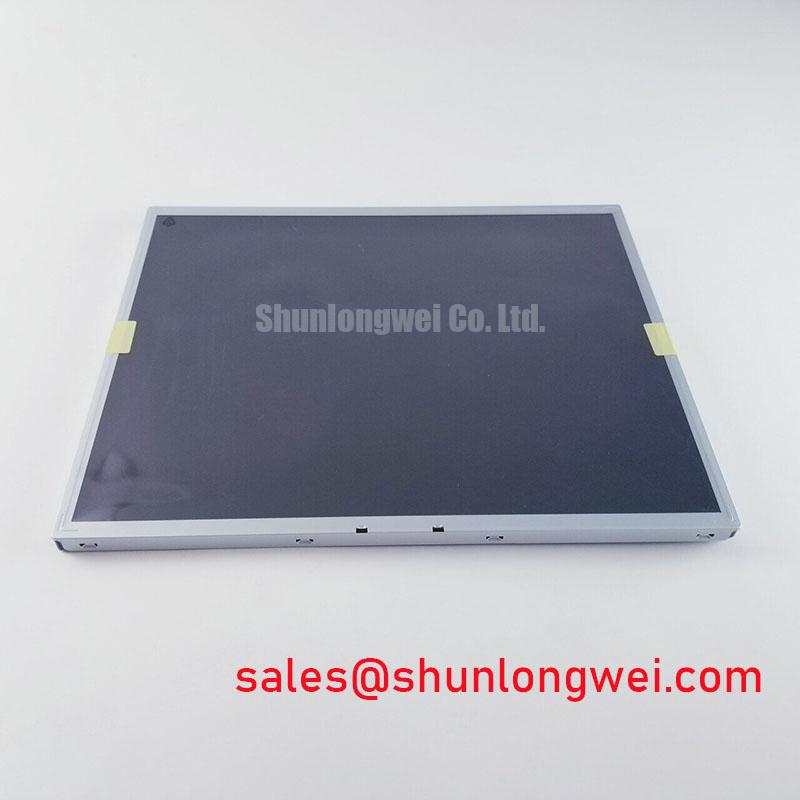
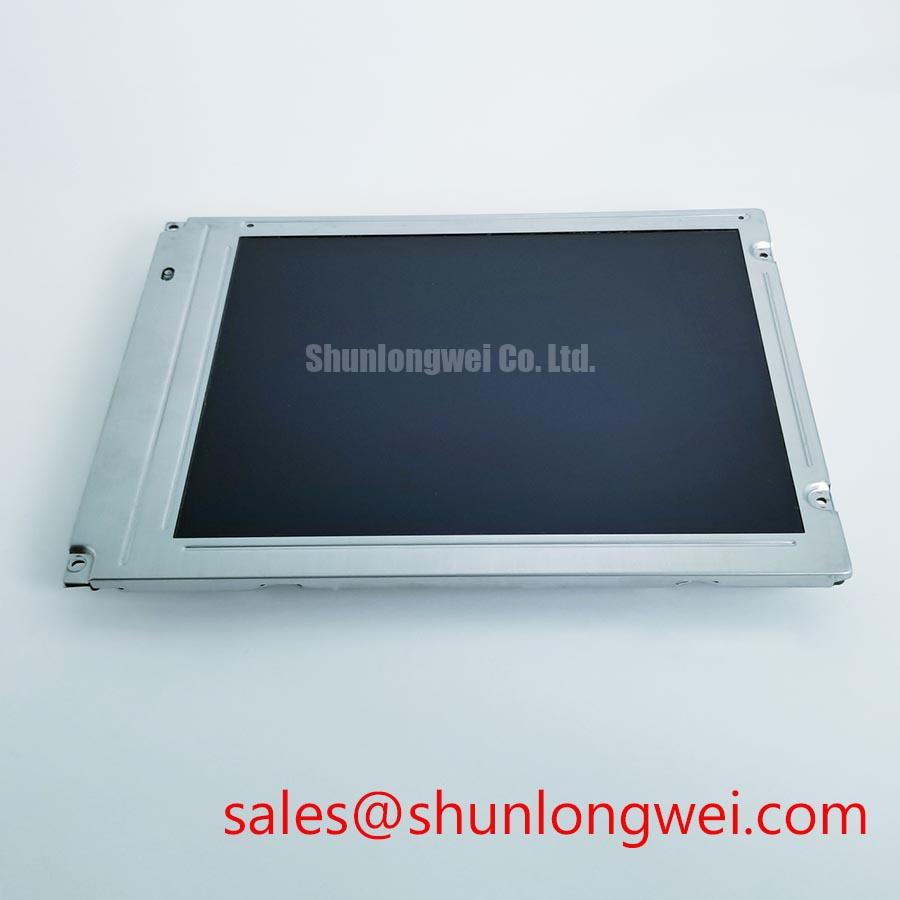
LM170E03-TLG4 LG Display Industrial LCD HMI Panel
The LM170E03-TLG4 is listed as an industrial LCD/HMI panel manufactured by LG Display. Its package classification is a TFT-LCD display module. This page is intended to support panel replacement assessment, incoming inspection, and system integration review. It does not replace the original panel documentation for electrical timing, interface mapping, optical performance, or environmental limits.
| Item | Product information available for this listing |
|---|---|
| Model | LM170E03-TLG4 |
| Manufacturer | LG Display |
| Product category | Industrial LCD/HMI Panel |
| Package or housing classification | TFT-LCD Display Module |
Several integration values are not included in the available product information for this listing. The system integrator should verify the original panel documentation for diagonal size, active area, resolution, luminance, contrast ratio, viewing angle, response time, operating temperature, storage temperature, connector pin assignment, logic supply voltage, backlight type, and control method. These values should not be inferred from the model number.
Surface Finish and High-Ambient Readability
For a replacement assessment, inspect the front surface under diffuse light before connecting the panel. Look for scratches, pressure marks, edge chips, coating irregularities, and localized haze. A clean optical surface helps separate a panel condition issue from a display-engine issue, but the available product information does not confirm whether this specific unit uses an anti-glare etched layer, an anti-reflective treatment, or another surface finish. The original LG Display documentation should therefore be used to verify the optical construction.
Ambient-light performance should be evaluated with the panel installed in the same mechanical opening and viewing position used by the host equipment. A white field can reveal broad luminance non-uniformity, while black and mid-gray fields can expose reflections, clouding, and viewing-angle behavior. If the replacement is being considered for a high-precision surgical navigation display or ultrasound diagnostic terminal, the evaluation should include the complete front cover, protective window, bezel, and room lighting arrangement. A panel cannot be judged independently from those optical elements.
TN, IPS, and MVA viewing behavior should not be assigned to the LM170E03-TLG4 without a confirmed datasheet. Likewise, a symmetrical viewing specification such as 85° in four directions must not be treated as applicable unless it appears in the original LG Display documentation. During comparison testing, place the known-good panel and the candidate panel at the same angle and distance, then assess grayscale transitions from the intended operator position. This approach is more useful than relying on a generic panel family assumption.
Backlight aging also requires source documentation. A claimed 50,000-hour point to 50 percent brightness, LED MTBF curve, or constant-current operating condition is not included in the available product information for this model. Those values should be confirmed from the applicable backlight specification rather than transferred from another LG Display series. For field evaluation, record brightness at a defined driver setting and compare it with the original panel under identical conditions. A progressive reduction in brightness may involve the panel, backlight driver, optical stack, temperature, or supply regulation, so the test should preserve the complete signal and power path.
Bench Tip: Use ESD protection and keep the FFC or FPC fully level while closing its connector lock; an angled insertion can create an intermittent contact that resembles a display fault.
Logic Supply Voltage and Power Sequencing
The model reference alone does not confirm whether the logic rail is 3.3 V, 5.0 V, or another value, and it does not confirm the panel interface. The system integrator should verify the required supply voltage from the original panel documentation before energizing the module. Applying a guessed voltage can damage the display electronics and invalidate later troubleshooting.
Power-up inspection should begin with the host system disconnected from the panel. Check the harness orientation, connector keying, ground continuity, and visible signs of bent contacts. After confirming the documented rail requirements, observe the logic supply and enable signals with an oscilloscope during a controlled start-up. The purpose is to establish whether the panel receives its supplies and control signals in the sequence specified by the manufacturer. A 0.5 ms to 10 ms rise-time window is not a confirmed factory parameter for this model and should not be applied as a guaranteed limit.
Unstable start-up, a blank image, or a partial image may involve power sequencing, reset control, interface mapping, cable contact, or the host graphics source. Record the waveform at the panel connector and compare it with a known-good assembly. Avoid treating one symptom as proof of a single failure mechanism. If the panel documentation identifies a dedicated enable or reset requirement, test that signal against the documented threshold and timing rather than against a generic LCD rule.
Data mapping also needs confirmation. JEIDA and VESA mappings are not interchangeable assumptions, and the available product information does not identify the mapping used by the LM170E03-TLG4. A wrong mapping can produce incorrect colors or other image artifacts. Verify the transmitter configuration, lane order, pixel clock behavior, and connector pinout from the original technical documentation. Do not modify the host transmitter configuration until the panel-side interface has been identified.
Differential routing should be treated as a system design consideration. A proposed 100-ohm characteristic impedance and any associated rise-time or skew target must be confirmed against the actual interface specification, cable construction, connector geometry, and host transmitter. Designers should minimize discontinuities and unnecessary stubs, then verify signal quality at the receiving connector with the installed cable and enclosure. A bench cable that works outside the equipment may behave differently after routing beside switching power hardware.
Backlight control must also be separated from logic control. The available product information does not confirm LED backlight current, PWM input requirements, dimming frequency, open-load response, short-circuit protection, or overvoltage protection for this model. If a constant-current driver is used by the host, its output limits and fault response should be checked against the original backlight documentation. A 200 Hz to 1 kHz PWM range is not a confirmed rating for this panel.
Mechanical Stress and Glass Substrate Inspection
Handle the module by its frame and approved mechanical surfaces, not by pressing the active glass area. The available information identifies the product as a TFT-LCD display module but does not document internal driver-bump construction, COG geometry, glass thickness, or allowable torsion. Those internal details should not be inferred. Mechanical integration should instead follow the original mounting drawings and the host equipment service procedure.
During incoming inspection, examine the perimeter of the glass, frame corners, flex connection area, and visible bonding region under controlled illumination. Do not use pressure or twisting as a diagnostic test. If the panel has been removed from equipment, support it evenly while disconnecting the cable. Frame distortion can place stress on the glass and may create intermittent symptoms that disappear when the panel is placed on a flat bench.
A practical primary-color check uses full-screen red, green, blue, white, black, and mid-gray images generated by a known-good controller. Observe the complete image for fixed lines, missing regions, color contamination, flicker, and changes when the harness is stationary. A flashlight held at an oblique angle can help reveal dark shadows or surface irregularities, but it cannot by itself distinguish a backlight fault from a driver or signal fault. Confirm the observation by checking the backlight output, the input signal, and the panel connector.
When a line defect appears, compare its location across several image fields. A defect that follows the image data may require transmitter, mapping, or cable investigation. A persistent localized line may require panel-level assessment. This is a diagnostic direction rather than a guaranteed cause. Avoid flexing the module to reproduce the issue because the test itself can worsen mechanical damage.
TTL or LVDS classification, transmitter clock tolerance, data hold time, and industrial-temperature timing margins are not included in the available LM170E03-TLG4 product information. The integrator should confirm the interface type and timing table from the original LG Display documentation. Where high-speed differential signaling is used, assess the installed cable, connector seating, reference return, and oscilloscope waveform as one signal path. A cable swap should be performed only with a documented compatible cable and with power removed.
For equipment that displays ultrasound images or surgical navigation graphics, grayscale continuity and fine line stability deserve particular attention. Test patterns should include low-contrast steps and thin vertical and horizontal lines, but acceptance criteria must come from the equipment manufacturer or display specification. The panel listing does not establish medical imaging performance, diagnostic approval, or system safety certification. Any such qualification belongs to the complete finished equipment.
Reliability planning can be supported by the engineering guidance in Industrial Display & HMI Solutions. The guidance should be used as a design reference, while the LM170E03-TLG4-specific limits remain subject to its original factory documentation.
FFC/FPC Cable Routing and Grounding
Inspect the cable path before connecting the display. Confirm that the FFC or FPC is the correct width, contact orientation, exposed-contact direction, and length for the original assembly. The available product information does not provide the LM170E03-TLG4 connector pinout, cable impedance, shield termination, or grounding arrangement. These details must be taken from the panel and equipment documentation.
When the display is installed near a variable-frequency motor drive or another high-noise power assembly, route the display cable away from switching nodes and high-current conductors where the enclosure permits. This is a design consideration, not a model-specific EMC certification. A panel itself must not be described as independently compliant with CISPR, EN 55011, or another complete-equipment EMC standard. The finished system requires its own verification with the final cable, grounding, enclosure, and operating load.
A shielded cable may require termination at a connector shell, chassis reference, signal ground, or another arrangement specified by the equipment designer. Do not connect a shield at both ends by assumption, and do not leave it floating by assumption. Verify the intended grounding topology and inspect for paint, anodizing, loose fasteners, or contamination that could interrupt the chassis reference. If common-mode ferrite suppression is considered, select and validate it as part of the complete signal path because its effect depends on frequency, current, cable construction, and connector placement.
A 100 Ω ±10% differential impedance and 50 ps skew budget are not confirmed factory ratings for this display module. Use them only if the actual interface specification calls for those values. Designers should control pair geometry, maintain a continuous reference path, reduce unnecessary vias, and validate the installed link with suitable measurements. Horizontal noise bands, pixel jitter, or intermittent color changes can also arise from supply ripple, connector contact, transmitter configuration, grounding, or backlight interaction, so compare the panel-side waveform with a known-good system before assigning responsibility to the display.
After reconnecting the module, secure the cable so that enclosure movement does not pull against the connector. Run the complete image test through start-up, normal operation, dimming changes, and equipment load transitions. Record the panel identity, cable identity, supply measurements, observed image behavior, and connector condition in the service report. This creates a repeatable replacement baseline without assuming electrical, optical, or mechanical values that are not documented for the LM170E03-TLG4.