
Content last revised on September 10, 2026
BOE MV215FHM-N60 21.5-inch Full HD TFT-LCD Panel Technical Analysis
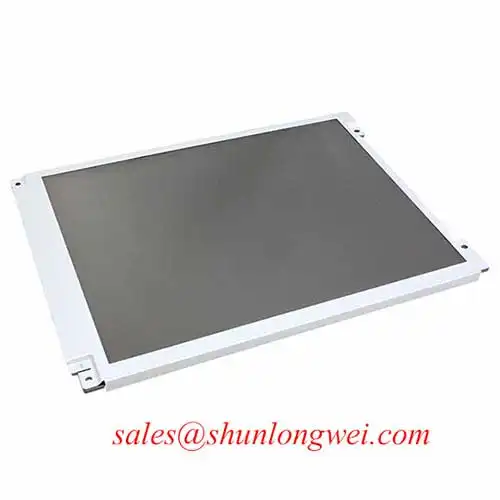
The BOE MV215FHM-N60 is a 21.5-inch diagonal a-Si TFT-LCD display panel, optimized for high-definition visual output in industrial and commercial environments. Integrating a 1920(RGB)×1080 (FHD) resolution and a 30-pin LVDS interface, this module is engineered to balance power efficiency with visual clarity, making it a reliable choice for long-cycle hardware deployments. For systems requiring consistent 1080p performance in fixed-installation environments, the MV215FHM-N60 provides a stable architecture that prioritizes signal integrity and color depth.
What is the primary benefit of the LVDS interface in this 21.5-inch panel? It ensures high-speed data integrity while minimizing electromagnetic interference (EMI) in dense industrial or medical electronics environments. For industrial HMI and digital signage requiring 1080p clarity with standard 250-nit brightness, the MV215FHM-N60 stands as a cost-effective, high-performance solution.
Key Parameter Overview
Decoding the Specs for Enhanced Visual Reliability
The technical performance of the MV215FHM-N60 is defined by its ability to maintain a 1000:1 contrast ratio across a wide 16.7M color gamut (6-bit + Hi-FRC). The following table outlines the critical engineering specifications required for system integration and driver board matching.
| Technical Attribute | Specification Value | Engineering Significance |
|---|---|---|
| Screen Size | 21.5 inch | Standard desktop and kiosk footprint for human-machine interaction. |
| Resolution | 1920×1080 (FHD) | High pixel density (102 PPI) suitable for information-dense UI. |
| Brightness | 250 cd/m² (Typ.) | Optimized for indoor environments to reduce power and heat. |
| Interface Type | LVDS (2 ch, 8-bit) | Industry-standard protocol ensuring compatibility with wide-ranging controllers. |
| Contrast Ratio | 1000:1 (Typ.) | Provides sharp distinction between dark and light pixels for text legibility. |
| Backlight Type | WLED (White LED) | Ensures thin profile and lower Typical Power Consumption compared to CCFL. |
| Active Area | 476.064 × 267.786 mm | Precision measurement for mechanical bezel and enclosure design. |
Application Scenarios & Value
Achieving System-Level Benefits in High-Definition Commercial Displays
Engineers often face the challenge of selecting a display that offers enough resolution for modern software interfaces without exceeding the thermal and power envelopes of fanless enclosures. The MV215FHM-N60 addresses this by utilizing an a-Si TFT-LCD structure that maintains high aperture ratios, allowing for 250-nit brightness with moderate power draw. This is particularly critical in medical diagnostics and lab equipment where thermal management is as important as visual accuracy.
In the field of digital signage, the 16:9 aspect ratio and FHD resolution allow for the native display of standard video content without scaling artifacts. This makes the MV215FHM-N60 ideal for point-of-sale (POS) terminals and information kiosks. For applications requiring higher brightness or different viewing angles, engineers may also evaluate the G215HVN01.0 or the LM215WF3-SLA1 as comparable alternatives within the 21.5-inch category.
- Medical Imaging: The 1000:1 contrast ratio ensures that subtle gradients in medical software are rendered clearly.
- Industrial Control: The 30-pin LVDS interface provides a robust connection that is resistant to vibration-induced signal loss when paired with high-quality locking connectors.
- Public Transit: Its WLED backlight longevity supports the 24/7 operational requirements of information displays.
Industry Insights & Strategic Advantage
Sustainability and Standardization in Large-Format LCD Manufacturing
The transition toward WLED technology in panels like the MV215FHM-N60 represents more than just a shift in lighting; it is a move toward more sustainable and energy-efficient TFT-LCD designs. Modern display manufacturing now focuses on reducing the carbon footprint by optimizing the light guide plates (LGP) to achieve uniform brightness with fewer LEDs. This directly impacts the Total Cost of Ownership (TCO) for large-scale deployments, such as in smart building control panels or airport flight information systems (FIDS).
Furthermore, the LVDS (Low Voltage Differential Signaling) interface serves as a strategic "future-proof" bridge. While newer protocols like eDP are gaining traction in the laptop market, the industrial and commercial sectors continue to rely on LVDS because of its high noise immunity and the abundance of mature, reliable scaler ICs. Selecting a panel like the MV215FHM-N60 allows procurement teams to leverage a robust supply chain of auxiliary components, ensuring that the display subsystem remains maintainable for 5 to 10 years. To understand the thermal characteristics of these integrated systems, engineers should consider how thermal resistance principles, while often discussed in power semiconductors, share common thermal management goals with large-area display backlights.
Frequently Asked Questions
Is the MV215FHM-N60 compatible with standard 30-pin LVDS cables?
Yes, it utilizes a standard 30-pin interface. However, engineers must verify the pin mapping (pinout) of their specific driver board to ensure it matches the BOE sequence for the 2-channel 8-bit signal and power supply (typically 5.0V).
How does the 250 cd/m² brightness impact visibility in high-ambient light?
The 250-nit brightness is designed for indoor use. In environments with direct sunlight or high-intensity overhead lighting, readability may be reduced. For such scenarios, an anti-glare coating or a higher-brightness panel would be required to maintain the 1000:1 contrast ratio.
What is the typical operating temperature range for this BOE panel?
As a standard commercial-grade panel, the MV215FHM-N60 typically operates within a range of 0°C to +50°C. For industrial applications subject to extreme cold or heat, the enclosure must include active thermal management to keep the liquid crystals within their fluid state.
Does this model support 10-bit color depth?
No, the MV215FHM-N60 supports 16.7M colors using a 6-bit + Hi-FRC (Frame Rate Control) architecture. This is sufficient for almost all industrial and general-purpose commercial display applications, providing smooth gradients without the cost overhead of true 10-bit hardware.
What is the expected lifespan of the WLED backlight?
While specific MTBF depends on operating conditions, standard BOE WLED backlights are typically rated for 30,000 to 50,000 hours to half-brightness. Maintaining the display at 70-80% brightness can significantly extend this lifespan in 24/7 applications.
From an engineering perspective, the MV215FHM-N60 represents a mature, high-yield product that minimizes integration risks through its adherence to industry-standard dimensions and interfaces. By focusing on FHD resolution and LVDS connectivity, it provides the necessary pixel density for modern applications while maintaining the mechanical and electrical simplicity required for industrial-grade reliability.
