
Content last revised on September 10, 2026
BOE MV215FHM-N30: Engineering Seamless Integration with FHD Clarity
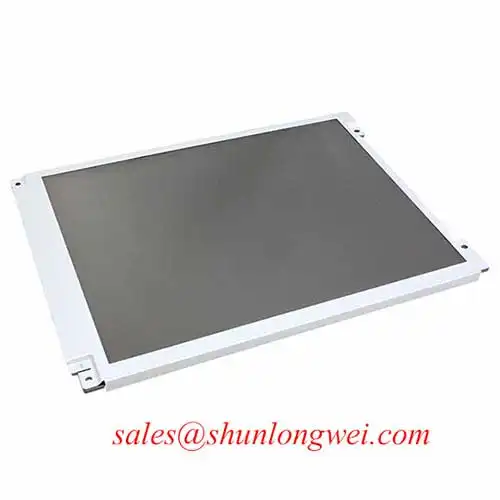
The BOE MV215FHM-N30 simplifies commercial and industrial monitor design by offering a highly standardized interface and wide-angle display technology, ensuring rapid system integration. Key Specs: 21.5-inch | 1920x1080 FHD | 1000:1 Contrast Ratio. This a-Si TFT-LCD guarantees reduced development time and pristine visual fidelity across diverse environments. What is the primary benefit of its LVDS architecture? Streamlined PCB routing and reduced EMI during integration. Wondering about driver board compatibility? The standard 2-channel, 8-bit LVDS interface ensures drop-in replacement capability for most existing display controllers. For designers prioritizing rapid deployment, this 21.5-inch module is the optimal choice.
Key Parameter Overview
Decoding the Specs for Rapid HMI and Kiosk Integration
| Core Metric | Specification Highlight |
|---|---|
| Panel Size & Resolution | 21.5-inch, 1920x1080 (FHD) |
| Optical Performance | 250 nits Brightness, 1000:1 Contrast Ratio |
| Viewing Angle | 89/89/89/89 (Typ.) via ADS Technology |
| Signal Interface | 30-pin LVDS (2 ch, 8-bit) |
| Operating Range | 0°C to 50°C |
Download the MV215FHM-N30 datasheet for detailed specifications and performance curves.
Application Scenarios & Value
Achieving System-Level Benefits in Commercial Display Terminals
Engineers often face significant challenges when designing public-facing displays, particularly regarding off-axis visibility and ambient light reflection. The MV215FHM-N30 excels in resolving these hurdles. By utilizing advanced ADS panel technology, this display achieves a symmetrical 89/89/89/89 viewing angle. This specification ensures that users interacting with an HMI terminal or self-service kiosk receive color-accurate information from almost any vantage point. Furthermore, the built-in anti-glare surface treatment mitigates harsh overhead lighting reflections. This is critical for maintaining the high 1000:1 Contrast Ratio in commercial spaces. When integrating the display via its standard LVDS interface, hardware teams can significantly reduce their time-to-market. While this model is ideal for standard indoor integration, systems requiring specialized high-brightness capabilities might consider the related G215HAN01.0.
Technical Deep Dive
A Closer Look at the 30-Pin LVDS Architecture for Simplified Routing
When evaluating TFT-LCD principles for modern electronics, signal integrity is paramount. The 30-pin LVDS connector on the MV215FHM-N30 provides a robust mechanism for transmitting high-bandwidth video data. Think of the LVDS interface as a multi-lane highway specifically designed for high-speed couriers; it moves massive amounts of pixel data with minimal electromagnetic noise, much like dedicated express lanes prevent traffic jams. This differential signaling approach allows for longer cable runs between the scalar board and the panel without signal degradation. For further reading on layout best practices, reviewing LVDS interface design guidelines can ensure optimal routing.
Similarly, examining the ADS, similar to IPS technology, reveals advanced liquid crystal manipulation. The ADS mechanism acts like a perfectly ground optical lens. It reorients the crystal molecules horizontally to ensure light transmittance remains highly uniform regardless of observer position. This structural design, paired with energy-efficient WLED backlights, delivers reliable continuous operation for commercial displays.
FAQ
Resolving Top Engineering Queries for the MV215FHM-N30
How does the Anti-Glare (AG) surface treatment of the MV215FHM-N30 impact performance in brightly lit environments?
The AG coating diffuses incident light, significantly reducing specular reflections from ambient sources. This preserves the 250 nits brightness and prevents screen washout, ensuring that on-screen data remains legible under harsh overhead lighting.
Is the 30-pin LVDS connector on the MV215FHM-N30 universally compatible with standard scalar boards?
Yes, the 2-channel, 8-bit LVDS pinout is an industry standard for 1920x1080 displays. It allows straightforward integration with most off-the-shelf driver boards, minimizing custom PCB design efforts and accelerating prototype development.
What are the thermal limitations of this panel, and how do they dictate enclosure design?
This module operates reliably within a 0°C to 50°C temperature range. Enclosure designs must incorporate adequate passive ventilation or active cooling to ensure the WLED backlight operates within its thermal envelope, preventing premature luminance degradation.
Looking ahead, the shift towards standardized FHD panels like this one empowers OEMs to scale their product lines efficiently. By leveraging reliable interfaces and wide-angle display technologies, hardware teams can future-proof their interactive terminals without inflating overall system costs.

