Content last revised on August 28, 2026
Industrial Visual Precision: A Technical Overview of the P1010WXF1MB10
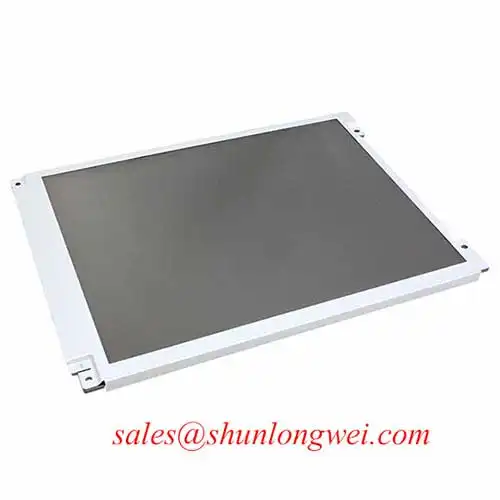
The P1010WXF1MB10 represents a cornerstone in industrial-grade visual interfaces, specifically engineered to bridge the gap between high-definition clarity and the rigorous demands of 24/7 operational environments. As a professional distributor, we recognize that selecting a display for Human-Machine Interface (HMI) or medical monitoring is not just about resolution, but about long-term signal integrity and thermal stability. This 10.1-inch TFT-LCD module, primarily manufactured by Innolux, offers a specialized 1280x800 WXGA resolution, ensuring that dense data visualizations remain crisp and legible under varying light conditions. For engineers addressing the challenge of display longevity in high-temperature cabinets, the P1010WXF1MB10 provides a reliable thermal operating window and a robust LVDS interface that minimizes electromagnetic interference (EMI).
UVP: Delivering high-resolution WXGA clarity with industrial-grade thermal resilience for operational-critical HMI systems.
Top Specs: 1280x800 Resolution | LVDS 1-ch 8-bit | 400 cd/m² Brightness
Key Benefits: Enhanced data legibility and superior EMI resistance in industrial layouts.
Core Question: How does this module handle high-duty cycles? Through optimized WLED backlight efficiency and a wide operating temperature range of -20 to 70 °C. For systems prioritizing thermal margin, this 10.1-inch module is the optimal choice.
Key Parameter Overview
Decoding the Specs for Enhanced Industrial Reliability
The following table outlines the critical technical specifications for the P1010WXF1MB10. These values are essential for calculating power budgets and enclosure ventilation requirements.
| Technical Attribute | Specification Value | Engineering Significance |
|---|---|---|
| Screen Size | 10.1-inch | Ideal for compact PLC control panels. |
| Resolution | 1280(RGB) x 800 (WXGA) | High pixel density for complex waveforms. |
| Luminance | 400 cd/m² (Typ.) | Ensures visibility in indoor factory lighting. |
| Interface Type | LVDS (1 ch, 8-bit) | Industry-standard for low noise and high speed. |
| Contrast Ratio | 800:1 (Typ.) | Deep blacks and sharp text rendering. |
| Operating Temperature | -20 ~ 70 °C | Maintains liquid crystal stability in harsh zones. |
| Backlight Type | WLED | Long life-cycle and reduced power consumption. |
Application Scenarios & Value
Achieving System-Level Benefits in High-Stability Power and Control
Engineers often face the "ghosting" or color-shift issues common in consumer-grade screens when used in industrial racks. The P1010WXF1MB10 addresses this through its IPS-like viewing angles (often cited as 85/85/85/85) and high contrast. Consider a Medical Monitoring Station: here, a 1280x800 resolution allows for side-by-side display of patient vitals and high-resolution imaging without the need for a secondary monitor. In Factory Automation, the LVDS interface acts as a robust highway, moving data packets quickly and safely away from the "noise" generated by nearby Variable Frequency Drives (VFDs) or motor starters.
The P1010WXF1MB10 is particularly effective in outdoor-adjacent environments where ambient temperatures fluctuate. Its thermal management is comparable to a well-vented engine block; it efficiently dissipates the heat generated by the WLED backlight to prevent the liquid crystals from reaching their isotropic point, which would otherwise lead to "blackout" spots. For applications requiring even higher brightness or different interface protocols, related models such as the EV101WXM-N10 or the G101EVN01.0 may offer alternative performance envelopes within the same 10.1-inch form factor.
Technical Deep Dive
A Closer Look at Signal Integrity and Backlight Efficiency
From an engineering perspective, the LVDS (Low-Voltage Differential Signaling) implementation in the P1010WXF1MB10 is its most vital feature. Think of LVDS as a dual-lane high-speed bridge where cars (data) travel in opposite directions at once; the resulting balanced current cancels out radiation that could interfere with sensitive PLC sensors. This is a critical advantage when designing TFT-LCD systems for modern industrial automation.
Furthermore, the WLED driver design focuses on minimizing the "startup surge" typical in large-format panels. By spreading the light-emitting diodes across the edge-lit or direct-lit matrix, the P1010WXF1MB10 achieves a uniformity that prevents localized hotspots. This is akin to a radiator with multiple small fins rather than one large one; it spreads the thermal load, ensuring the liquid crystal layer remains within its linear response range for accurate color reproduction even after 50,000 hours of operation. This reliability is vital for harsh environment HMIs where failure results in significant downtime.
Frequently Asked Questions
What is the primary benefit of the P1010WXF1MB10's LVDS interface in industrial designs?
The LVDS interface provides high-speed data transmission with extremely low power consumption and high noise immunity, making it ideal for environments with heavy electromagnetic interference from motors and actuators.
How does the 800:1 contrast ratio impact user interface design for field technicians?
An 800:1 contrast ratio ensures that text and icons are clearly distinguishable even in high-glare environments. This reduces eye strain for operators and minimizes the risk of input errors during critical machine adjustments.
Can the P1010WXF1MB10 be used in outdoor kiosks?
While its 400 cd/m² brightness is suitable for shaded outdoor areas, full sunlight applications may require an additional high-brightness film or specialized housing. However, its -20 to 70 °C operating range makes it robust enough for the thermal swings associated with outdoor enclosures.
In the landscape of industrial display technology, the P1010WXF1MB10 remains a strategic asset for OEMs aiming to balance cost-efficiency with uncompromising durability. Its adoption of standard LVDS protocols ensures compatibility with a wide array of industrial computing platforms, from ARM-based controllers to x86 industrial PCs. By prioritizing thermal stability and signal integrity, this module supports the transition toward more data-intensive IIoT infrastructures.