



Content last revised on September 10, 2026
PAH300N16CM | 1600V 300A PIM | Engineering Analysis for VFD & UPS Designs
Introduction: A Focus on System Reliability
Engineered for Robustness in High-Voltage Power Conversion
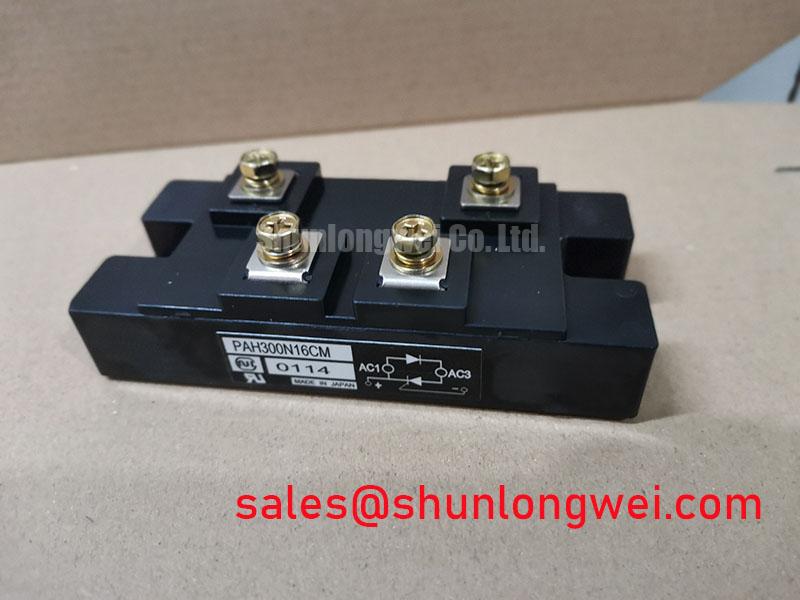
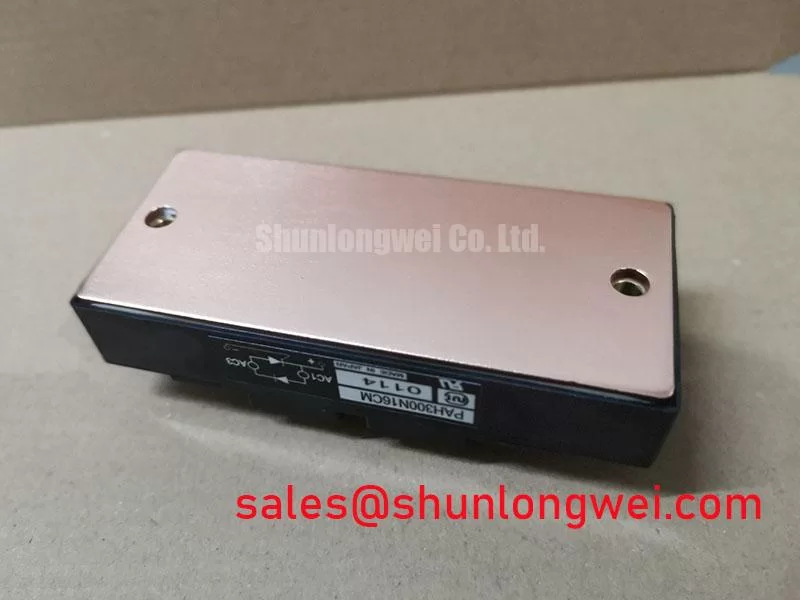
The Fuji Electric PAH300N16CM is a Power Integrated Module (PIM) that delivers superior thermal reliability for high-voltage industrial drives and UPS systems by integrating a complete power stage with a robust 1600V rating. This 7-in-1 module consolidates a three-phase converter, a brake chopper, and a three-phase IGBT inverter into a single, thermally efficient package. Key specifications include: 1600V | 300A | Rth(j-c) of 0.15 K/W (Inverter IGBT). The primary engineering benefits are enhanced system robustness on volatile 690V AC lines and a significantly simplified thermal management strategy. Its integrated NTC thermistor provides the direct feedback needed for precise over-temperature protection, a critical requirement for reliable VFD operation. For 690V industrial drives demanding high reliability and simplified thermal design, the PAH300N16CM's 1600V rating and integrated structure present an optimal engineering solution.
Key Parameter Overview
Decoding the Specs for Enhanced Thermal and Electrical Robustness
The specifications of the PAH300N16CM are foundational to its performance in demanding industrial environments. Each parameter translates directly into tangible system-level advantages, from electrical ruggedness to thermal stability. What is the primary benefit of its integrated NTC thermistor? It enables direct temperature monitoring for enhanced system protection.
| Parameter | Value & Engineering Significance |
|---|---|
| Collector-Emitter Voltage (Vces) | 1600V. This provides a substantial safety margin for applications running on 600V to 690V industrial AC lines, ensuring high reliability against the voltage spikes and transients common in factory settings. |
| Continuous Collector Current (Ic) | 300A (@ Tc=80°C, Inverter). This rating supports high-power motor drives and power conversion systems, enabling significant torque and power output. |
| Collector-Emitter Saturation Voltage (Vce(sat)) | 2.2V (Typ, Inverter). A lower Vce(sat) directly reduces conduction losses, which are a major source of heat in the module. This contributes to higher overall system efficiency. |
| Thermal Resistance (Rth(j-c)) | 0.15 K/W (Inverter IGBT). This critical value indicates highly efficient heat transfer from the silicon die to the module's baseplate, simplifying heatsink design and enabling greater power density. |
| Integrated NTC Thermistor | Provides a direct, real-time measurement of the module's internal temperature, allowing for the implementation of precise over-temperature protection and system monitoring. |
| Maximum Junction Temperature (Tj max) | 150°C. Standard operating limit that defines the thermal boundaries for long-term reliable operation. Effective thermal management is key to staying well below this limit. |
Application Scenarios & Value
System-Level Benefits in Heavy-Duty Motor Drives and Power Backup Systems
The PAH300N16CM is engineered for applications where electrical robustness and long-term reliability are non-negotiable. Its design provides significant value in complex power conversion systems by reducing both physical and thermal complexity.
A primary application is in high-power Variable Frequency Drives (VFDs) used to control large induction motors in environments like manufacturing, mining, or material handling. In these systems, which often run on 690V grids, the module's 1600V Vces rating is not just a specification—it's a critical reliability feature. It provides the necessary headroom to absorb voltage transients caused by motor switching or grid instability, preventing catastrophic failure of the inverter stage. By integrating the entire power front-end (rectifier) and output stage (inverter) into one component, engineers can streamline their thermal design, using a single heatsink and simplifying the gate drive layout, which directly reduces assembly costs and potential points of failure.
Similarly, in large-scale Uninterruptible Power Supply (UPS) systems for data centers or medical facilities, the module's high level of integration and reliability are paramount. The 7-in-1 topology reduces the component count and simplifies the internal power routing, contributing to a more compact and dependable UPS design. For applications requiring even higher current handling within a similar voltage class, system designers may also evaluate options such as the CM600DX-24T which offers a 600A rating.
Technical Deep Dive
Analysis of the Thermal Pathway and Its Impact on Long-Term Reliability
A key factor dictating the lifespan and performance of any power module is its ability to evacuate heat from the semiconductor junctions. The PAH300N16CM's low junction-to-case thermal resistance (Rth(j-c)) is a testament to a design focused on thermal efficiency. This parameter quantifies the opposition to heat flow between the active silicon chip and the module's metal baseplate. A lower value signifies a more effective thermal path.
Think of thermal resistance like the traffic on a road. A high Rth(j-c) is a congested, single-lane street, causing heat to back up at the junction and leading to high temperatures. In contrast, the low Rth(j-c) of this module acts as a wide-open, multi-lane superhighway. It allows the thermal energy generated during switching and conduction to travel swiftly away from the sensitive silicon, preventing the "traffic jams" of heat buildup that accelerate material degradation and lead to premature failure. This efficient thermal pathway is crucial for improving the module's power cycling capability—its ability to withstand repeated temperature swings—which is a primary determinant of operational lifetime in applications with fluctuating loads, such as servo drives and industrial pumps.
Frequently Asked Questions (FAQ)
Engineering Questions on Implementation and Reliability
How does the 1600V Vces rating of the PAH300N16CM benefit system design for 690V AC lines?
The 1600V rating provides a significant safety margin, or derating factor, against voltage spikes that are common on industrial 690V grids. This electrical ruggedness prevents the IGBT from entering an avalanche breakdown condition during transient events, directly enhancing the long-term reliability and uptime of the equipment.
What is the practical advantage of the low Rth(j-c) in the inverter section for thermal management?
A low Rth(j-c) allows for more effective heat extraction from the IGBT chips. This enables engineers to either use a smaller, lower-cost heatsink for a given power output or to push more power through the module while keeping junction temperatures within safe limits, thereby increasing the system's power density.
How should the integrated NTC thermistor be utilized for effective over-temperature protection?
The NTC thermistor should be connected to a monitoring circuit, typically managed by the system's microcontroller. By referencing the resistance-temperature curve in the datasheet, the controller can accurately track the module's baseplate temperature. A common strategy is to program a two-stage warning: a soft alarm or power reduction at a high temperature (e.g., 100°C) and a hard shutdown of the gate drive signals before Tj max is exceeded.
What are the primary design considerations when replacing multiple discrete components with the 7-in-1 PAH300N16CM module?
The main considerations shift from individual component layout to module-level integration. This includes ensuring a flat and clean mounting surface for optimal thermal contact, designing a laminated busbar for low-inductance power connections, and creating a compact gate driver board that minimizes the distance to the module's gate and emitter terminals to ensure clean switching signals.
Is negative gate voltage recommended for driving the IGBTs in this module, especially in noisy industrial environments?
Yes, applying a negative gate voltage (e.g., -8V to -15V) during the off-state is a highly recommended practice. It increases the noise margin, preventing Miller-effect-induced turn-on, which can be caused by the high dv/dt of other switching devices in the inverter. This is a crucial technique for preventing shoot-through and ensuring robust operation, as detailed in many guides on robust IGBT gate drive design.
An Engineer's Perspective on Integration
From an engineer's standpoint, the PAH300N16CM is less about raw power and more about built-in resilience. It offers a pre-validated, thermally efficient subsystem that mitigates many of the electrical and thermal risks associated with high-voltage industrial environments. This level of integration allows design teams to abstract away component-level challenges and focus on system-level innovation, accelerating time-to-market and enhancing the final product's reliability in the field.